-
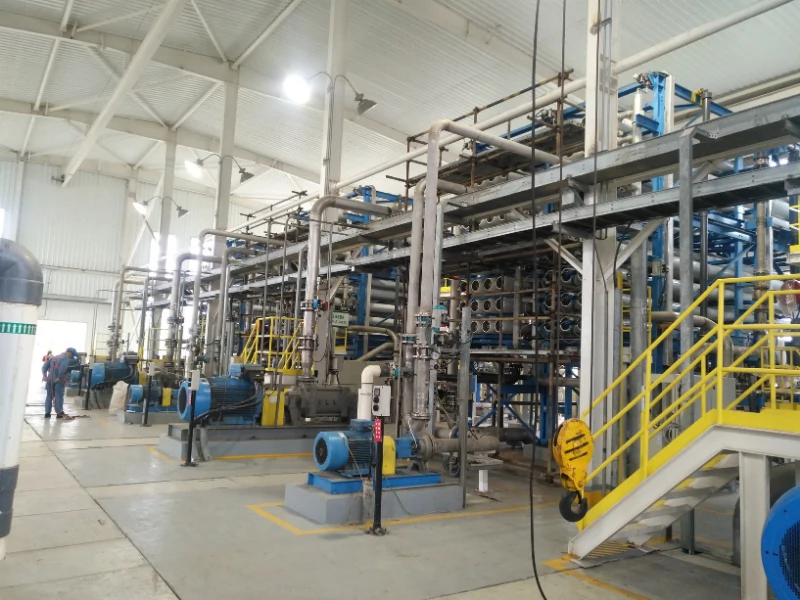
UF vs RO Membrane: Key Differences and Applications
2026-10-21
Ultrafiltration (UF) and reverse osmosis (RO) are pressure-driven membrane technologies designed for different water treatment objectives. UF primarily removes suspended solids, colloids, and many microorganisms, while RO reduces dissolved salts and a broad range of dissolved contaminants. Unders... -
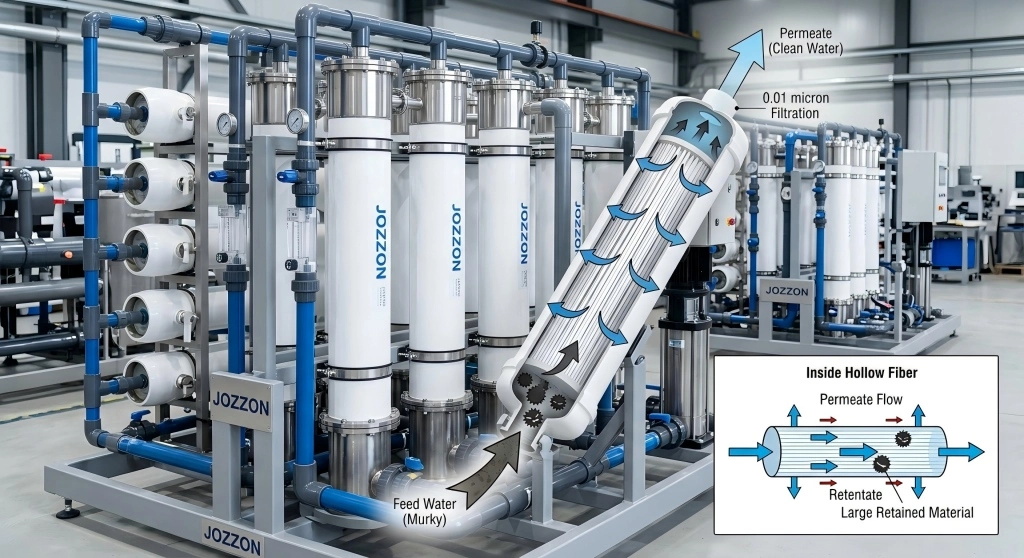
What Is an Ultrafiltration Membrane? A Comprehensive Educational Guide
2026-10-14
Ultrafiltration (UF) is a pressure-driven membrane separation technology used in water treatment, wastewater reuse, and industrial processing. An ultrafiltration membrane removes suspended solids, colloidal particles, and many microorganisms while allowing water and most dissolved salts to pass t... -
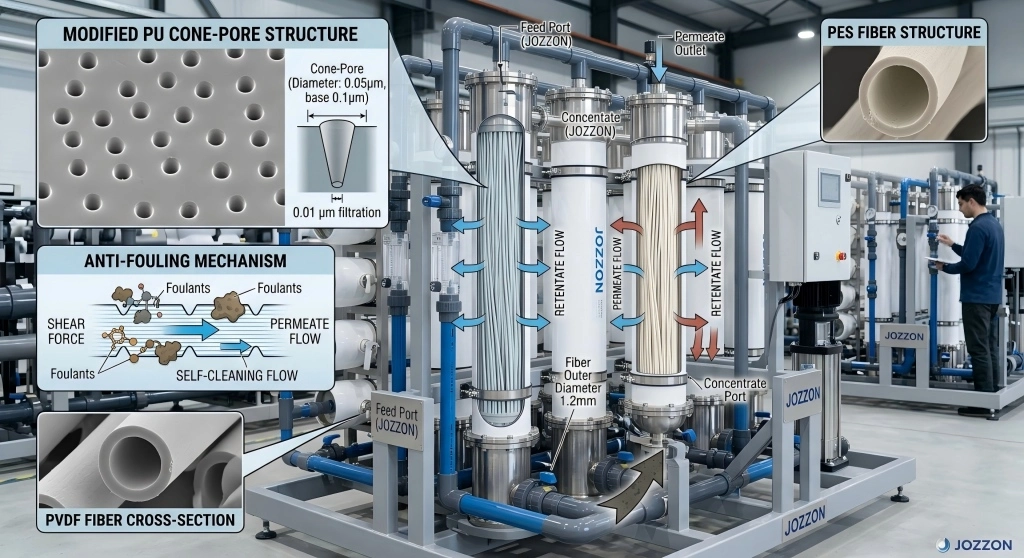
Jozzon Ultrafiltration Membrane Modules: Technology, Performance, and Best Practices
2026-10-12
Ultrafiltration (UF) has become a cornerstone of modern water treatment, and Jozzon’s hollow fiber UF membrane modules are engineered to deliver reliable performance even under challenging feed water conditions. This guide summarizes the key technical features, operating parameters, and maintenan... -
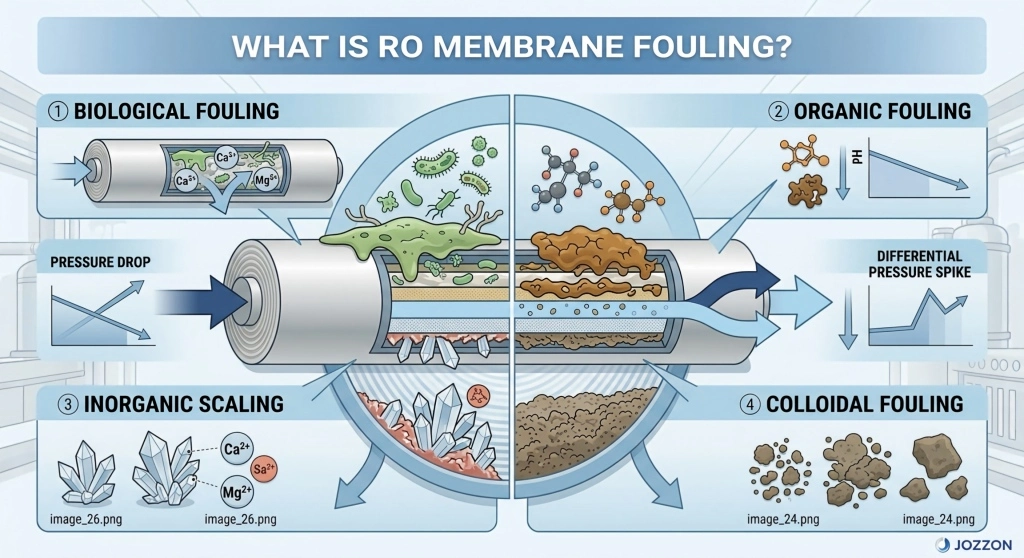
Common RO Membrane Fouling Types and How to Fix Them
2026-09-30
Reverse osmosis (RO) membrane fouling is one of the most common causes of declining performance in water treatment systems. When unwanted materials accumulate on the membrane surface or within the feed channel, they increase resistance to water transport, reduce permeate flow, and may require hig... -
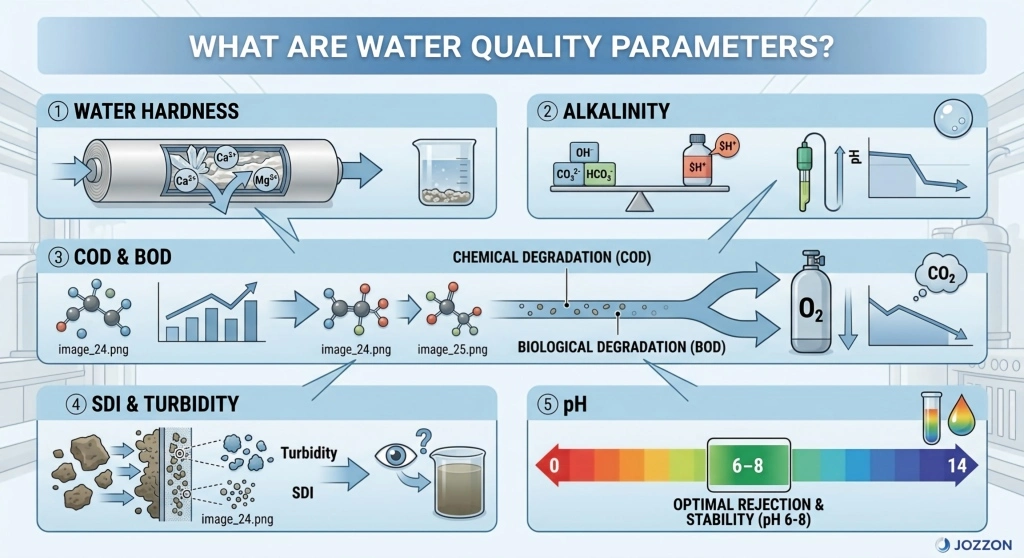
Water Quality Parameters for RO: Hardness, COD, SDI & More
2026-09-23
The stable operation of a water treatment system depends heavily on understanding the quality of its feed water. Before selecting an RO membrane or designing a pretreatment system, operators need to evaluate key water quality parameters in water treatment, including hardness, alkalinity, COD, BOD... -
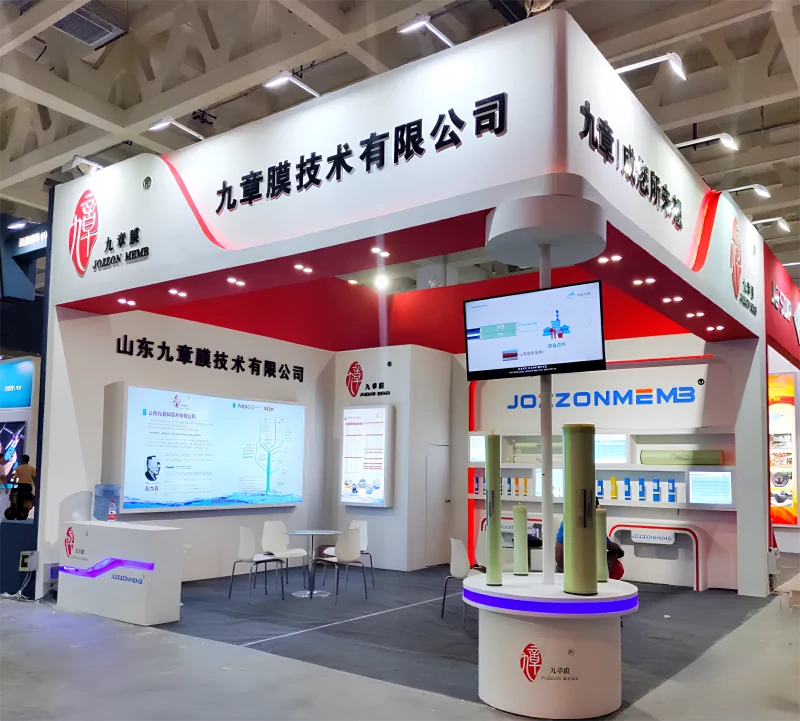
A Beginner’s Guide to Reverse Osmosis Membranes: Why Water Treatment Relies on RO
2026-09-22
Clean, predictable water is essential for modern industrial, municipal, and commercial operations. Among membrane-based separation technologies, reverse osmosis (RO) is widely used when high-quality water and high rejection of dissolved contaminants are required. But what is a reverse osmosis mem... -
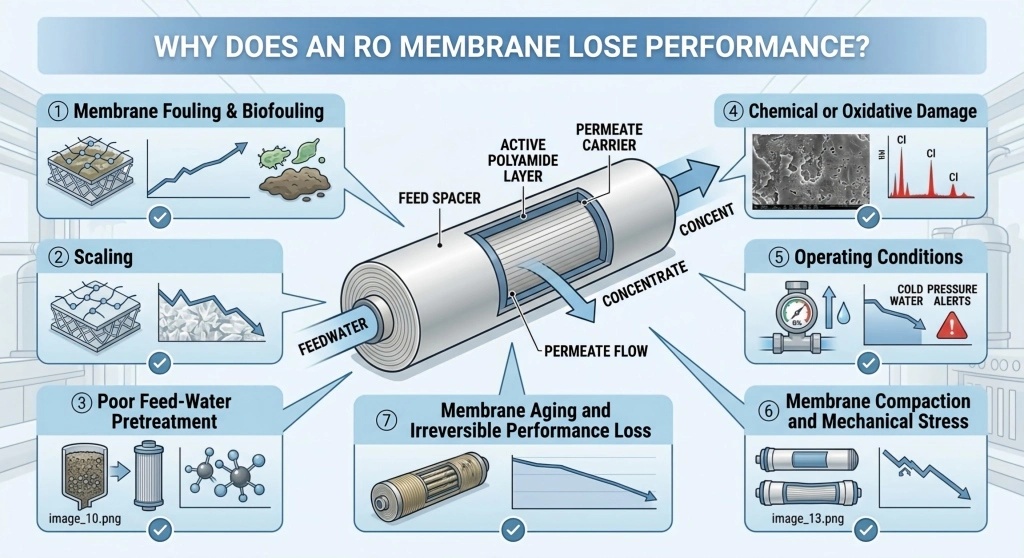
Why Does an RO Membrane Lose Performance?
2026-09-21
Reverse osmosis (RO) systems are designed to deliver stable permeate flow and water quality, but membrane performance can decline during operation. Common warning signs include lower permeate flow, higher product-water conductivity, increasing differential pressure, and greater pressure requireme... -
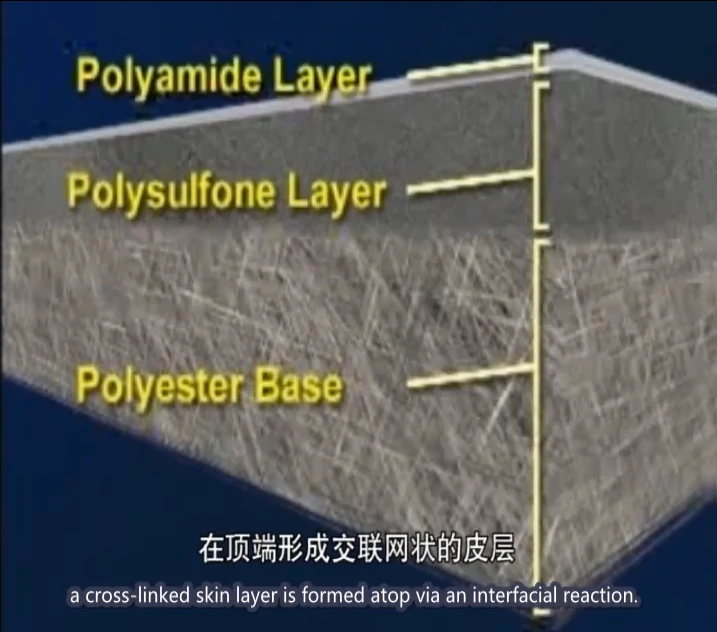
The Science Behind High-Performance RO Membranes: From Molecular Structure to Industrial Application
2026-09-18
In the world of water treatment, reverse osmosis (RO) is often described as a simple filtration process—water is pushed through a membrane, salts are rejected, and clean water comes out the other side. But the reality is far more complex. Behind every high-performance RO membrane lies a sophistic... -
What a Real Water Quality Report Reveals About JOZZON’s Membrane Strength
2026-09-17
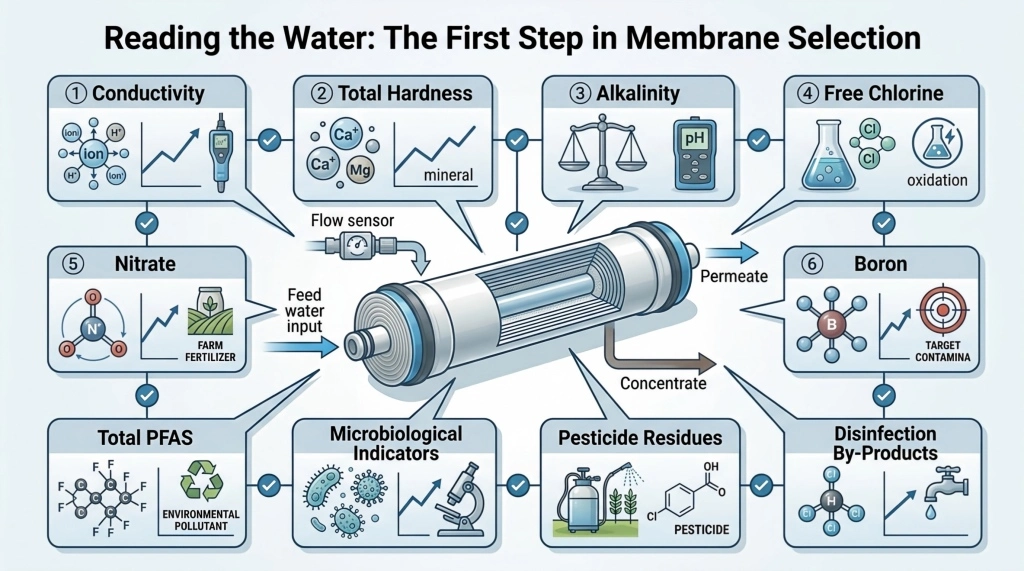
Yesterday, we completed the shipment of a batch of reverse osmosis membrane elements. Before shipment, our technical team analyzed the customer’s water quality report item by item, and based on that analysis, completed membrane element selection, system matching, and factory water testing. ... -
Engineering Excellence: How JOZZON’s Membrane Technology Delivers Performance That Lasts
2026-09-15
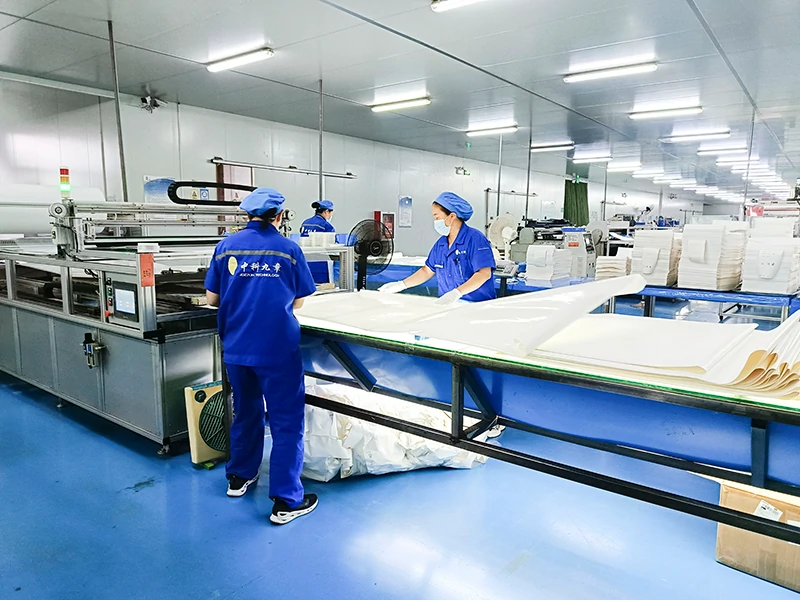
At JOZZON, we don’t just manufacture reverse osmosis membranes. We engineer them from the molecular level up, combining advanced materials science with precision manufacturing to deliver elements that perform reliably in the world’s most demanding water treatment applications. This is the story o... -
How Long Does an RO Membrane Last?
2026-09-11
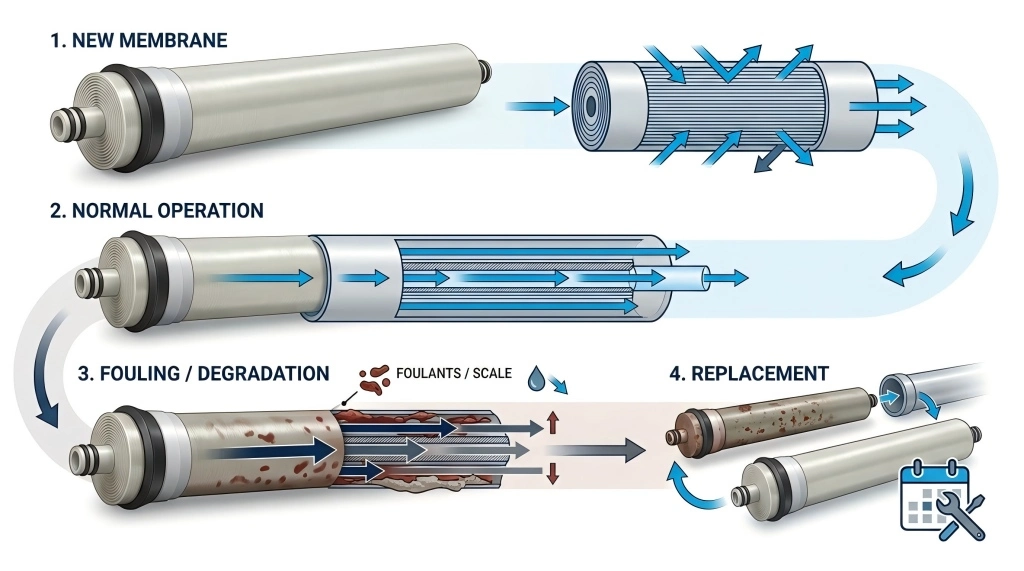
Reverse osmosis (RO) systems are widely used in industrial, municipal, and commercial water treatment. For system operators, the RO membrane lifespan directly affects permeate quality, operating costs, maintenance requirements, and overall system reliability. So, how long does an RO membrane last... -
Reverse Osmosis 101: Key Concepts You Need to Know for Effective Water Treatment
2026-09-09
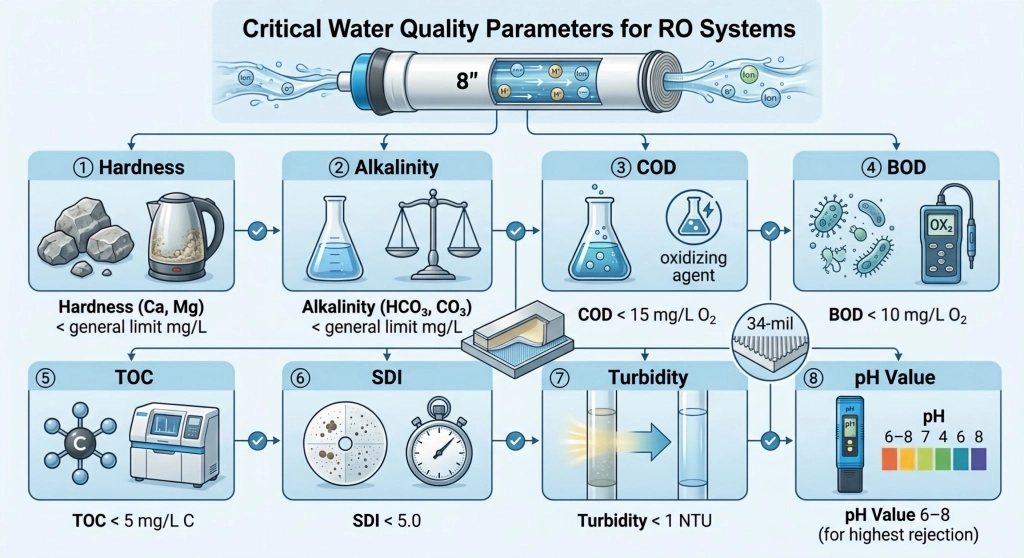
Reverse osmosis technology is widely used across industries—from industrial pure water production and municipal supply to seawater desalination and wastewater reuse. But behind the control panels and pressure vessels lies a set of fundamental principles and water quality parameters that determine... -
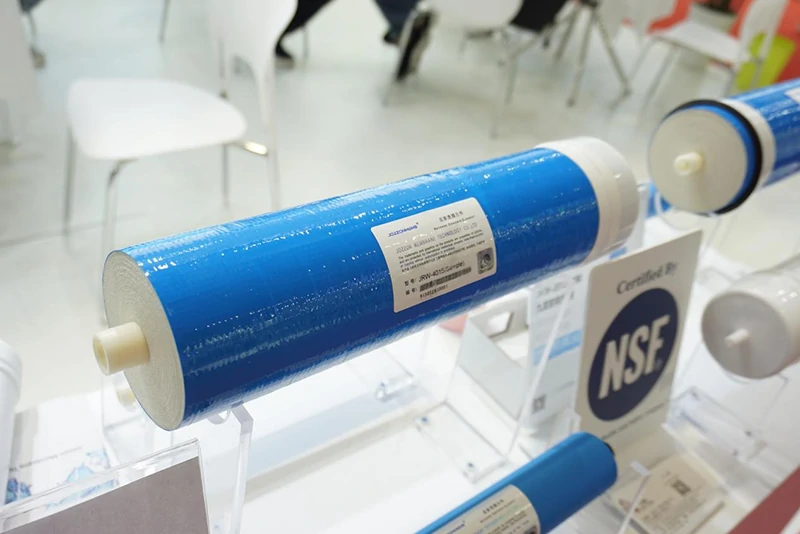
Mastering the Fundamentals: How Jozzon Delivers Excellence in Membrane Technology
2026-09-08
At Jozzon, we believe that superior water treatment solutions are built on a foundation of technical mastery. Our deep understanding of the fundamental principles governing reverse osmosis—from water chemistry to system dynamics—drives every innovation we bring to market. This commitment to tech... -

What Is Salt Rejection?
2026-08-27
Salt rejection is one of the key performance indicators used to evaluate a reverse osmosis (RO) membrane. It describes the percentage of dissolved salts retained by the membrane rather than passing into the permeate. In general, a higher salt rejection means less dissolved salt enters the product... -
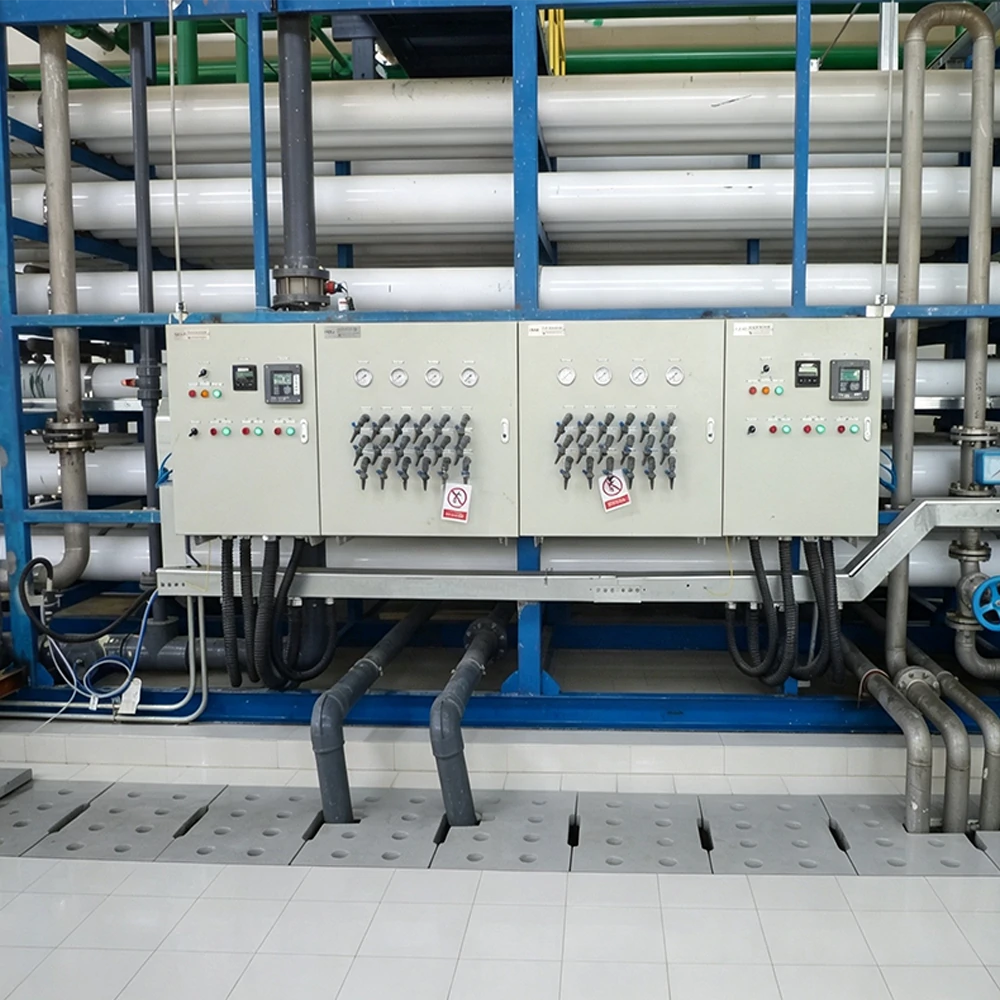
What Is Membrane Flux?
2026-08-19
In pressure-driven membrane filtration systems such as reverse osmosis (RO), nanofiltration (NF), ultrafiltration (UF), and microfiltration (MF), membrane flux is one of the most important performance parameters. It describes the amount of permeate produced per unit membrane area over a given per... -
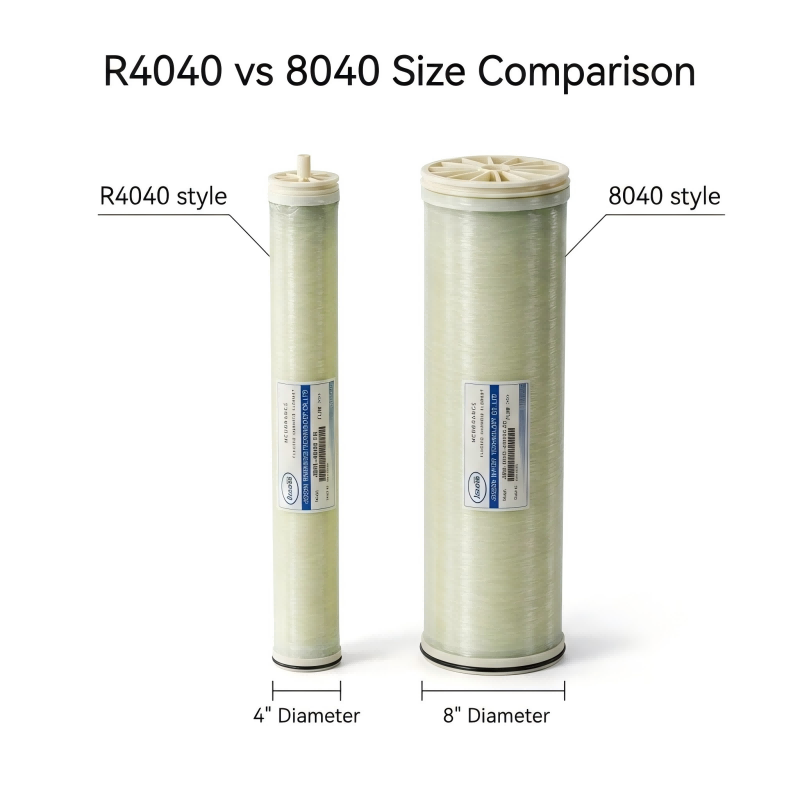
4040 vs 8040 RO Membrane: Key Differences & Selection Guide
2026-08-07
Designing or scaling an industrial reverse osmosis (RO) system eventually requires answering a fundamental engineering question: which membrane element size best balances water yield, plant footprint, and equipment costs? While membrane chemistry, salt rejection, and operating pressure all influe...