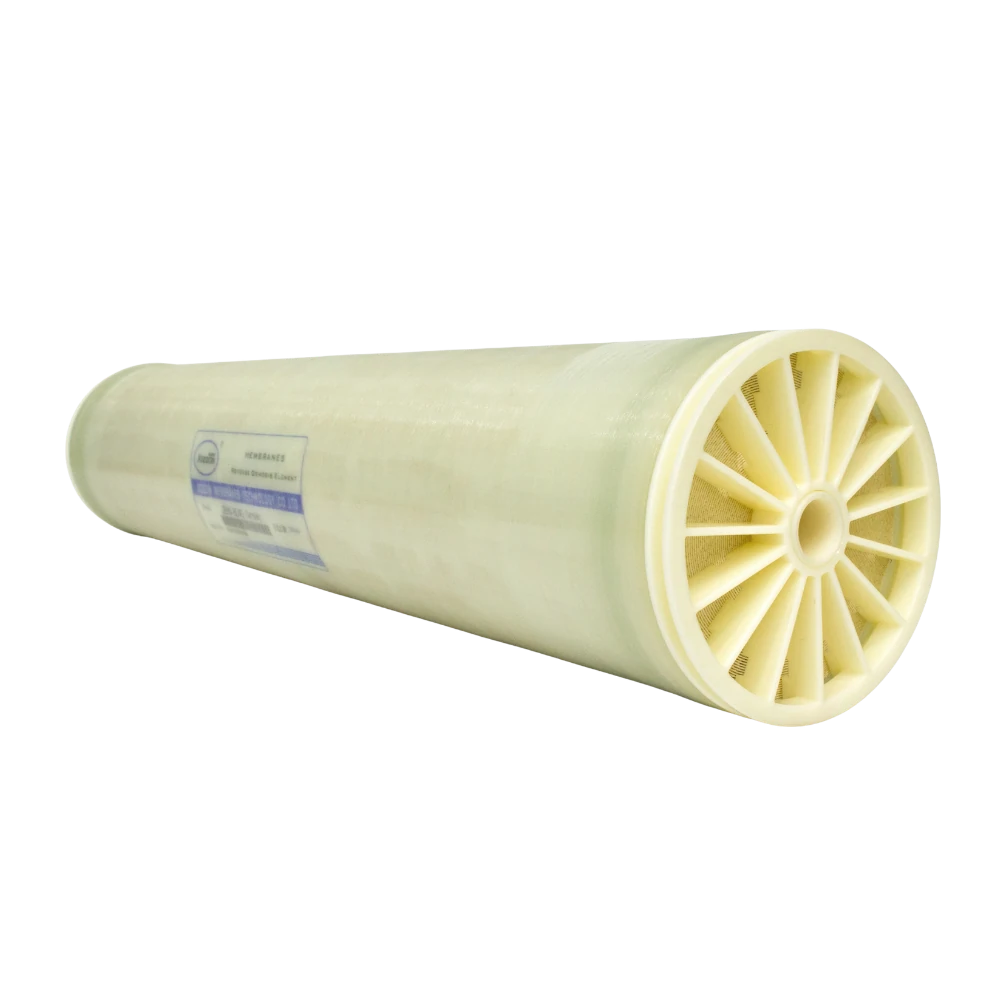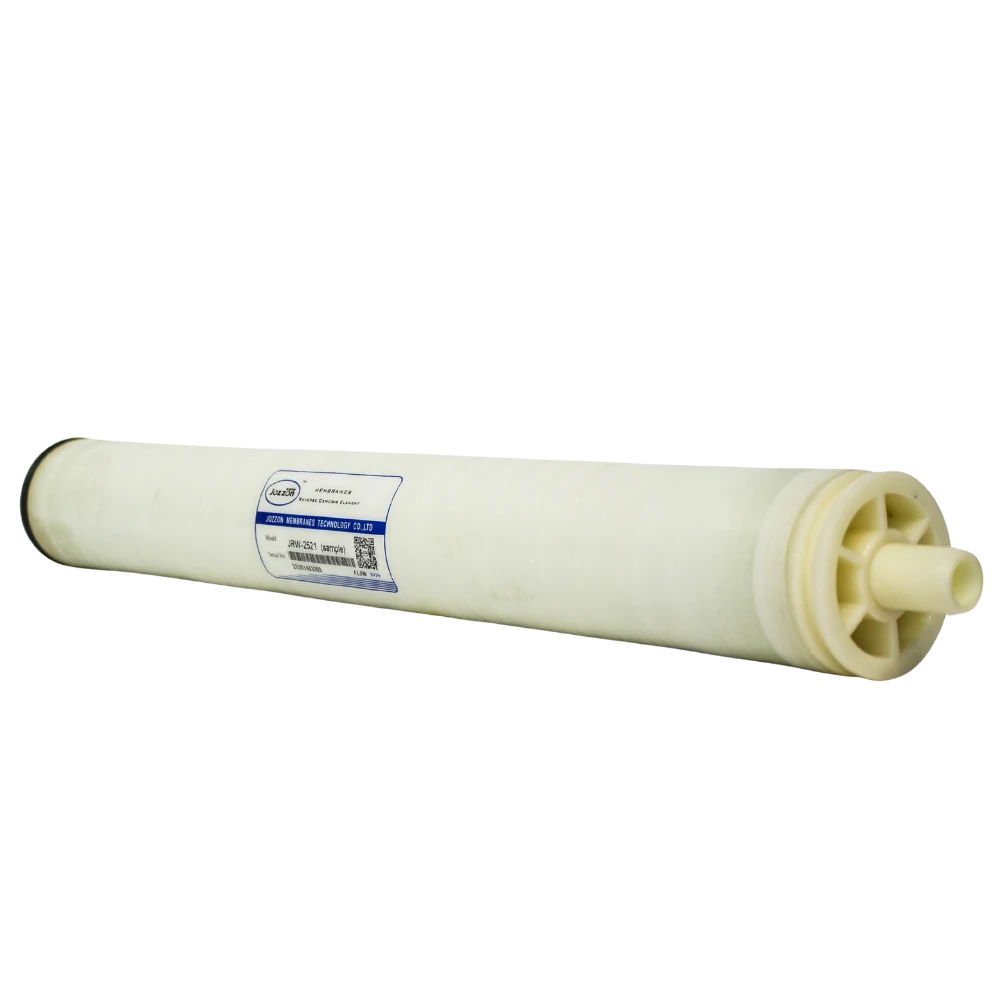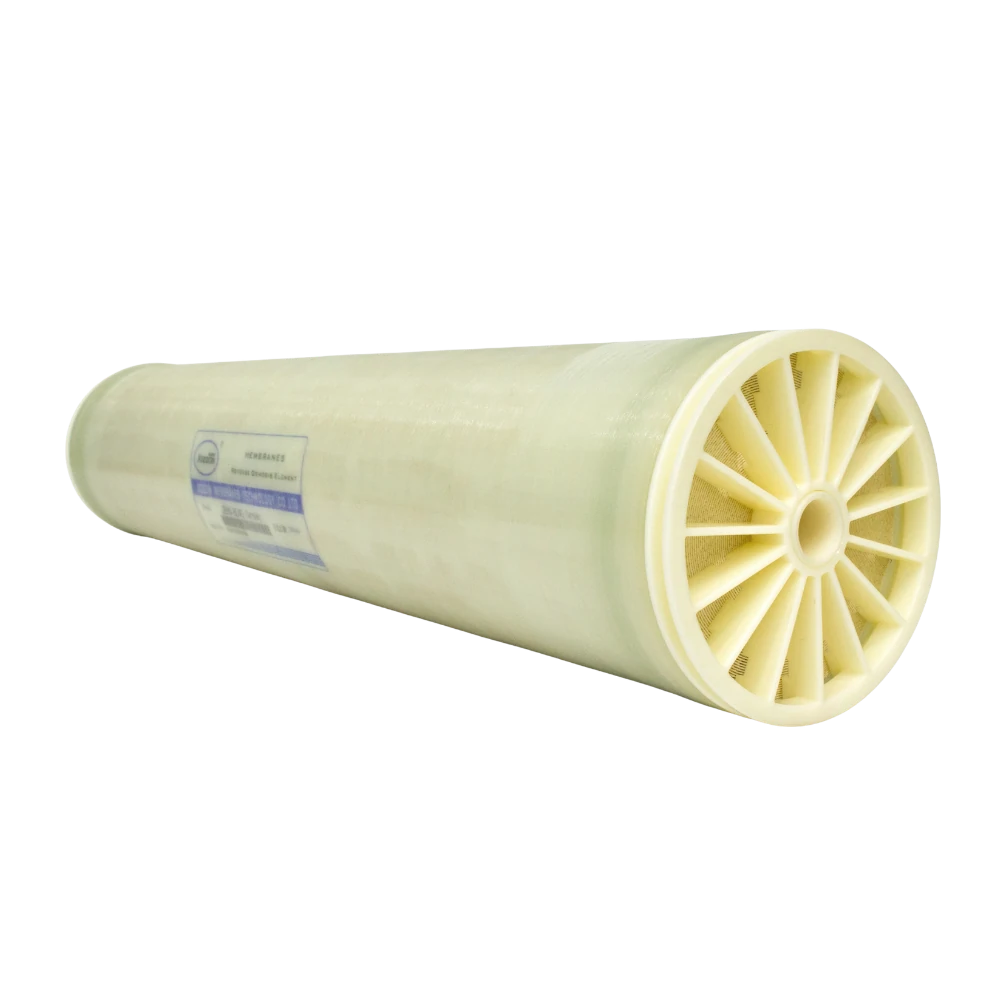
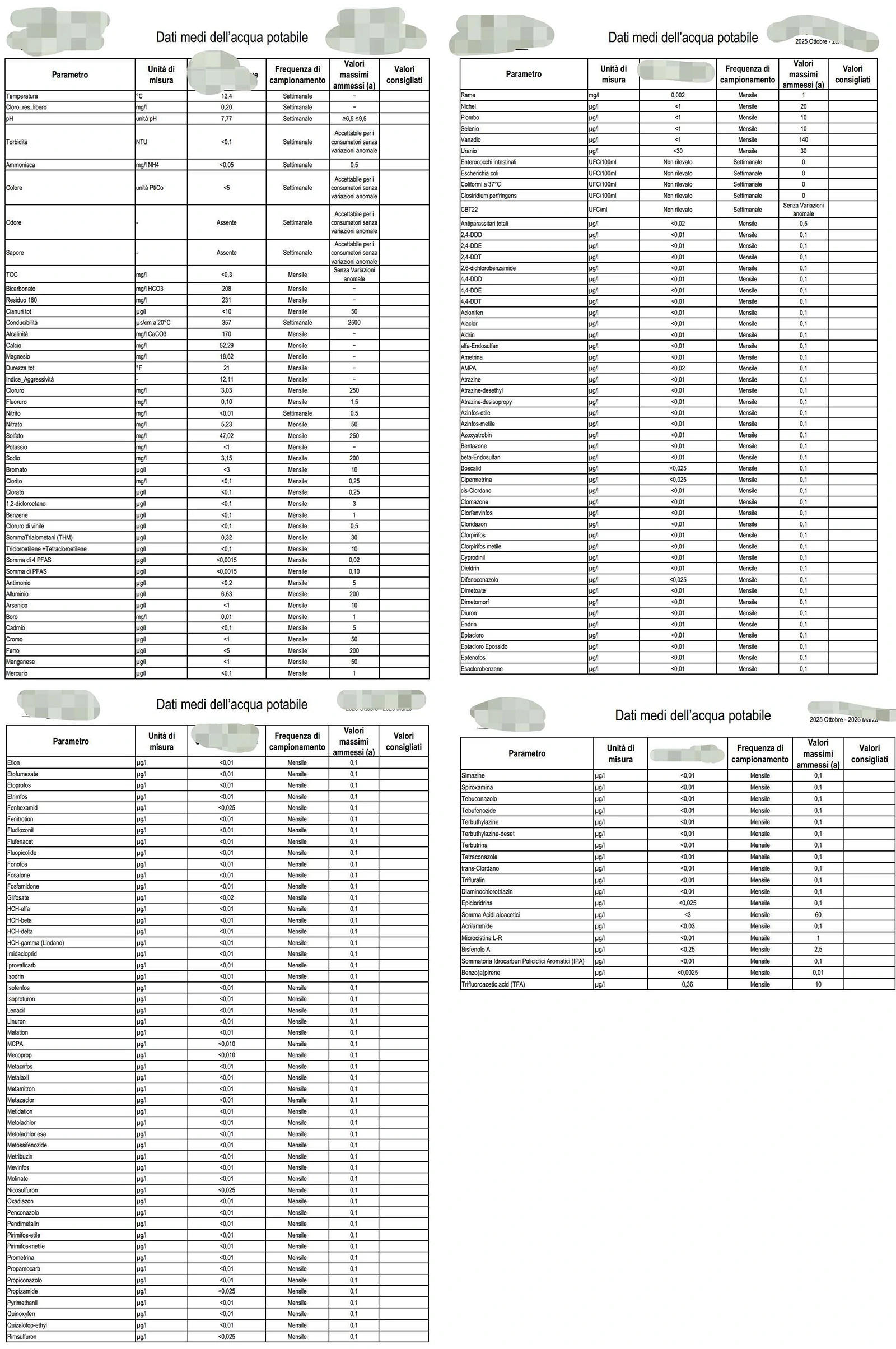
Yesterday, we completed the shipment of a batch of reverse osmosis membrane elements. Before shipment, our technical team analyzed the customer’s water quality report item by item, and based on that analysis, completed membrane element selection, system matching, and factory water testing. This water quality report covers nearly one hundred parameters—including temperature, pH, conductivity, hardness, free chlorine, heavy metals, disinfection by-products, pesticide residues, and PFAS—making it a comprehensive drinking water quality testing report. Today, let’s use this report as an example to discuss how JOZZON responds to customer needs with technical strength.
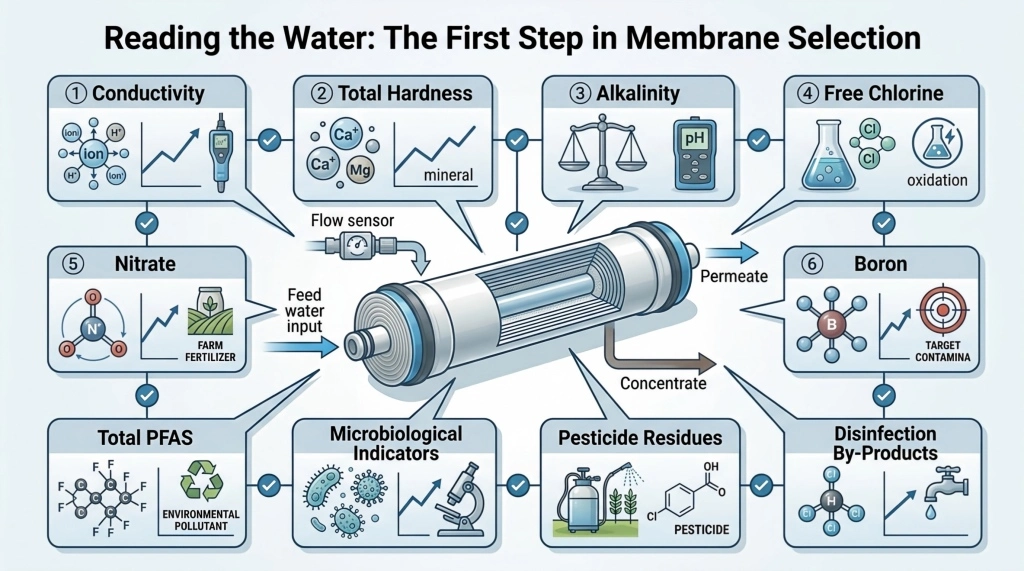
I. Reading the Water: The First Step in Membrane Selection
Many people think that buying a reverse osmosis membrane is simply a matter of choosing a model and comparing prices. But what truly determines membrane performance and lifespan is the feed water quality. The same membrane, used under different water quality conditions, can have a lifespan that differs by several times. Therefore, a professional membrane supplier always starts by reading the water quality report.
Taking this report as an example, let’s first look at several key indicators:
1. Conductivity: 357 μS/cm (at 20°C)
Conductivity reflects the content of total dissolved solids in water. 357 μS/cm is a typical low to medium salinity water quality, far below brackish water (usually above 2000 μS/cm) and far below seawater (about 50,000 μS/cm). This means the customer’s water source is a low-salinity source. The requirement for membrane element salt rejection is relatively moderate, but the requirements for permeate flux and operating energy consumption are higher—because the osmotic pressure of low-salinity water is lower, the system is more likely to operate at low pressure, making membrane flux performance and fouling resistance the key factors.
2. Total Hardness: 21 °F (about 210 mg/L as CaCO₃)
21 °F is moderately hard water. Hardness is mainly composed of calcium (52.29 mg/L) and magnesium (18.62 mg/L). Water with high hardness tends to cause scaling on the membrane surface in reverse osmosis systems, especially calcium carbonate scaling. Therefore, for this water quality, the anti-scaling performance of the membrane element and the pretreatment design of the system are equally important. JOZZON’s wide-channel membrane elements and anti-fouling coating technology are designed precisely for such water quality conditions.
3. Alkalinity: 170 mg/L as CaCO₃, Bicarbonate: 208 mg/L
Alkalinity and hardness together determine the scaling tendency of water. The alkalinity of this water is relatively high, meaning that during the concentration process, the saturation of calcium carbonate will rise rapidly. Without control, calcium carbonate scale will quickly form on the membrane surface. JOZZON’s hydrophilic membrane surface (contact angle only 36.5 degrees) can effectively reduce the tendency of pollutants to adhere to the membrane surface. Combined with appropriate scale inhibitor dosing, it can significantly extend the cleaning cycle.
4. Free Chlorine: 0.20 mg/L
Free chlorine is the natural enemy of reverse osmosis membranes. Aromatic polyamide membranes are extremely sensitive to chlorine, and long-term exposure to free chlorine can cause irreversible degradation of membrane performance. The free chlorine in this water is 0.20 mg/L. Although within the drinking water standard range, reduction treatment (usually sodium bisulfite) is mandatory for reverse osmosis membranes. It is worth mentioning that JOZZON adopts a chlorine-free post-treatment process. The membrane element itself contains no residual chlorine and does not introduce additional oxidation risks due to post-treatment processes, which is crucial for ensuring membrane lifespan.
5. Nitrate: 5.23 mg/L, Sulfate: 47.02 mg/L, Chloride: 3.03 mg/L
These three indicators are all far below the limits, indicating that the ion composition of this water source is relatively mild and the desalination load on the membrane is not high. However, it should be noted that nitrate and sulfate may approach or exceed the limits after concentration, so the system’s recovery rate design needs to be precisely calculated based on the membrane’s performance curve.
6. Boron: 0.01 mg/L, Arsenic: <1 μg/L, Lead: <1 μg/L, Uranium: <30 μg/L
Although these trace elements are present in extremely low concentrations, they are of great concern in drinking water applications. JOZZON’s seawater desalination membrane elements have a boron permeability of ≤0.08 and also excel at removing such trace contaminants. Uranium in particular (<30 μg/L, close to the limit of 30 μg/L) places higher demands on membrane rejection performance.
7. Total PFAS: <0.0015 μg/L, Total of 4 PFAS: <0.0015 μg/L
PFAS (per- and polyfluoroalkyl substances) are a hot topic in the global water treatment industry in recent years. The PFAS content in this report is extremely low, indicating that the water source is not significantly contaminated by PFAS. Even so, JOZZON membrane elements’ rejection capability for PFAS substances is still trustworthy—our highly cross-linked polyamide desalination layer has excellent rejection performance for organic pollutants with larger molecular weights.
8. Microbiological Indicators: All Not Detected
Intestinal enterococci, Escherichia coli, coliform bacteria at 37°C, Clostridium perfringens, and CBT22 were all not detected, indicating that the microbiological safety of this water source is good. However, reverse osmosis membranes themselves are also an effective microbiological barrier. JOZZON’s dense desalination layer can intercept bacteria and viruses, providing a dual guarantee for effluent safety.
9. Pesticide Residues and Disinfection By-Products: All Below Detection Limits
The report lists nearly one hundred pesticide residues (such as atrazine, glyphosate, chlorpyrifos, etc.) and disinfection by-products (such as trihalomethanes, haloacetic acids, etc.), all below detection limits. This indicates that the chemical safety of this water source is very high, but it also reflects the customer’s extremely strict requirements for water quality—and JOZZON membrane elements are designed precisely to meet such high standards.
II. From Water Quality to Membrane: JOZZON’s Technical Matching
After analyzing the water quality report, the next question is: What kind of membrane element is most suitable for this water quality?
Based on the above analysis, we can draw several key conclusions:
Low salinity, moderate hardness, high alkalinity: Requires membrane elements with high flux, anti-scaling, and cleaning resistance.
Presence of free chlorine: Requires the system to be equipped with reducing agent dosing, while the membrane element itself should have good oxidation resistance.
High concern for trace elements and PFAS: Requires membrane elements with high salt rejection and high rejection rates.
Good microbiological safety: But membrane elements still need to provide a reliable microbiological barrier.
In response to these needs, JOZZON’s membrane elements have the following advantages:
1. High Flux, Low Energy Consumption
JOZZON adopts a high cross-linked polyamide film density formula, combined with precisely controlled cross-linking density and advanced surface modification technology, achieving industry-leading water flux. For low-salinity water sources, this means that at the same permeate production, the system can operate at lower operating pressure, significantly reducing energy consumption.
2. Excellent Fouling Resistance
Our anti-fouling technology increases hydrophilic neutral-charge groups during the interfacial polymerization reaction, reducing the membrane surface contact angle to 36.5 degrees (conventional reverse osmosis membranes are 43.5 degrees). The better hydrophilicity makes it harder for pollutants to adhere. At the same time, the feed spacer width of our full range of membrane elements is higher than 31 mil (other companies use 28 mil). The wide channel design greatly improves fouling resistance.
3. Chlorine-Free Post-Treatment, Longer Lifespan
JOZZON adopts a chlorine-free post-treatment process. The membrane sheet production process is free of chlorination post-treatment, avoiding attack on the aromatic polyamide desalination layer by active chlorine. This means our membrane elements will not experience rapid performance decay, and product life is greatly extended.
4. High Salt Rejection, Ensuring Effluent Safety
Our 8-inch membrane elements achieve a maximum rejection rate of 99.5% and a water flux higher than 10000 GPD. For indicators such as nitrate, sulfate, boron, arsenic, lead, and uranium in this water quality, JOZZON membrane elements can provide reliable rejection performance.
5. Dry Membrane Elements, More Flexible Storage and Transportation
JOZZON is one of the few manufacturers in the world with the capability to produce dry membrane elements. Our dry membrane technology extends the storage time of membrane elements from 3 months to 24 months, reduces transportation costs, and requires no preservatives, making it more environmentally friendly. For customers who need to stock up in advance or have long transportation cycles, this is a very practical advantage.
III. Water Testing Before Shipment: Every Membrane Verified with Real Water Quality
The batch of membrane elements shipped yesterday underwent strict water testing before leaving the factory. We test flux, rejection, and integrity to ensure that every membrane meets the customer’s water quality requirements and system design parameters.
This is not just talk. JOZZON’s production team has an average of more than ten years of experience, led by a production director with decades of expertise. The critical processes of gluing and rolling are carried out by experienced hands, ensuring that every glue line is placed with care and every membrane leaf is aligned with precision. This human-centered craftsmanship, combined with strict water testing procedures, ensures the consistency and reliability of our membrane elements.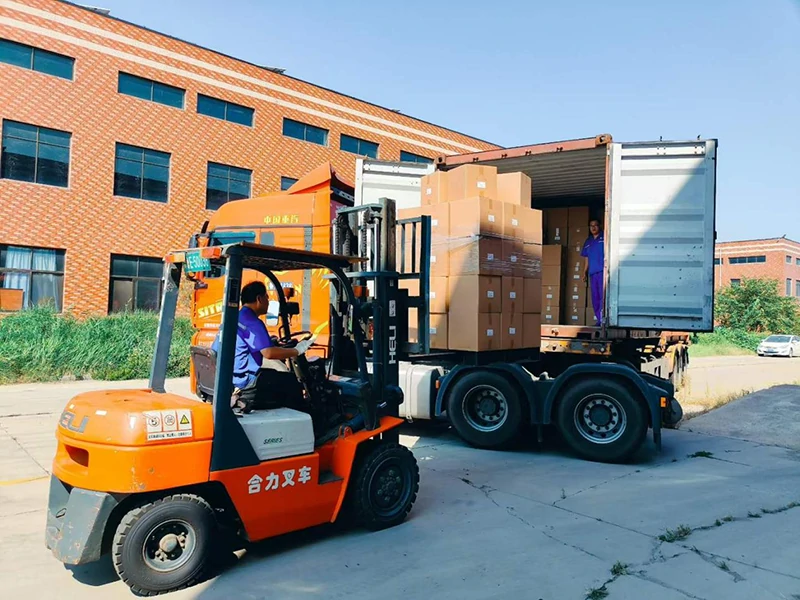
IV. Why Global Customers Choose JOZZON
As can be seen from this water quality report, the customer’s requirements for water quality are very strict—nearly one hundred indicators, covering microbiology, heavy metals, pesticide residues, disinfection by-products, PFAS, and more. This high standard is precisely the area where JOZZON excels.
Our strength is reflected in:
- Source innovation: We hold multiple invention patents and have developed a modified aromatic polyamide reverse osmosis composite membrane material preparation system based on entirely new monomers, using a polysulfone support layer with a molecular weight of 80,000 to 90,000 and a completely new structure.
- Leading processes: Efficient acid-binding process, high cross-linking skin layer technology, chlorine-free post-treatment process, end cap vortex technology, household membrane antibacterial technology each one has been verified through practical application.
- Reliable manufacturing: Dry membrane elements, wide channel design, precise gluing technology (maximum membrane area up to 440 square feet), full range of antibacterial technology.
- Market recognition: We supply membrane elements to well-known domestic home appliance brands such as Midea, Royalstar, and Lamo, as well as well-known foreign manufacturers such as KFlow and Lexcru. Our annual production of reverse osmosis membrane sheets is 3.3 million square meters, accounting for about 6% of domestic demand, making us one of the few reverse osmosis membrane sheet manufacturers in the world.
V. Conclusion: Every Water Quality Report Is a Technical Dialogue
For JOZZON, every water quality report is not a bunch of cold numbers, but a technical dialogue with the customer. We understand customer needs by reading the water quality; we solve customer problems by matching technology; we ensure customer trust through strict water testing.
The batch of membrane elements shipped yesterday will soon serve an application scenario with extremely high water quality requirements. We believe that with JOZZON’s core technology and manufacturing strength, these membrane elements will operate stably and provide customers with safe, reliable permeate.
If you also have a water quality report that needs analysis, or are looking for a reverse osmosis membrane solution suitable for your water source, please contact the JOZZON technical team. We look forward to working with you to protect every drop of water with technology.