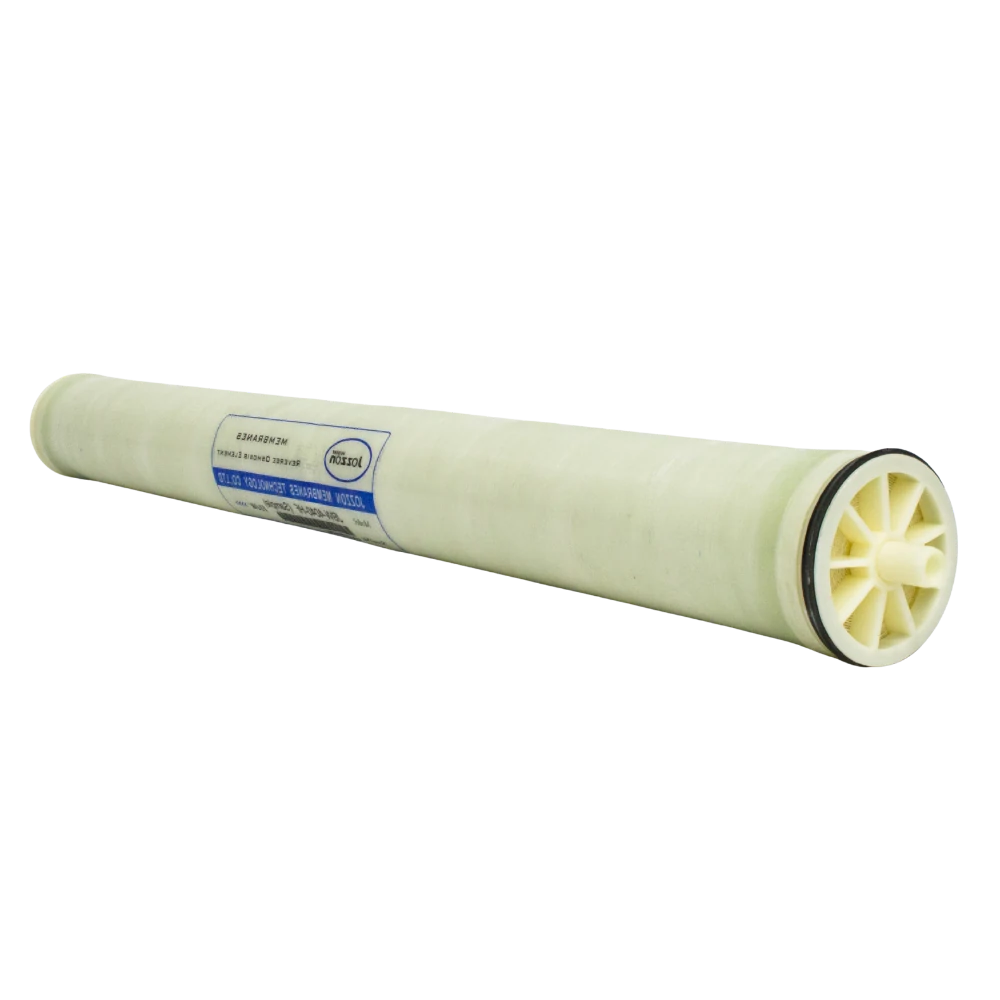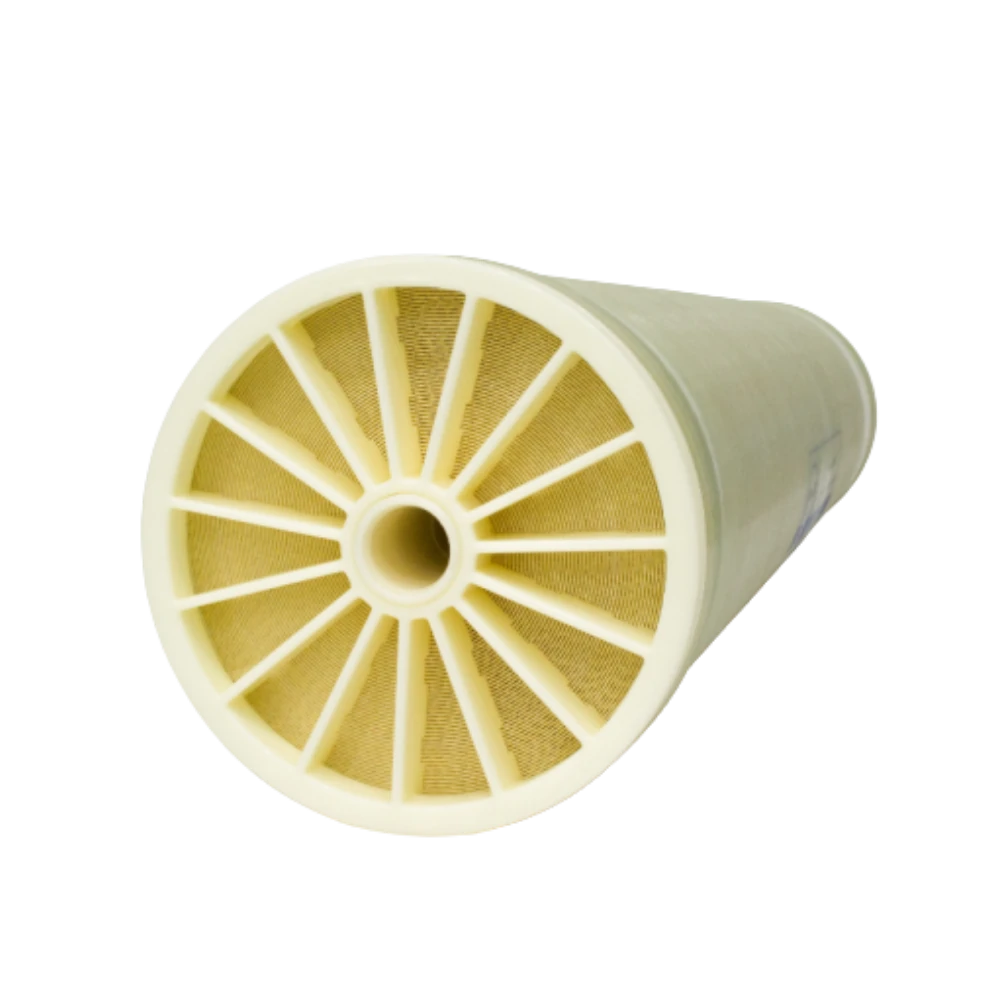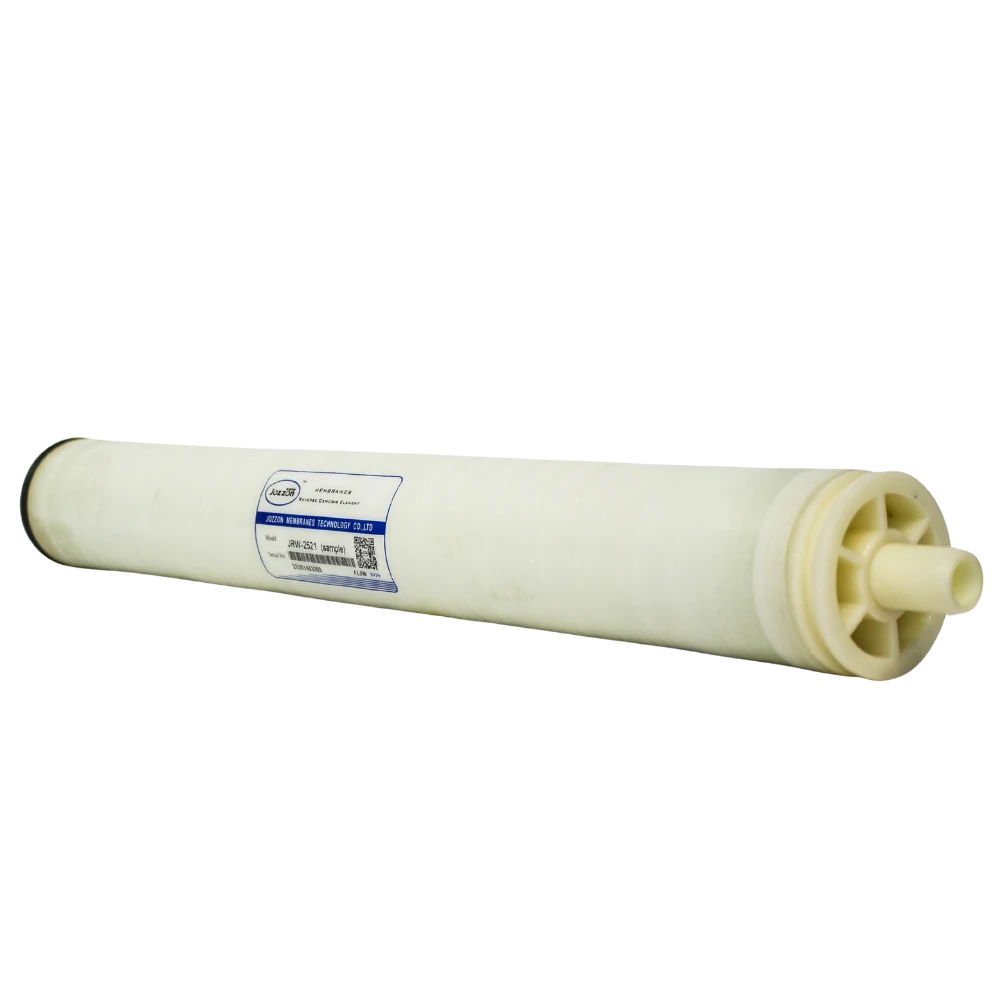


Low-energy Reverse Osmosis Membrane Elements
The JEC series does not increase flow rate by 'squeezing' the membrane to produce more water. Instead, it achieves low-pressure, high-quality, and stable water production without reducing desalination or increasing fouling, through hydrophilic modification and precise increase of membrane area, helping you save electricity, money, and maintenance.
Low Energy RO Membrane Designed for Stable Low-pressure Operation
The JEC Series low energy RO membrane does not artificially force higher permeate flow by compromising structural integrity. Instead, it operates efficiently at an ultra-low pressure of 116 psi (0.8 MPa) while maintaining a high 98%–99% salt rejection rate. This design philosophy enables water treatment facilities to reduce electricity consumption, lower OPEX, and simplify maintenance routine.
By achieving high water flux through dual innovations in “hydrophilic modification + maximized active area,” the JEC Series produces water output per unit comparable to standard high-pressure products but at a drastically reduced driving pressure. It serves as an ideal choice for low-pressure systems, energy-sensitive industrial facilities, and retrofit projects that require performance upgrades without replacing existing high-pressure pumps.
Why Choose JOZZON JEC Low Energy RO Membrane
1. Hydrophilic Membrane Modification
Advanced hydrophilic modification of the desalination layer improves membrane permeability, allowing the membrane to produce water effectively at a lower operating pressure.
2. High-quality Desalination Without Sacrifice
The JEC series maintains 98%-99% salt rejection, ensuring that lower operating pressure does not come at the expense of core desalination performance.
3. Low-pressure Operation at 116 psi
With a rated operating pressure of 116 psi (0.8 MPa), JEC elements reduce the pressure required for RO operation and help lower electricity consumption.
4. Optimized Membrane Area
The effective membrane area is precisely increased to improve total water production without relying solely on excessive permeate flux per unit membrane area.
5. Stable Long-term Water Production
The balanced combination of membrane hydrophilicity and effective membrane area supports stable water production while avoiding unnecessary increases in fouling risk.
6. Energy-saving System Upgrade
JEC elements are suitable for upgrading existing RO systems where reducing operating pressure and energy consumption is a priority, potentially without replacing the existing high-pressure pump.
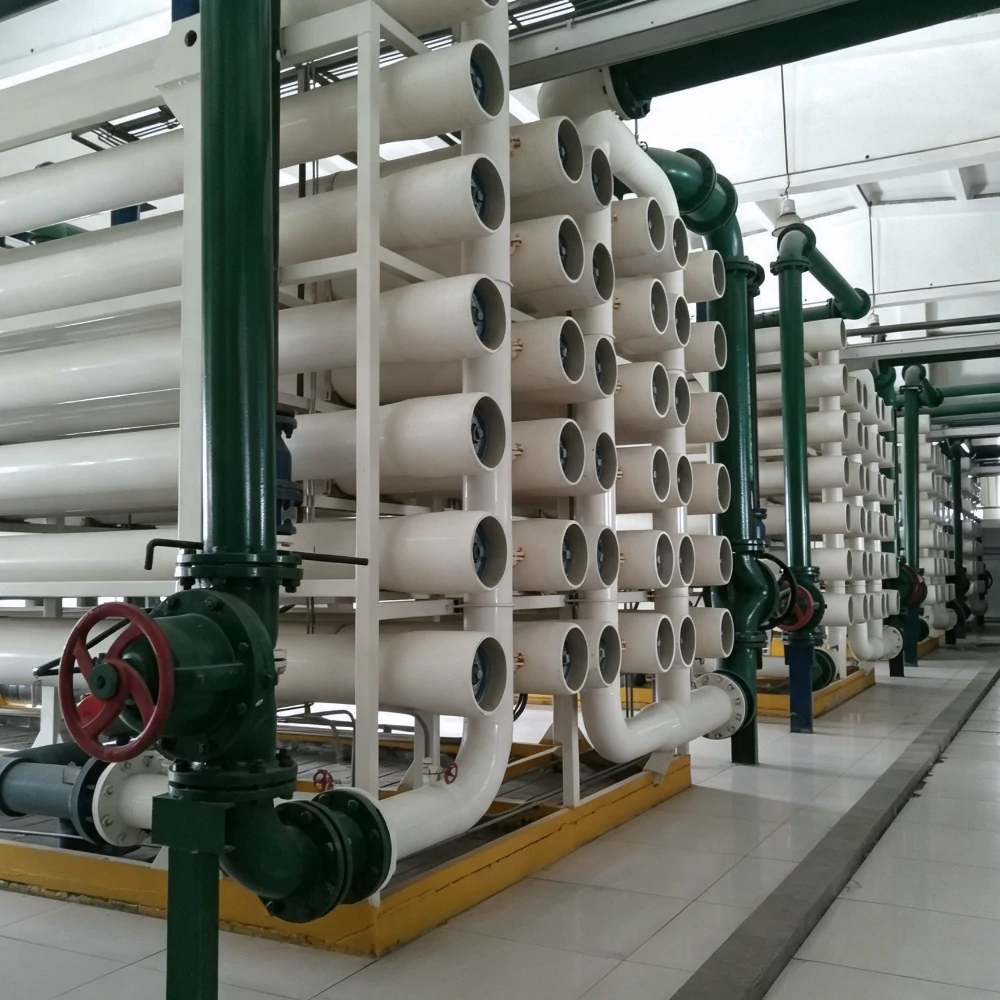
How JEC Low Energy RO Membranes Achieve Lower Energy Consumption
▼
▼
116 psi / 0.8 MPa
▼
JEC achieves the balance between permeability and membrane area rather than simply maximizing water production per unit membrane area.
Available Models
|
Component Model |
Effective Membrane Area ft 2 (m 2 ) |
Water Production Flow Rate GPD(m³ / d) |
Stable Desalination Rate (%) |
Minimum Desalination Rate (%) |
|---|---|---|---|---|
|
JEC-4040 |
100 (9.29) |
2500 (9.5) |
99.0 |
98.0 |
|
JEC-4021 |
48 (4.46) |
1000 (3.8) |
98.0 |
97.0 |
Note: The standard test conditions for membrane elements are 0.8 MPa, which is the same as the performance of ordinary low-pressure membrane elements at 1.03 MPa.
Extreme Usage Conditions
| Maximum Operating Pressure | 600psi (4.14 MPa) |
| Maximum Influent Flow Rate | 16 gpm (3.6 m³/h) |
| Maximum Inlet Water Temperature | 45℃ |
| Maximum Influent SDI15 | 5 |
| Influent Free Chlorine Concentration | < 0.1 ppm |
| Influent ph Range During Continuous Operation | 2~12 |
|
ph Range of Influent During Chemical Cleaning (Short-term 30-minute Period) |
1~13 |
| Maximum Pressure Drop of A Single Membrane Element | 15psi (0.1Mpa) |
Test Conditions
| Test Pressure | 116psi (0.8Mpa) |
| Test Solution Temperature | 25℃ |
| Test Solution Concentration (NaCl) | 1000ppm |
| Test Solution ph Value | 7.5 |
| Single Membrane Element Recovery Rate | 15% (4040), 8% (4021) |
Membrane Element Size
The units in the diagram are millimeters (inches).

C=19.1mm (0.75″), D=26.7mm (1.05″)

C=19.1mm (0.75″), D=26.7mm (1.05″)