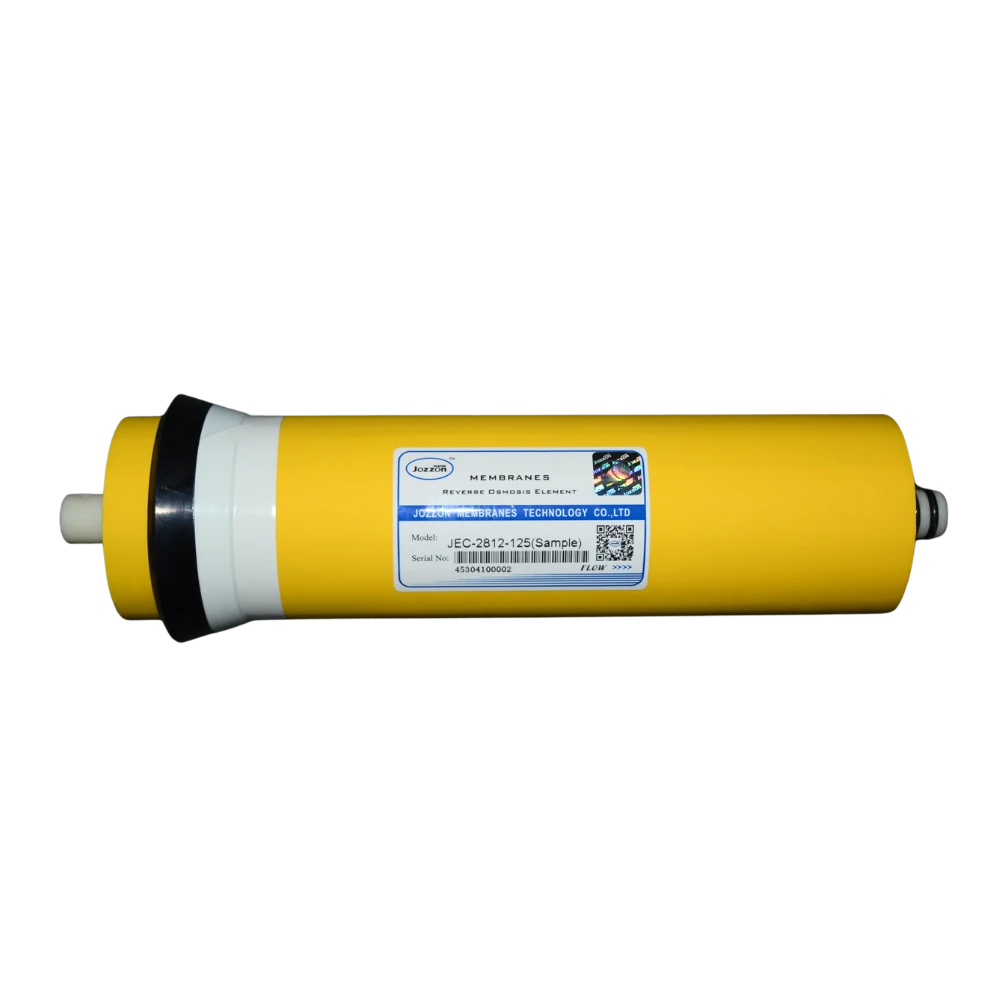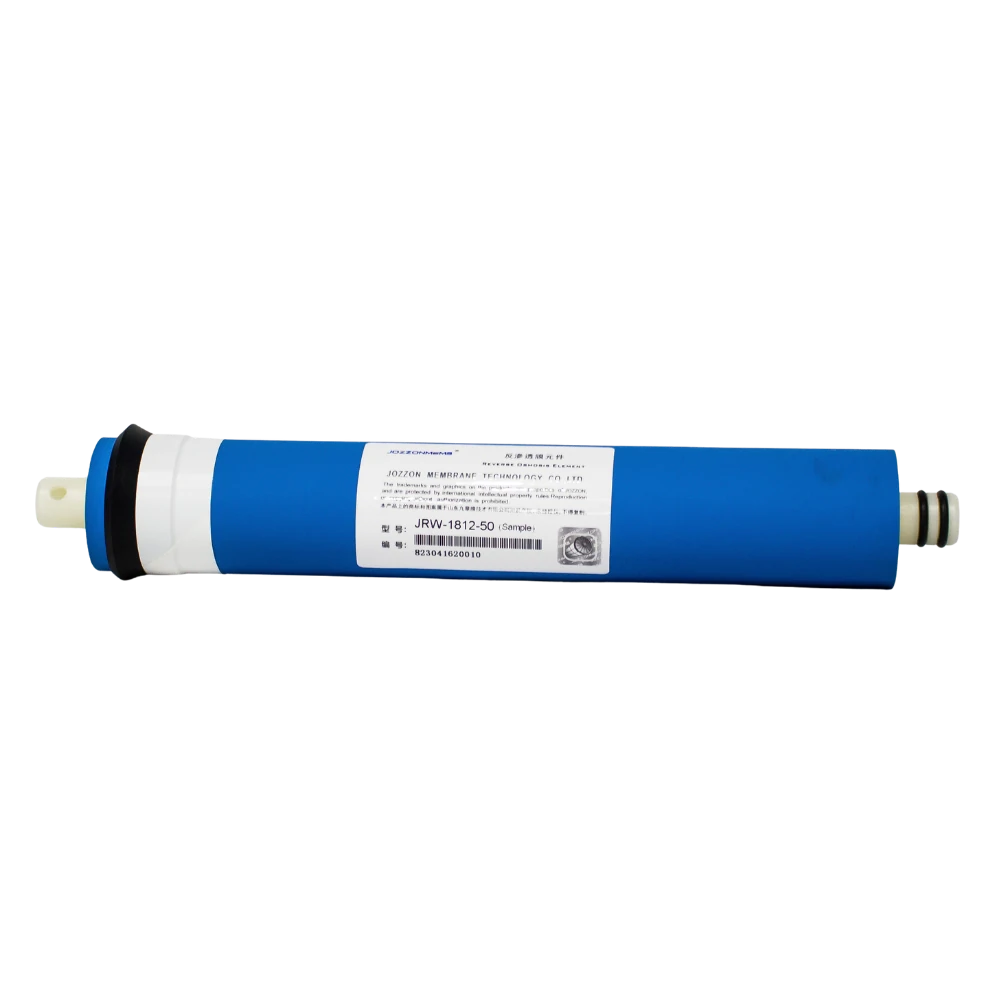
Salt rejection is one of the key performance indicators used to evaluate a reverse osmosis (RO) membrane. It describes the percentage of dissolved salts retained by the membrane rather than passing into the permeate. In general, a higher salt rejection means less dissolved salt enters the product water, resulting in lower permeate TDS and conductivity.
For water treatment engineers and system operators, understanding what is salt rejection is important for membrane selection, system design, performance monitoring, and troubleshooting. A decline in rejection can be associated with changes in operating conditions, membrane fouling or scaling, chemical damage, aging, or leakage around membrane elements.
This article explains the fundamentals of reverse osmosis salt rejection, how an RO membrane rejection rate is calculated, what affects rejection performance, and how to maintain stable salt rejection during operation.
Why Salt Rejection Matters in RO Systems
The primary function of an RO membrane is to separate water from dissolved salts and other contaminants. Salt rejection provides a direct indication of how effectively the membrane performs this separation.
When rejection is high, less salt enters the permeate, helping the system produce water with lower TDS and conductivity. This is particularly important in industrial process water, boiler feedwater, drinking water treatment, water reuse, and high-purity water systems, where permeate quality can directly affect downstream processes.
Salt rejection should not be evaluated on its own, however. Permeate flow, feed pressure, temperature, recovery, feed water chemistry, and normalized membrane performance should also be considered. A change in any of these factors can influence the measured salt rejection in reverse osmosis.

What Is Salt Rejection?
Salt rejection is the percentage of dissolved salts retained by an RO membrane. It compares the concentration of dissolved salts in the feed water with the concentration remaining in the permeate.
The basic principle is straightforward: the higher the salt rejection, the smaller the proportion of dissolved salts that passes through the membrane.
For example, if an RO membrane has a nominal salt rejection of 99%, approximately 1% of the measured salt concentration passes through under the specified test conditions. The actual rejection achieved in an operating system can vary because membrane performance depends on feed water quality and operating conditions.
Salt rejection is therefore a membrane performance parameter rather than a fixed property that will remain identical under every application.
How Does Salt Rejection Work in Reverse Osmosis?
Role of the RO Membrane
RO membranes use a dense, semi-permeable selective layer that preferentially allows water to pass while restricting most dissolved ions. Unlike conventional filtration, RO separation does not depend simply on mechanical particle-size screening. Water and dissolved species interact differently with the membrane through the solution-diffusion mechanism.
Feed water is pressurized to overcome its osmotic pressure and create the driving force required for water transport through the membrane. The membrane’s selective-layer chemistry and structure influence both water permeability and ion rejection.
This is the fundamental mechanism behind reverse osmosis salt rejection.
Feed Water, Permeate, and Concentrate
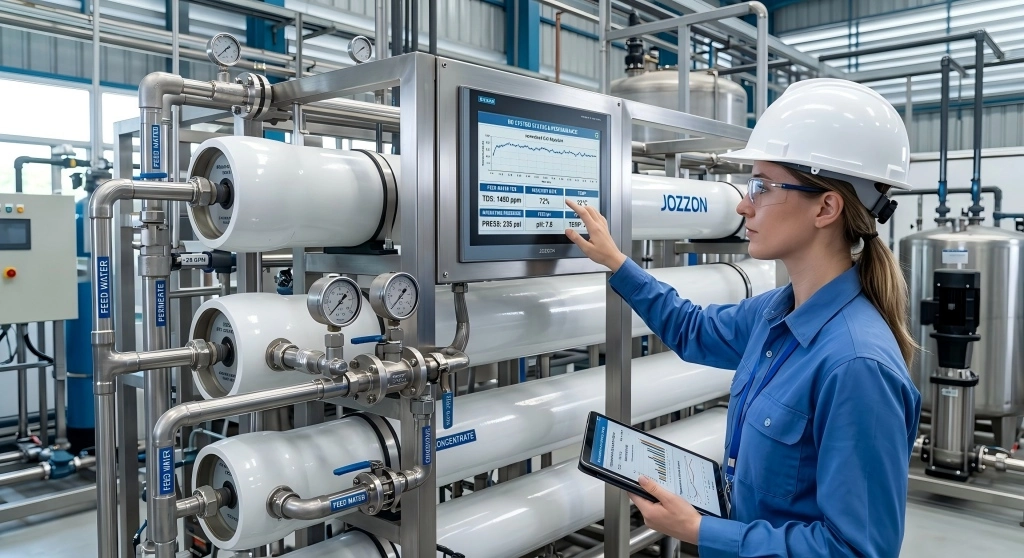
An RO system produces three streams or process states that are important for understanding rejection:
- Feed water: water entering the RO membrane.
- Permeate: water that passes through the membrane.
- Concentrate: water containing the majority of the rejected salts and contaminants.
As water moves through the membrane elements, salts are preferentially retained in the feed-concentrate channel. The permeate therefore contains substantially lower concentrations of dissolved salts.
Comparing feed and permeate concentrations provides the basis for determining membrane rejection.
Typical Industry Standards
Standard thin-film composite (TFC) RO membranes commonly achieve nominal salt rejection in the range of approximately 98.0% to 99.8% under specified laboratory test conditions. Actual field performance may differ because temperature, pressure, feed water chemistry, recovery, and system configuration influence membrane behavior.
Different membrane categories are designed for different requirements. Brackish water, seawater, low-pressure, and high-rejection RO membranes can have different permeability and rejection characteristics. Therefore, membrane specifications should always be compared under equivalent test conditions rather than based only on the highest advertised rejection percentage.
Salt Rejection Calculation
The standard salt rejection calculation is:
Salt Rejection (%) = (1−Cp/Cf) × 100%
Where:
- Cₚ = salt concentration in the permeate
- C𝒇 = salt concentration in the feed water
For example, if feed water contains 1,000 mg/L of dissolved salts and permeate contains 10 mg/L:
Salt Rejection = (1−10/1000) × 100 = 99%
The calculated salt rejection is therefore 99% under those conditions.
In plant operation, conductivity is often used as a convenient indicator of ionic concentration. However, conductivity is not equivalent to total dissolved solids or the concentration of every individual salt, so conductivity-based rejection should be interpreted appropriately.
What Is a Good RO Membrane Rejection Rate?
Typical RO Membrane Rejection Levels
A good RO membrane rejection rate depends on the membrane type, feed water, operating conditions, and application requirements. Modern TFC RO membranes can provide nominal salt rejection above 99% under appropriate test conditions, but the actual value measured in a system may vary.
When evaluating membrane performance, it is useful to distinguish between initial rejection and stabilized rejection. Newly installed elements may require an initial stabilization period before their performance reaches a representative operating condition.
The manufacturer’s technical specification should therefore be used as the reference for expected rejection, together with the associated feed water and operating conditions.
Standard RO vs. High-Rejection RO Membranes
Standard RO membranes are designed to balance salt rejection, permeate flow, operating pressure, and energy consumption. High-rejection membranes use membrane chemistry and structures designed to minimize ion passage and are particularly useful where lower permeate TDS or conductivity is required.
However, a higher nominal rejection is not automatically a better choice. A high-rejection membrane may require greater driving pressure, while a higher-permeability membrane may provide greater water production at lower pressure. The appropriate choice depends on the overall system requirements.
Factors That Affect Salt Rejection
Feed Water Temperature
As temperature increases, water viscosity decreases and water transport through the membrane generally increases. At the same time, salt diffusion through the polyamide layer can also increase, potentially resulting in greater salt passage and a lower measured rejection.
For meaningful performance comparisons, temperature should therefore be considered when analyzing changes in rejection.
Operating Pressure
Higher feed pressure generally increases the driving force for water transport. Under appropriate operating conditions, this can increase permeate production and improve observed salt rejection by producing a greater proportion of water relative to salt transport.
Pressure should remain within the membrane manufacturer’s specified operating range because excessive pressure can increase energy consumption and contribute to other operational risks.
Feedwater pH
Feedwater pH affects membrane surface chemistry and the behavior of different ionic species. Polyamide TFC membranes generally exhibit a negative surface charge under neutral to alkaline conditions, which can influence the rejection of negatively charged ions.
Operation outside the recommended pH range can affect membrane performance and may accelerate chemical degradation.
Feed Water TDS
Higher feedwater TDS increases osmotic pressure. If operating pressure remains unchanged, the resulting reduction in net driving pressure can decrease water flux while increasing permeate TDS, potentially reducing observed salt rejection.
Recovery Rate
As recovery increases, dissolved salts become more concentrated in the membrane feed channel. Higher concentration increases the osmotic pressure and concentration gradient across the membrane and can also increase scaling risk.
System recovery should therefore be selected according to feed water chemistry, membrane characteristics, and system design.
Membrane Fouling and Scaling
Colloidal matter, organic deposits, biological growth, and inorganic scale can alter conditions at the membrane surface and increase concentration polarization. Severe fouling or scaling can reduce water transport and may eventually affect salt rejection.
Membrane Age and Condition
RO membranes can experience gradual physical compaction and chemical wear during long-term operation. Under well-controlled conditions, aging may cause a gradual change in rejection, while exposure to unsuitable chemicals or operating conditions can cause much more rapid deterioration.
Monitoring long-term rejection trends helps operators distinguish normal aging from abnormal membrane damage.
Common Causes of a Drop in Salt Rejection
A sudden decrease in rejection should be investigated, particularly when it occurs together with increased permeate conductivity or TDS. Not every rejection problem originates from the membrane itself.
O-Ring and Interconnector Leaks
Damaged, improperly installed, or deteriorated O-rings, interconnectors, end caps, and other sealing components can allow feed or concentrate water to bypass the membrane. Such leakage can cause a sudden increase in permeate conductivity even when the membrane itself remains functional.
Chemical Oxidation
Conventional thin-film composite membranes are sensitive to oxidants such as free chlorine. Exposure above the membrane’s specified tolerance can damage the polyamide selective layer and cause an irreversible reduction in rejection.
Effective pretreatment and dechlorination are therefore essential for protecting membrane integrity.
Membrane Aging and Compaction
Long-term pressure exposure, repeated chemical cleaning, and unsuitable operating conditions can gradually alter membrane structure. If rejection continues to decline despite stable feed water and operating conditions, membrane condition and service history should be investigated.
How to Maintain Stable Salt Rejection
Select the Right RO Membrane
Membrane selection should consider feed water type, required permeate quality, operating pressure, recovery, temperature, and system capacity. A membrane designed for brackish water, for example, should not automatically be substituted for a seawater or high-purity membrane simply because the nominal rejection appears similar.
An experienced membrane manufacturer can help match membrane characteristics to the actual operating conditions.
Optimize Pretreatment
Pretreatment protects RO membranes from suspended solids, colloids, hardness, organic matter, microorganisms, and oxidants. Depending on feed water characteristics, treatment may include multimedia filtration, cartridge filtration, softening, antiscalant dosing, activated carbon, or ultrafiltration.
Good pretreatment reduces fouling and scaling risks and helps maintain stable rejection and permeate production.
Maintain Proper Operating Conditions
Pressure, recovery, temperature, pH, and feed water quality should remain within the membrane manufacturer’s recommended operating range. When monitoring rejection, operators should also record these conditions so that changes in membrane performance can be distinguished from changes in the feed or operating environment.
Clean the Membrane When Necessary
Membrane cleaning should be based on established performance criteria rather than performed unnecessarily. A significant decline in normalized permeate flow, an increase in differential pressure, or a sustained reduction in rejection may indicate that cleaning is required.
Cleaning procedures should be selected according to the type of fouling and the membrane manufacturer’s chemical compatibility requirements.
Salt Rejection and RO Membrane Selection
When selecting an RO membrane, salt rejection should be considered as part of a broader performance profile rather than as an isolated specification. A suitable membrane should provide the required balance of:
- Salt rejection and permeate flow
- Operating pressure and recovery
- Fouling resistance and chemical stability
- Feed water compatibility and expected service life
Selecting a membrane solely because it has the highest nominal rejection may result in unnecessary pressure requirements or reduced productivity. Conversely, choosing a high-flow membrane without sufficient rejection may fail to meet downstream water quality requirements. The best approach is to match the membrane’s performance characteristics with the actual feed water and treatment objectives. For industrial systems in particular, membrane selection should be based on water analysis, required capacity, operating conditions, and lifecycle considerations.
Conclusion
Salt rejection is a fundamental measure of RO membrane separation performance. It indicates how effectively a membrane retains dissolved salts and is commonly calculated by comparing feed and permeate concentrations.
Understanding reverse osmosis salt rejection and the factors affecting it helps engineers evaluate membrane performance, identify abnormal changes, and select appropriate RO elements. Although a high RO membrane rejection rate is important for applications requiring low-TDS or low-conductivity water, rejection should always be evaluated together with permeate flow, temperature, pressure, recovery, feed water chemistry, and membrane condition.
Stable rejection ultimately depends on more than membrane chemistry alone. Correct membrane selection, effective pretreatment, appropriate operating conditions, proper monitoring, and timely cleaning all contribute to reliable long-term performance.
For industrial and commercial water treatment systems, JOZZON provides RO membrane solutions designed for different feed water conditions and treatment requirements, helping users achieve the appropriate balance of salt rejection, water production, operating efficiency, and membrane service life.