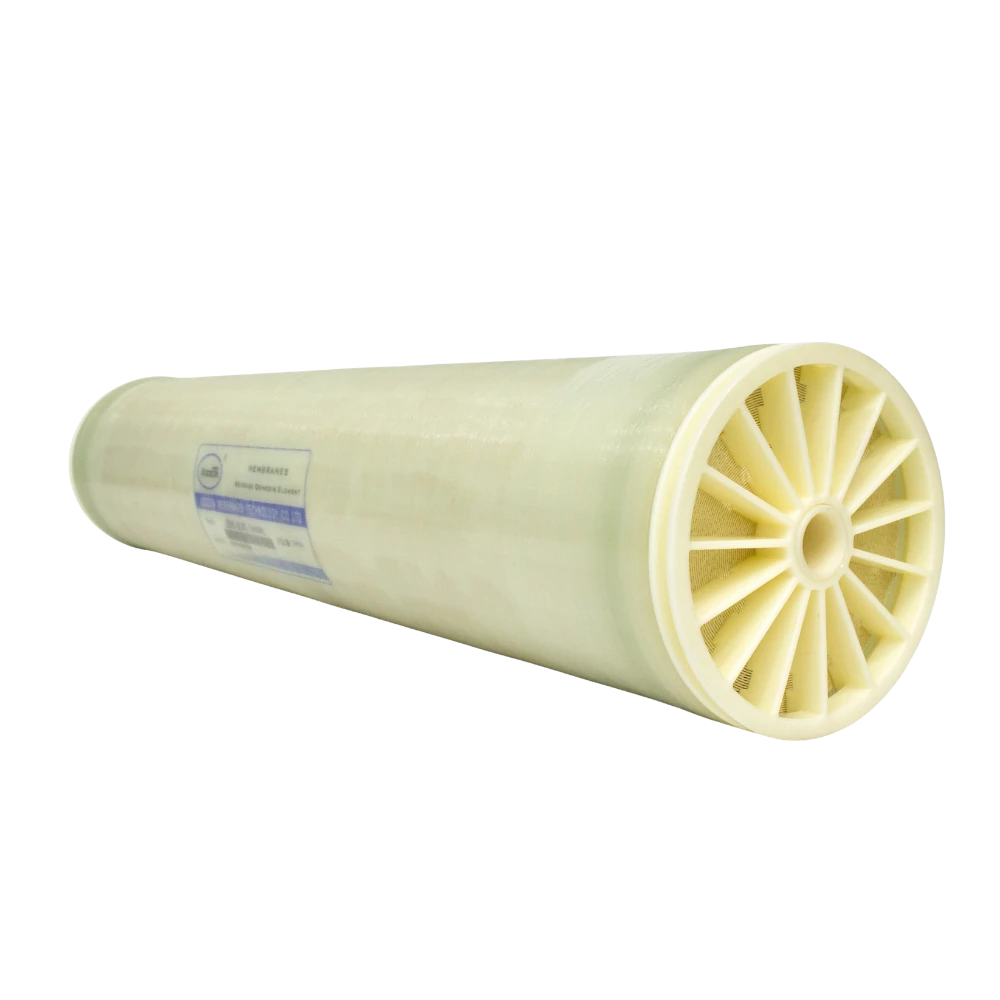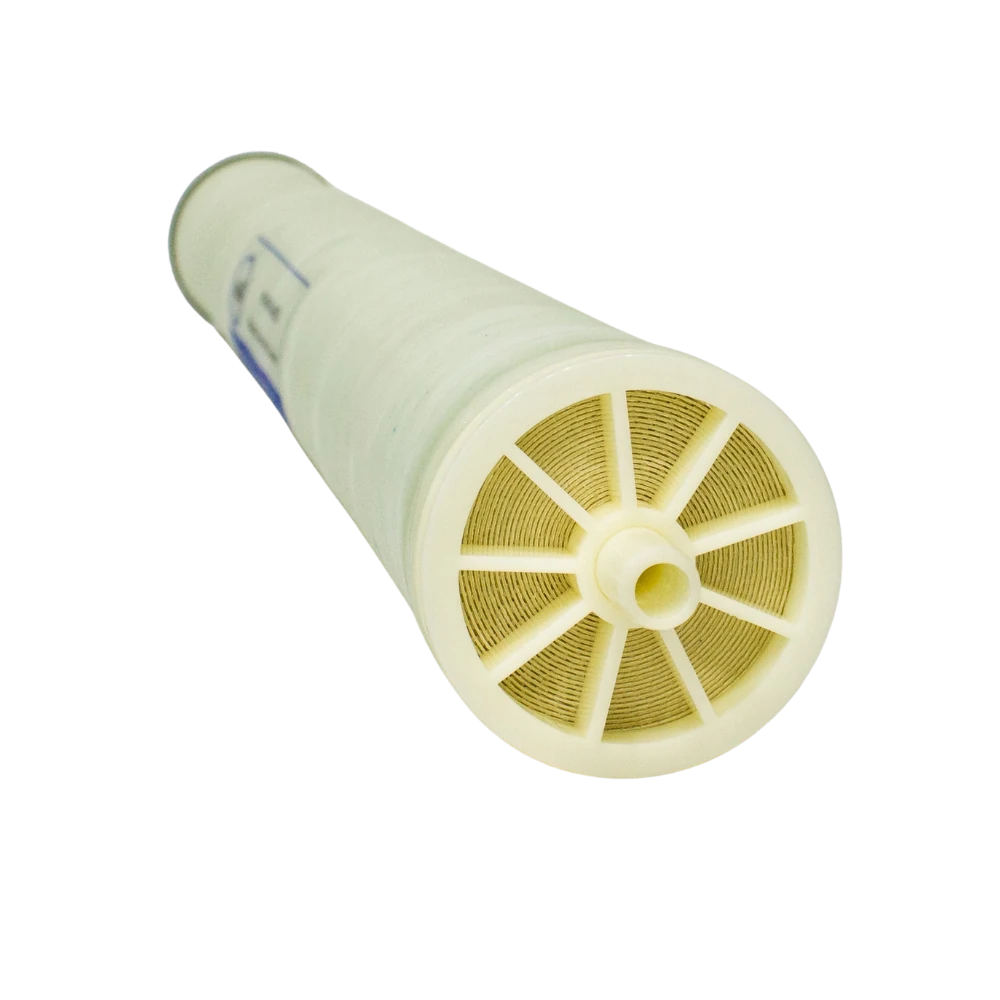
Reverse osmosis (RO) membrane fouling is one of the most common causes of declining performance in water treatment systems. When unwanted materials accumulate on the membrane surface or within the feed channel, they increase resistance to water transport, reduce permeate flow, and may require higher operating pressure to maintain production. If the underlying cause is not identified and controlled, fouling can increase energy consumption, cleaning frequency, and membrane replacement costs.
Not all deposits develop in the same way or require the same treatment. Biological fouling, organic fouling, inorganic scaling, and colloidal fouling have different causes, locations, and effects on RO system performance. Understanding these differences helps operators diagnose performance loss more accurately and take corrective action before fouling becomes difficult to reverse.
What Is RO Membrane Fouling?
RO membrane fouling occurs when suspended solids, organic compounds, microorganisms, or other contaminants accumulate on the membrane surface or restrict the feed spacer channels. The resulting deposit creates additional resistance to water transport and can make it harder for the system to maintain its designed permeate production.
Biological, organic, and colloidal deposits are commonly classified as forms of membrane fouling, while inorganic scaling is generally treated separately because it develops when dissolved minerals precipitate after their concentration exceeds their solubility limits.
How Does Membrane Fouling Affect RO Performance?
The most important effects of membrane fouling include:
- Lower permeate flow: Deposits increase hydraulic resistance and reduce normalized permeate production.
- Higher differential pressure: Fouling can restrict feed channels and increase the pressure difference between the feed and concentrate sides.
- Declining salt rejection: Some deposits can alter membrane surface conditions and contribute to increased salt passage.
- Higher energy consumption: Additional pressure may be required to compensate for reduced water production.
Fouling can also accelerate further deposition. As the feed channel becomes more restricted, concentration polarization can increase the local concentration of salts and other contaminants near the membrane surface.
Four Common Types of RO Membrane Fouling
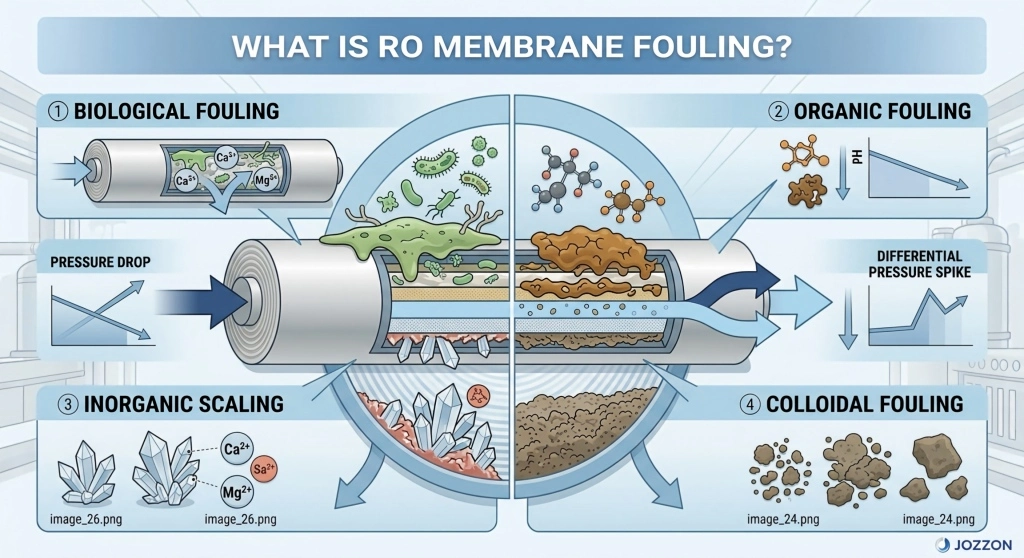
The four major deposit types encountered in RO systems are:
|
Type |
Typical Sources |
Main Impact |
|
Biological fouling |
Bacteria and other microorganisms |
Biofilm formation and flow restriction |
|
Organic fouling |
Natural organic matter, oils, polymers |
Reduced permeability |
|
Inorganic scaling |
Calcium, sulfate, silica and other minerals |
Mineral precipitation |
|
Colloidal fouling |
Silt, clay, metal oxides and fine particles |
Feed-channel blockage and pressure increase |
These mechanisms can also occur simultaneously. For example, organic matter and colloidal particles can contribute to biological growth, while scaling can develop alongside other forms of fouling when recovery is too high or pretreatment is inadequate.
Biological Fouling
Biological fouling, or biofouling, occurs when microorganisms attach to membrane surfaces, multiply, and form a protective biofilm. Once established, this biological layer can become increasingly resistant to physical removal and chemical treatment.
What Causes Biological Fouling?
Bacteria, fungi, microalgae, and protozoa can enter an RO system through the feed water. Warm temperatures, biodegradable nutrients, and favorable hydraulic conditions can support microbial attachment and growth. Bacteria may produce extracellular polymeric substances (EPS), which bind cells together and form a resilient biofilm.
Signs of Biological Fouling
Biofouling often develops first in the lead elements of an RO train because these elements receive the highest nutrient load. Typical indicators include a rapid increase in Stage 1 differential pressure and a slippery or gelatinous film within the feed spacers. Unusual foul or earthy odors may also be observed during maintenance inspections.
How to Control Biological Fouling
Biological fouling should be addressed through both upstream control and appropriate cleaning. Pretreatment should reduce biodegradable nutrients and suspended contaminants, while disinfection or suitable biocide programs can help control microbial growth.
Where chlorine is used upstream, effective dechlorination is essential because conventional polyamide RO membranes are sensitive to free chlorine. Sodium metabisulfite (SBS) may be used to remove residual oxidants, but dosing must be properly controlled to avoid creating conditions that encourage downstream biological regrowth.
Organic Fouling
Organic fouling occurs when dissolved or colloidal carbon-based compounds adsorb onto or accumulate on the membrane surface. The resulting organic layer can reduce membrane permeability and contribute to declining permeate production.
Common Sources of Organic Fouling
Natural organic matter is a common source, particularly in surface water containing humic acids, fulvic acids, and tannins. Industrial systems may also introduce oils, grease, surfactants, residual polymers, antiscalant carryover, or other organic chemicals into the RO feed.
How Organic Fouling Affects RO Membranes
Organic compounds can interact with the membrane surface and form a dense deposit that restricts water transport. As the deposit develops, membrane flux decreases and the system may require additional pressure to maintain production. Organic deposits can also interact with other foulants, creating mixed deposits that are more difficult to remove.
Organic Fouling Prevention and Treatment
The best approach is to control the organic load before it reaches the RO membrane. Depending on the feed-water characteristics, pretreatment may include granular activated carbon (GAC), organo-clay media, or ultrafiltration.
When significant organic fouling has already developed, an appropriately selected high-pH cleaning process can help loosen and remove organic deposits. Cleaning chemistry should always be compatible with the membrane manufacturer’s operating limits and recommendations.
Inorganic Scaling and RO Membrane Scaling
Membrane scaling differs from conventional fouling because it results primarily from chemical precipitation rather than the accumulation of biological, organic, or colloidal material.
What Is RO Membrane Scaling?
During RO operation, water passes through the membrane while most dissolved salts remain in the concentrate stream. As recovery increases, rejected salts become progressively concentrated. When the concentration of a mineral exceeds its solubility limit, crystals can precipitate and deposit on the membrane surface.
This process is known as RO membrane scaling and can restrict feed channels, reduce permeate flow, and increase pressure requirements.
Common Scaling Compounds
Common mineral scalants include:
Calcium carbonate (CaCO₃): Highly prevalent under elevated pH, high alkalinity, and high temperature conditions.
Calcium sulfate (CaSO₄): Precipitates at high system recovery rates combined with high feed calcium and sulfate concentrations.
Barium sulfate / Strontium sulfate (BaSO₄ / SrSO₄): Possesses extremely low solubility limits; even low ppm concentrations form scale.
Silica and silicates: Extremely difficult to remove, precipitating rapidly in cold water or high-silica concentrate streams.
The conditions that promote precipitation vary by compound. High recovery, elevated mineral concentrations, unsuitable pH, and high silica concentration can all increase scaling risk.
What Causes Membrane Scaling?
A major cause is operating the RO system at a recovery level that exceeds the limits imposed by feed-water chemistry. Inadequate antiscalant dosing, changes in feed-water mineral content, and inappropriate pH control can further increase scaling risk.
Signs of RO Membrane Scaling
Scaling often develops more strongly toward the tail elements, where rejected salts are most concentrated. Typical indicators include declining system permeate flow, increased product-water TDS, and visible hard or crystalline deposits during membrane inspection.
This location can help distinguish scaling from biological, organic, and colloidal fouling, which more commonly affect the lead elements.
How to Prevent RO Membrane Scaling
Preventing scaling requires accurate feed-water analysis and control of the RO operating conditions. Depending on water chemistry, measures may include:
- Proper antiscalant dosing
- Feed-water pH adjustment
- Recovery optimization
- Regular monitoring of mineral concentrations
- RO projection and system-design review
Recovery should remain within the limits established for the specific feed-water chemistry and membrane system.
Colloidal Fouling
Colloidal fouling occurs when very fine, non-dissolved particles accumulate on the membrane surface or within the feed channel. Because these particles are small and can remain suspended in water, inadequate pretreatment can allow them to reach the RO system.
What Causes Colloidal Fouling?
Common sources include silt, clay, colloidal silica, iron hydroxides, and aluminum residues from upstream coagulation. High turbidity and elevated Silt Density Index (SDI) can indicate increased colloidal fouling potential.
How Colloidal Fouling Develops
As feed water moves across the membrane surface, fine particles can accumulate when hydraulic shear is insufficient to keep them suspended. Over time, the particles may form a compacted cake layer that increases resistance to water transport and reduces permeate flux.
How to Control Colloidal Fouling
Effective pretreatment is the primary control strategy. Operators should monitor SDI and turbidity, optimize coagulation and filtration, and consider UF or MF pretreatment where conventional filtration cannot adequately remove sub-micron particles.
The objective is to prevent colloidal material from reaching the RO membrane rather than relying on frequent membrane cleaning to compensate for inadequate upstream treatment.
How to Identify the Type of RO Membrane Fouling
Correct diagnosis is the foundation of effective RO membrane fouling treatment. Cleaning without identifying the likely foulant can waste chemicals, increase downtime, and potentially make some deposits more difficult to remove.
Start With RO Performance Data
RO operating data should be evaluated after accounting for changes in temperature, feed pressure, and salinity. Important indicators include normalized permeate flow, differential pressure, salt rejection, and operating pressure.
A Stage 1 differential-pressure increase may indicate biological, organic, or colloidal fouling, while final-stage flow loss combined with higher product-water TDS can indicate inorganic scaling. A pressure increase across the entire system may suggest multiple fouling mechanisms or serious pretreatment problems.
Examine Feed-Water Quality
Recent feed-water analysis can help narrow down the likely cause. High total organic carbon (TOC) may indicate organic fouling risk, while high turbidity or SDI points toward colloidal contamination. High silica or an elevated Langelier Saturation Index (LSI) can indicate increased scaling potential.
Compare Fouling Symptoms
|
Fouling Type |
Common Location |
Typical Appearance |
Key Driver |
|
Biological |
Stage 1 |
Slimy or soft biofilm |
Nutrients and microbial growth |
|
Organic |
Stage 1 |
Dark, tacky organic layer |
Natural organics, oil, polymers |
|
Inorganic scale |
Final stage |
Hard, gritty crystals |
High recovery and mineral precipitation |
|
Colloidal |
Stage 1–2 |
Compacted cake layer |
Fine particles and high SDI |
These patterns are useful diagnostic clues rather than absolute rules. Mixed fouling is possible, so operators should compare physical observations with performance data and feed-water chemistry.
RO Membrane Fouling Treatment
Identify the Fouling Mechanism First
Cleaning should begin with an assessment of the likely foulant. Operators should review performance trends, feed-water chemistry, pretreatment conditions, operating history, and previous cleaning results. When the cause remains unclear, membrane autopsy or deposit analysis can provide additional evidence.
A practical trigger for evaluating CIP is a significant change in normalized permeate flow or differential pressure. The uploaded document identifies a 10–15% change in these indicators as a point at which cleaning may become necessary, although the appropriate trigger should be based on the membrane manufacturer’s guidance and the individual system’s operating baseline.
Select an Appropriate Cleaning Approach
Cleaning chemistry should match the fouling mechanism:
- Low-pH cleaning is commonly used for inorganic mineral scale and metal hydroxide deposits.
- High-pH cleaning is commonly used for organic matter, biological deposits, and some colloidal deposits.
- Cleaning temperature can affect chemical reaction rates, but solutions should remain within the membrane manufacturer’s approved temperature limits.
The cleaning sequence should be selected according to the actual foulant and membrane compatibility. Using an inappropriate chemical can reduce cleaning effectiveness and may contribute to membrane damage.
If membrane performance does not recover adequately after cleaning, operators should investigate pretreatment, operating conditions, and possible irreversible membrane damage rather than simply increasing cleaning frequency.
How to Prevent Membrane Fouling
Optimize Feed-Water Pretreatment
Pretreatment is the first line of defense against membrane fouling. Depending on the feed-water source, it should control suspended solids, colloids, organic matter, hardness, microorganisms, and oxidants.
Pretreatment should be designed around actual water quality and its variability rather than relying on a standard configuration for every application.
Control RO Operating Conditions
Pressure, recovery, flux, temperature, and feed-water chemistry all influence fouling and scaling. Excessively high flux can increase concentration polarization and contribute to higher fouling and scaling potential.
Maintaining the RO system within its intended operating range helps reduce unnecessary membrane stress and cleaning requirements.
Monitor Membrane Performance
Operators should establish a reliable baseline and regularly monitor normalized permeate flow, salt rejection, differential pressure, and operating pressure. Trends are generally more useful than isolated readings because they reveal gradual changes in membrane condition.
Clean Before Fouling Becomes Severe
Early cleaning can help control reversible fouling before deposits become more difficult to remove. However, cleaning should be based on documented performance deterioration and a reasonable understanding of the likely foulant.
The goal is not to clean as frequently as possible, but to maintain stable membrane performance while minimizing chemical exposure, downtime, and unnecessary maintenance.
Managing RO Membrane Fouling
Effective RO membrane fouling management requires more than periodic cleaning. Operators should combine feed-water analysis, pretreatment control, appropriate operating conditions, performance monitoring, and timely cleaning to prevent small performance changes from developing into major operational problems.
The distinction between fouling and scaling is particularly important. Biological, organic, and colloidal fouling involve the accumulation of biological material, organic compounds, or fine particles, while membrane scaling results primarily from the precipitation of dissolved minerals. Because the underlying mechanisms differ, diagnosis should precede treatment.
For systems with persistent fouling challenges, selecting membrane elements with appropriate fouling resistance can provide an additional layer of protection alongside proper pretreatment and operating control. JOZZON develops industrial RO membrane solutions for demanding water-treatment applications where fouling resistance, stable flux, and long-term performance are important.
Conclusion
RO membrane fouling can result from biological growth, organic matter, colloidal particles, or inorganic mineral deposits, and each mechanism can affect system performance in a different way. Recognizing the difference between conventional fouling and RO membrane scaling is essential for selecting an appropriate corrective strategy.
For RO system operators and water-treatment professionals, the practical approach is straightforward: monitor performance, identify the likely foulant, examine feed-water quality, select the appropriate treatment, and correct the underlying cause. Effective pretreatment and continuous monitoring can help maintain stable membrane performance and reduce unnecessary cleaning, energy consumption, and premature membrane replacement.