Clean, predictable water is essential for modern industrial, municipal, and commercial operations. Among membrane-based separation technologies, reverse osmosis (RO) is widely used when high-quality water and high rejection of dissolved contaminants are required.
But what is a reverse osmosis membrane, and what makes it different from conventional filtration? An RO membrane is a semipermeable barrier that uses pressure to separate water from dissolved salts and other contaminants. Understanding how it works, what it removes, and where it fits among other membrane technologies provides a useful foundation for understanding modern water treatment.
What Is a Reverse Osmosis Membrane?
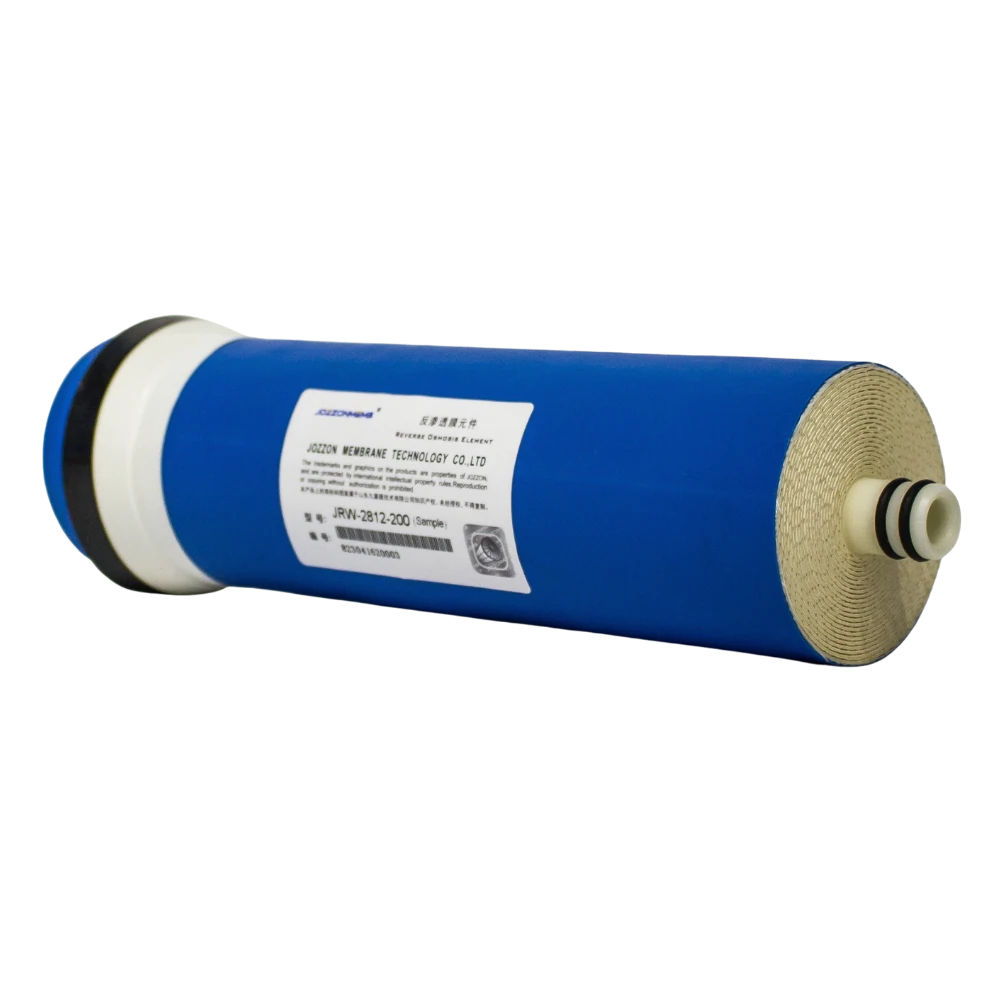
A reverse osmosis membrane is a semipermeable membrane designed to separate water from dissolved substances under applied pressure. Unlike conventional filtration, which primarily targets suspended particles, reverse osmosis membrane filtration can achieve high rejection of dissolved salts and many other low-molecular-weight contaminants.
What Is It?
An RO membrane acts as a selective barrier in a pressure-driven separation process. Feed water is pressurized against the membrane, allowing water to preferentially pass through the selective layer while a high proportion of dissolved salts and other retained substances remains in the concentrate stream.
Modern composite RO membranes can achieve salt rejection above 98% under appropriate operating conditions, although actual performance depends on membrane characteristics, feed-water chemistry, pressure, temperature, and system design.
What Does It Separate?
RO membranes are primarily used to separate water from:
- Dissolved salts and ions
- Many low-molecular-weight organic compounds
- Other dissolved constituents that are difficult to remove through conventional filtration
The rejection of individual contaminants varies according to their chemical properties, membrane characteristics, and operating conditions.
Why Is It Different From Conventional Filtration?
Conventional filtration generally removes contaminants based on particle size. Microfiltration (MF) and ultrafiltration (UF), for example, are commonly used to remove suspended solids, colloids, and larger microorganisms.
RO uses a much denser selective layer. Rather than simply retaining suspended particles, RO membrane filtration is designed to separate water from dissolved constituents.
This makes reverse osmosis particularly useful when a treatment process requires substantial reduction of dissolved salts and consistently low concentrations of dissolved contaminants.
How Does a Reverse Osmosis Membrane Work?
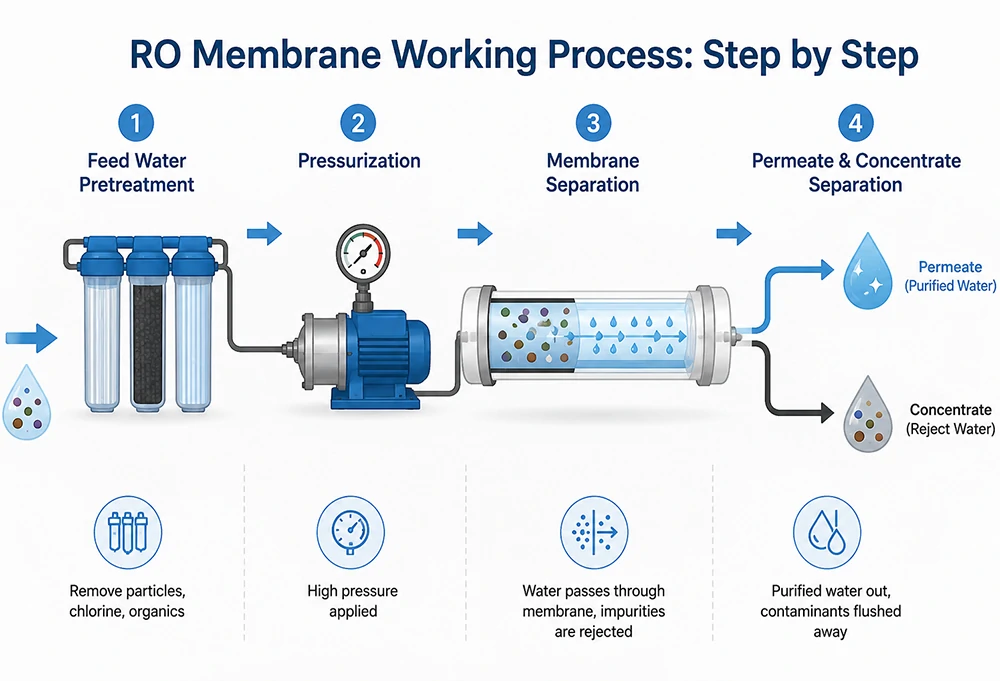
Reverse osmosis uses applied pressure to drive water through a semipermeable membrane against the natural osmotic pressure of the feed solution.
In a typical RO system, pressurized feed water flows across the membrane surface. Water preferentially passes through the membrane’s selective layer and becomes the permeate, while most rejected salts and other retained substances remain in the concentrate stream.
The basic process can be summarized as:
Feed Water → Applied Pressure → RO Membrane → Permeate + Concentrate
The membrane therefore does more than act as a conventional physical screen. Its selective layer controls the transport of water and dissolved substances, enabling a much tighter separation than MF and UF and, for many applications, higher dissolved-salt rejection than NF.
For a more detailed explanation of the separation mechanism, see How Does a Reverse Osmosis Membrane Work?
RO vs. UF vs. NF vs. MF: Where Does RO Fit?
When comparing RO vs UF vs NF vs MF, it is important to consider both the type of contaminants being removed and the required product-water quality.
|
Technology |
Typical Separation Focus |
Relative Separation Level |
Common Applications |
|
MF |
Suspended solids, larger particles, and some microorganisms |
Lower |
Clarification and particle removal |
|
UF |
Colloids, macromolecules, proteins, and microorganisms |
Higher |
Water purification and pretreatment |
|
NF |
Multivalent ions and many small organic compounds |
Higher |
Softening and selective contaminant removal |
|
RO |
Dissolved salts and many dissolved contaminants |
Highest |
Desalination and high-quality water production |
MF and UF are often used as pretreatment or clarification technologies, while NF provides selective removal of certain ions and organic compounds. RO provides a much tighter separation and is therefore selected when high rejection of dissolved constituents is required.
The appropriate technology depends on feed-water quality, treatment objectives, required product-water quality, operating conditions, and overall system design.
What Does an RO Membrane Remove?
So, what does an RO membrane remove? RO membranes are primarily designed to reduce dissolved salts and other contaminants that are difficult to remove through conventional filtration.
Dissolved Salts and Ions
RO membranes provide high rejection of many dissolved salts and ions, including sodium, chloride, calcium, magnesium, sulfate, and nitrate.
By reducing these dissolved constituents, RO can significantly lower total dissolved solids (TDS) and permeate conductivity. This capability is central to applications such as desalination, process-water treatment, and high-purity water production.
Many Dissolved Organic Compounds
RO membranes can also reject many dissolved organic compounds, including certain pesticides, herbicides, and other organic contaminants.
However, rejection is not identical for every compound. Molecular size, charge, polarity, membrane chemistry, and operating conditions can all affect the removal of individual organic substances.
Microorganisms and Particulates
The dense selective layer of an RO membrane provides a highly effective barrier against microorganisms and particulate contaminants.
In practical water treatment systems, however, RO should not be considered a substitute for appropriate pretreatment. Suspended solids, colloids, microorganisms, and other foulants can accumulate on the membrane surface and reduce system performance.
Proper pretreatment is therefore important for maintaining stable operation and extending membrane service life.
Why Is Reverse Osmosis Used in Water Treatment?
Why is reverse osmosis used in water treatment? The main reasons are its high rejection capability, consistent product-water quality, broad application range, and scalable system configuration.
High Contaminant Rejection
RO can provide high rejection of dissolved salts and many other contaminants. This makes it suitable for applications where product-water quality is a critical requirement.
Consistent Water Quality
When properly designed and operated, an RO system can produce stable and predictable permeate quality. Appropriate pretreatment and operating conditions are essential for maintaining this performance.
Broad Application Range
Reverse osmosis water treatment is used across a wide range of applications, including:
- Municipal water treatment
- Water purification
- Medical and pharmaceutical water
- Boiler feedwater
- Electronic ultrapure water
- Industrial process water
- Material concentration and separation
The appropriate membrane type and system configuration depend on the characteristics of the feed water and the required product-water quality.
Scalable Membrane Systems
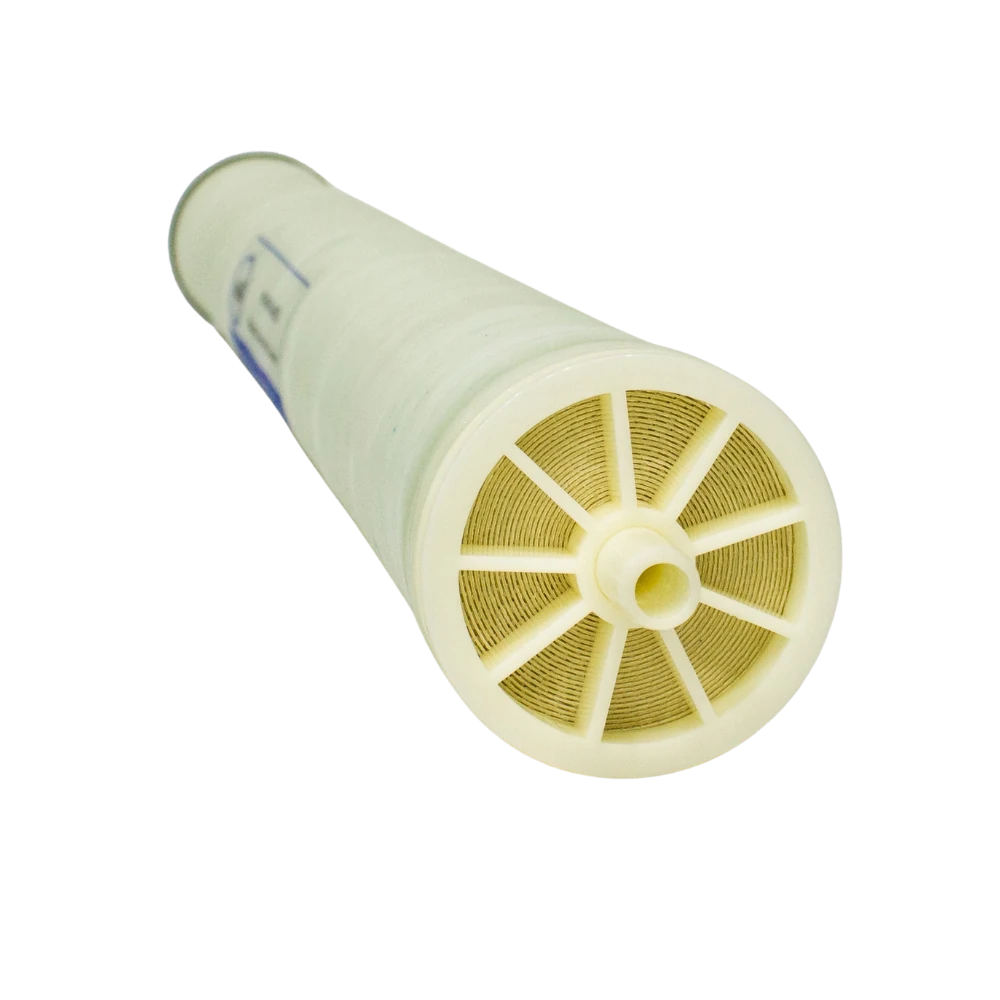
RO membrane elements can be installed in modular pressure-vessel configurations, allowing systems to accommodate different flow rates and production requirements. This scalability makes RO suitable for applications ranging from commercial water purification to large industrial water-treatment facilities.
How JOZZON Develops RO Membrane Elements
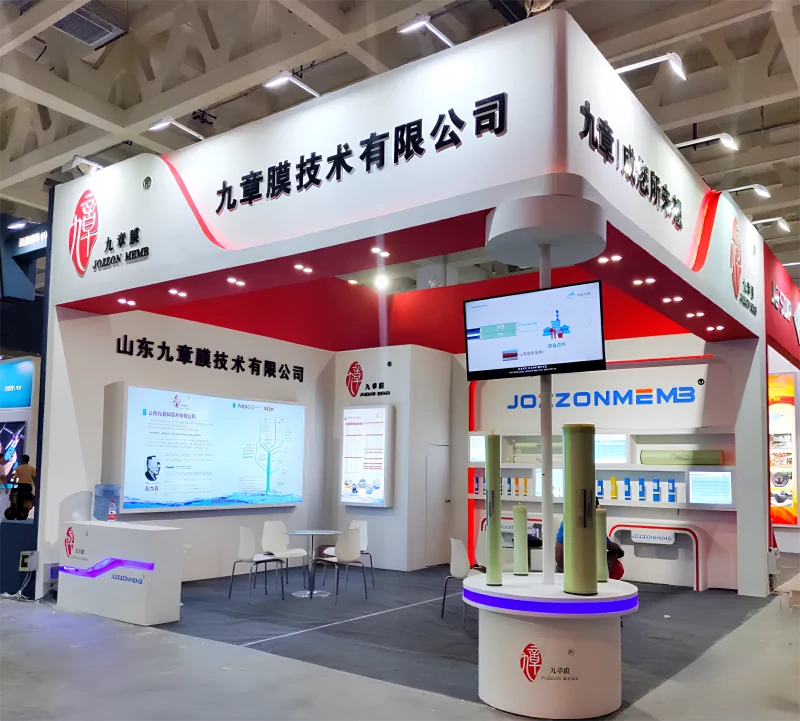
JOZZON Membrane Technology Co., Ltd. originated from the National Space Science Center of the Chinese Academy of Sciences and specializes in membrane element manufacturing and liquid separation solutions. The company’s capabilities include RO membrane elements, nanofiltration membrane elements, and spiral-wound ultrafiltration elements.
Dry Membrane Technology
JOZZON has large-scale production capabilities for dry membrane elements. Compared with traditional wet elements, dry membrane elements can simplify storage and transportation while reducing the need for liquid preservatives.
JOZZON dry elements feature a thicker desalination layer and may require a short stabilization period after commissioning. During this period, salt rejection gradually increases while water flux adjusts before the membrane reaches stable operating performance.
RO Membrane Element Manufacturing
JOZZON uses fully automated production facilities to manufacture RO membrane elements, nanofiltration elements, and spiral-wound ultrafiltration elements for different operating conditions.
R&D and Testing
More than 60% of JOZZON’s R&D team holds master’s degrees or higher. The company is supported by three professional research platforms focused on design development, process control, and testing.
These capabilities support ongoing development of membrane materials, manufacturing processes, and membrane element performance for different water-treatment requirements.
Understanding the Role of RO Membranes
A reverse osmosis membrane is more than a conventional filter. It is a selective separation medium designed to reduce dissolved salts and other contaminants under pressure, making it an important component of modern water treatment.
Understanding what an RO membrane does, what it removes, and how it differs from MF, UF, and NF provides a foundation for more advanced topics such as membrane selection, flux, salt rejection, fouling control, and system design.
For any water-treatment application, membrane selection should ultimately consider feed-water quality, required product-water quality, operating conditions, and treatment objectives.