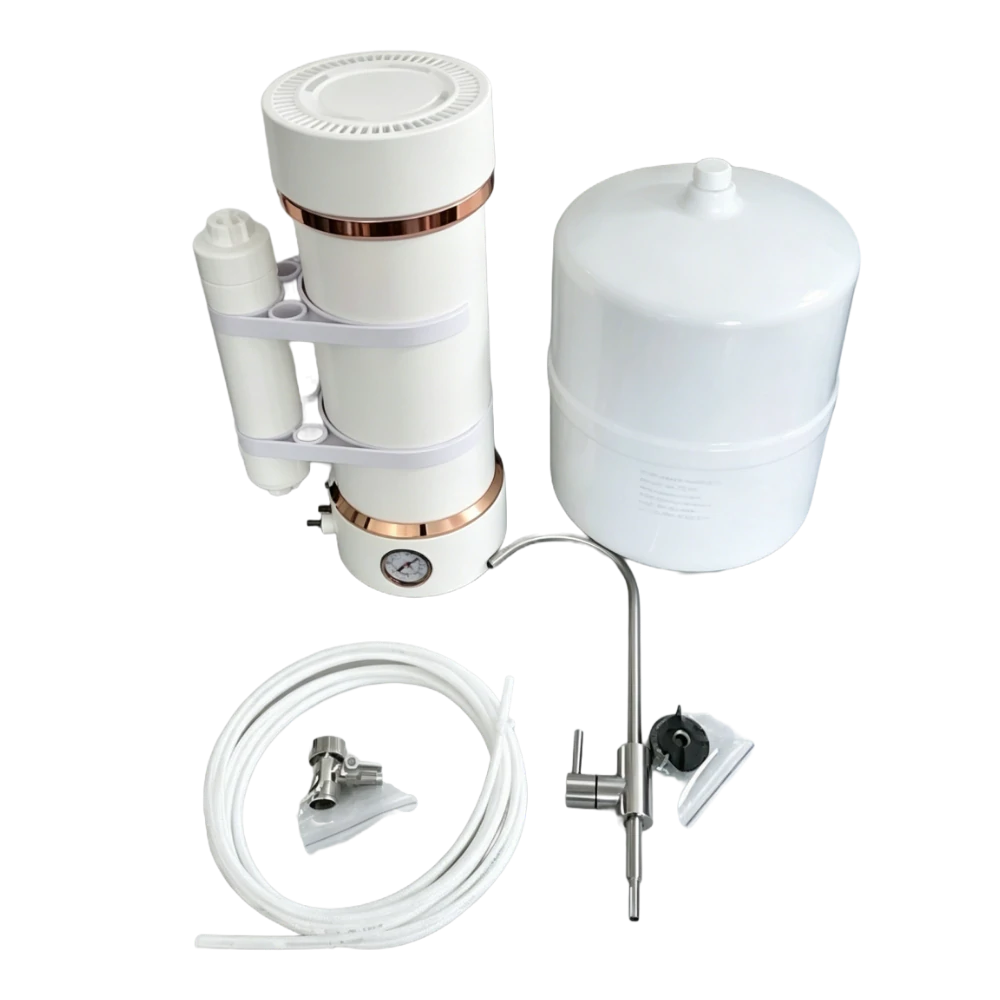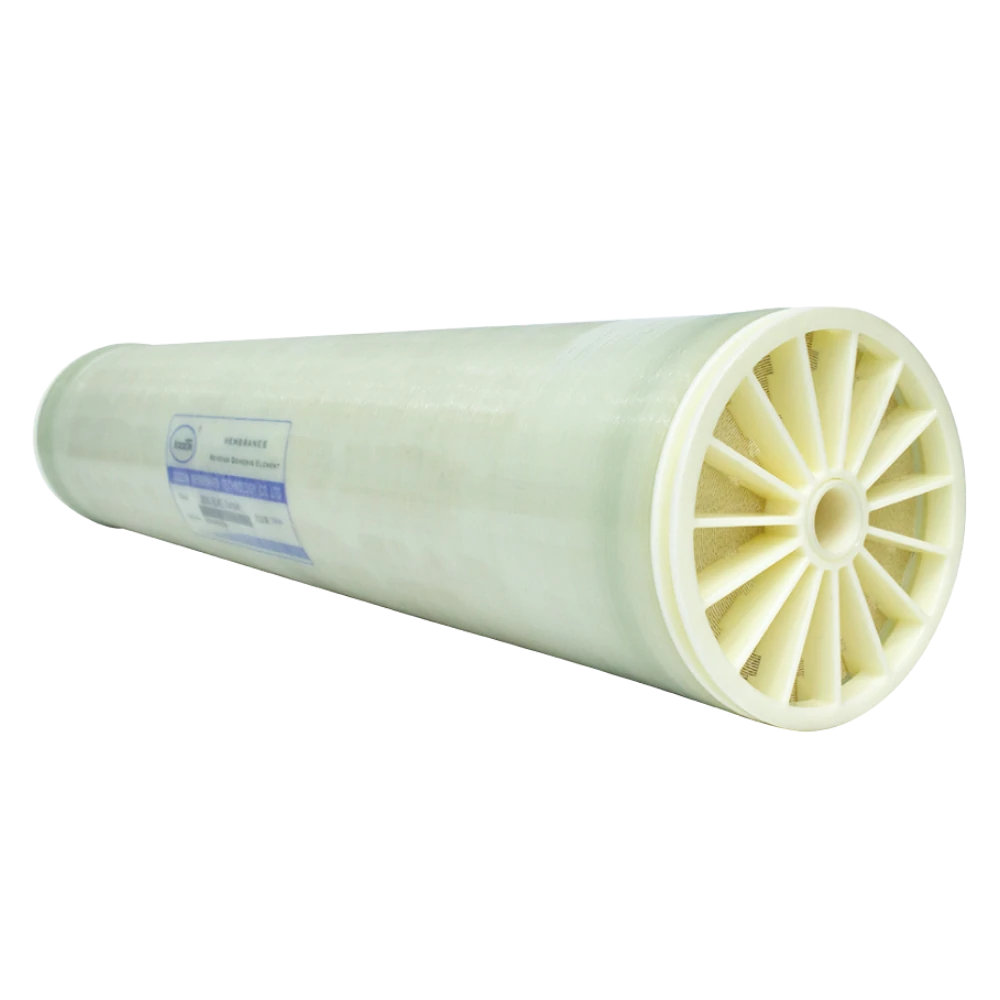
Reverse osmosis (RO) systems are widely used in industrial, municipal, and commercial water treatment. For system operators, the RO membrane lifespan directly affects permeate quality, operating costs, maintenance requirements, and overall system reliability.
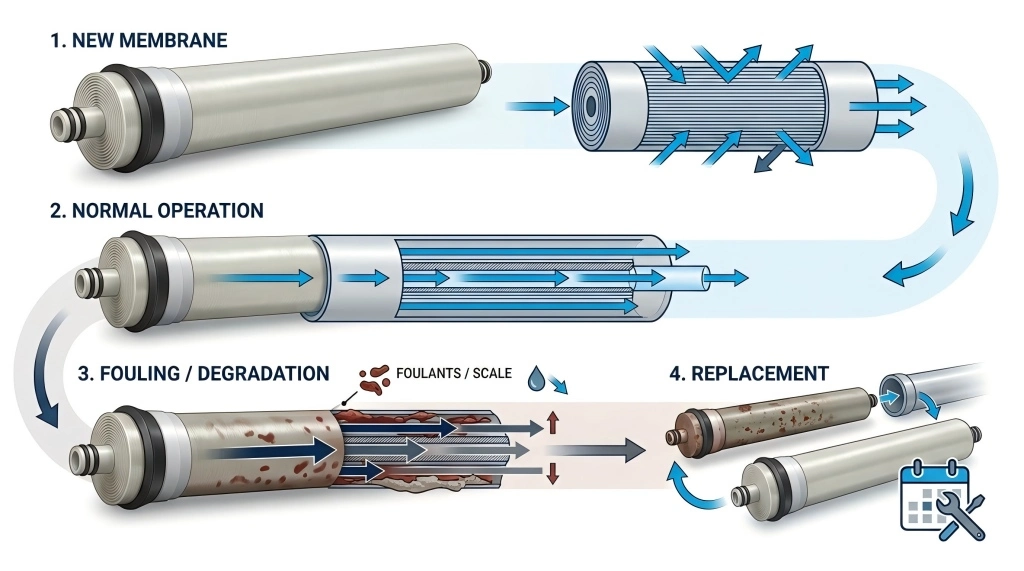
So, how long does an RO membrane last? There is no universal service-life limit. Under standard operating conditions with effective pretreatment and proper maintenance, a high-quality industrial RO membrane can typically provide 3–5 years of service, while membranes in well-controlled, low-TDS applications may exceed 5 years. More demanding applications, such as seawater desalination or zero liquid discharge (ZLD), may have a shorter typical RO membrane life, often around 1.5–3 years.
However, calendar age alone should not determine replacement. Feed water quality, pretreatment, operating conditions, fouling, scaling, chemical exposure, and cleaning practices all influence RO membrane lifespan. Monitoring membrane performance provides a more reliable basis for deciding when cleaning or membrane replacement is necessary.
How Long Does an RO Membrane Last?
Typical RO Membrane Lifespan
Under standard operating conditions with proper pretreatment, a high-quality industrial RO membrane lifespan typically ranges from 3 to 5 years. In well-controlled applications with low total dissolved solids (TDS) and rigorous maintenance, premium industrial elements can exceed 5–7 years.
More aggressive applications can shorten membrane life. High-salinity processes such as seawater desalination and ZLD systems expose membranes to greater osmotic pressure, fouling, scaling, and chemical stress, making a shorter service interval more likely.
These figures are general expectations rather than guarantees. A membrane that has operated for several years may still perform effectively, while a poorly protected membrane may require replacement much sooner.
What Determines RO Membrane Life?
The main factors affecting RO membrane life include:
- Feed water quality and variability
- Pretreatment effectiveness
- Operating pressure and recovery
- Temperature and pH
- Membrane flux
- Fouling and scaling
- Chemical exposure
- Cleaning frequency and procedure
- Mechanical stress and long-term compaction
Membrane flux is also important. Excessively high flux can increase concentration polarization, fouling, and scaling, potentially accelerating membrane degradation. Maintaining a sustainable operating flux is generally more beneficial than maximizing initial permeate production.
What Causes RO Membrane Degradation?
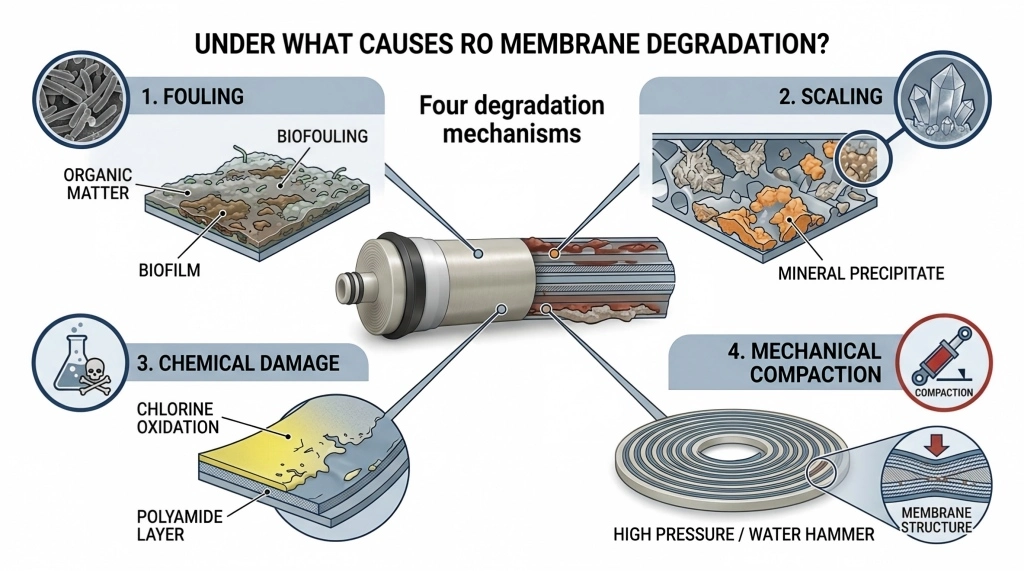
RO membrane degradation results from cumulative physical, chemical, and operational stress. The main causes include fouling, scaling, chemical damage, and mechanical stress.
Membrane Fouling
Fouling occurs when contaminants accumulate on the membrane surface or within the feed channels. Colloids, organic matter, and biological contaminants can increase resistance to water transport and reduce permeate flow.
If fouling becomes severe, operators may increase operating pressure to maintain production, which can increase energy consumption and mechanical stress. Effective pretreatment and timely cleaning help control reversible fouling before it causes more serious performance loss.
Scaling
Scaling occurs when dissolved minerals become concentrated and precipitate on the membrane surface. Calcium carbonate and sulfate scales are common concerns.
High recovery increases the concentration of rejected salts and can raise both osmotic pressure and scaling potential. Excessive recovery can also increase concentration polarization at the membrane surface, accelerating scale formation and reducing permeate flux.
Chemical Damage
Chemical exposure can cause irreversible membrane degradation. Conventional thin-film composite RO membranes are particularly sensitive to oxidants such as free chlorine.
If oxidant exposure exceeds the membrane manufacturer’s specified tolerance, it can damage the selective polyamide layer and permanently reduce salt rejection. Appropriate pretreatment and dechlorination are therefore essential for protecting the membrane.
Mechanical Stress and Compaction
RO membranes operate under pressure for extended periods. Excessive or prolonged pressure can contribute to physical compaction of the membrane structure and gradual performance deterioration.
Repeated chemical cleaning and unstable operating conditions may also contribute to membrane aging. A gradual decline in performance can occur over time, but a sudden change should trigger troubleshooting rather than being attributed automatically to membrane age.
Key Factors Affecting RO Membrane Lifespan
Feed Water Quality
Feed water quality is one of the most important factors affecting RO membrane life. High concentrations of suspended solids, colloids, organic matter, hardness, biological contaminants, and dissolved salts can increase fouling and scaling risks.
Different sources present different challenges. Well-pretreated municipal or well water may be relatively manageable, while industrial wastewater and highly variable surface water can place greater stress on the membrane.
Pretreatment Performance
Effective pretreatment protects the RO membrane by reducing the contaminants that reach the membrane surface. Depending on feed water characteristics, treatment may include multimedia filtration, cartridge filtration, softening, activated carbon, antiscalant dosing, or ultrafiltration.
Good pretreatment helps control fouling and scaling while supporting stable permeate flow and salt rejection.
Operating Pressure and Recovery
Operating pressure should provide sufficient driving force without unnecessarily increasing mechanical stress and energy consumption.
Recovery also requires careful control. Higher recovery concentrates dissolved salts in the concentrate stream, increasing osmotic pressure and scaling potential. Operating beyond the designed recovery range can further increase concentration polarization and membrane stress.
Temperature and pH
Temperature affects permeate production and salt rejection. As temperature increases, water viscosity decreases, allowing water to pass through the membrane more readily. Temperature changes can therefore affect measured membrane performance.
pH also influences membrane performance and chemical compatibility. Operating and cleaning conditions should remain within the membrane manufacturer’s recommended ranges to avoid unnecessary material degradation.
Cleaning and Maintenance
Proper cleaning helps maintain membrane performance, but unnecessary or inappropriate cleaning can also shorten membrane life.
Cleaning should be based on performance indicators such as declining normalized permeate flow, increasing differential pressure, or reduced rejection. The cleaning chemical, concentration, temperature, and duration should be selected according to the type of fouling and membrane compatibility requirements.
How to Know When to Replace an RO Membrane
Knowing when to replace an RO membrane requires evaluating several performance indicators rather than relying on operating hours or membrane age alone.
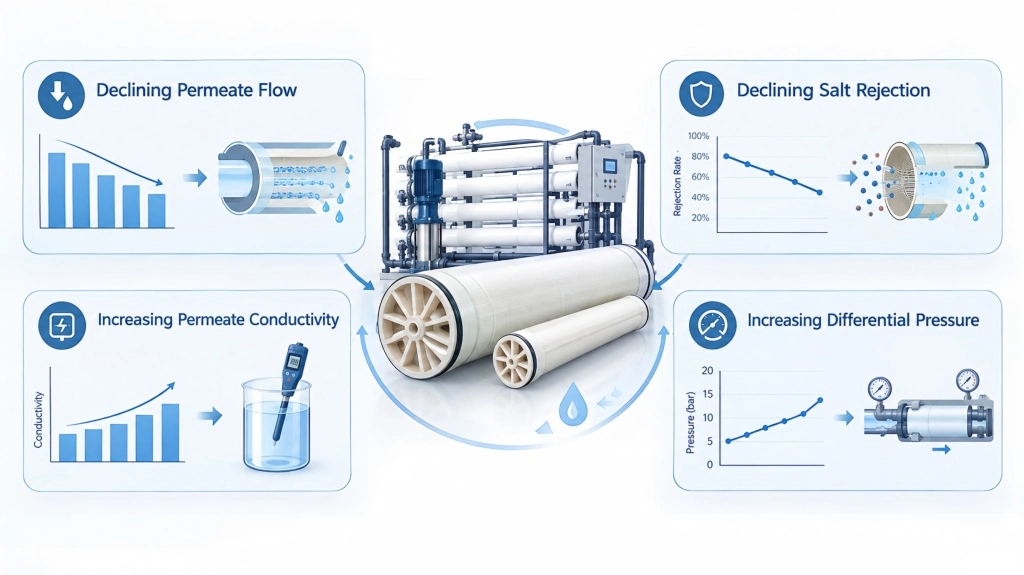
- Persistent Decline in Salt Rejection: A continuous drop in salt rejection or a spike in permeate conductivity indicates active layer failure or seal degradation. (Rule out damaged O-rings or interconnectors first).
- 10–15% Drop in Normalized Permeate Flow: A persistent decrease in flow under normalized temperature and pressure conditions points to severe fouling or irreversible compaction.
- 15%+ Increase in Differential Pressure (Delta P): A rising pressure drop across the vessel array indicates blocked feed spacer channels, risking mechanical telescoping.
- Irreversible Chemical Exposure: Immediate replacement is required if an accidental chlorine or oxidant breach compromises the polyamide layer.
- Unrestorable CIP Performance: If normalized flow, salt rejection, or differential pressure fail to recover following a proper acid/alkaline CIP, the membrane has reached its end of life.
How to Extend RO Membrane Lifespan
Improve Feed Water Pretreatment
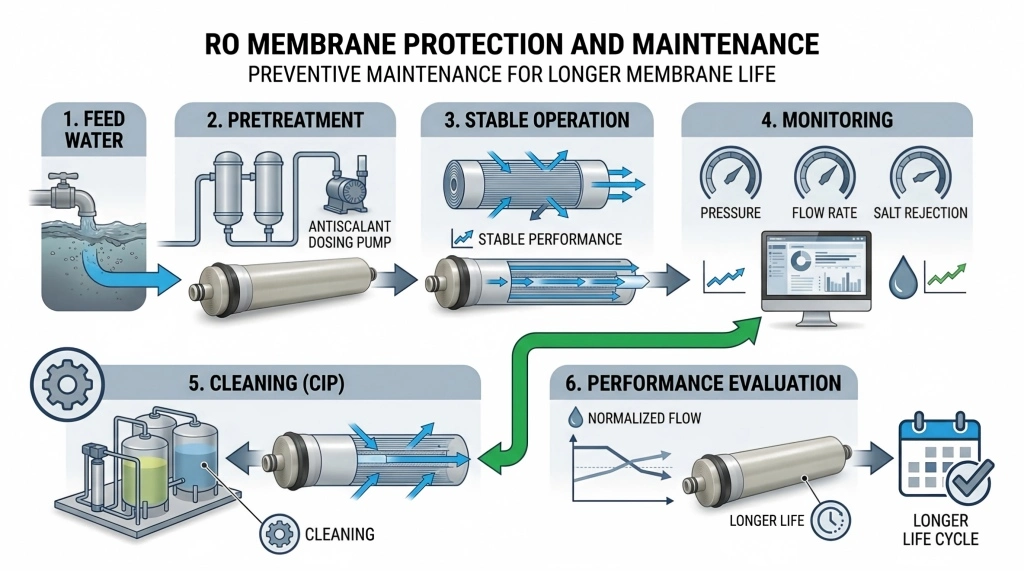
One of the most effective ways to extend RO membrane lifespan is to prevent contaminants from reaching the membrane.
Pretreatment should be designed according to the actual feed water. Controlling suspended solids, hardness, organic matter, biological activity, and oxidants reduces the contaminant load and helps protect membrane performance.
Operate Within the Recommended Range
Pressure, recovery, temperature, pH, and feed water conditions should remain within the membrane manufacturer’s recommended operating limits.
Increasing pressure or recovery simply to compensate for declining production can accelerate fouling, scaling, compaction, and energy consumption if the underlying problem is not addressed.
Maintain Stable Operating Parameters
Stable operation makes it easier to protect the membrane and identify performance changes.
Avoid unnecessary fluctuations in pressure, recovery, temperature, and feed water chemistry. Consistent operating conditions also make performance trends easier to compare over time.
Monitor Membrane Performance
A systematic monitoring program should track:
- Feed and concentrate pressure
- Permeate flow
- Feed and permeate conductivity
- Recovery
- Temperature
- Differential pressure
- Normalized permeate flow
- Salt rejection
Tracking these parameters over time allows operators to identify degradation early and make condition-based cleaning or replacement decisions.
Clean the Membrane Properly
Cleaning should target the actual fouling mechanism. Acidic and alkaline cleaning strategies may be appropriate for different deposits, but cleaning chemicals, concentrations, temperatures, and exposure times must remain compatible with the membrane manufacturer’s recommendations.
The goal is not to clean as frequently as possible. It is to control fouling effectively while minimizing chemical exposure, downtime, and unnecessary maintenance costs.
RO Membrane Replacement: What to Consider
When membrane performance can no longer be restored through appropriate cleaning and system optimization, replacement becomes necessary.
Match the Replacement Membrane to the Existing System
Replacement elements should match the physical and hydraulic requirements of the existing system.
Check key parameters such as:
- Element size, such as 4040 or 8040
- Active membrane area
- Permeate flow
- Salt rejection
- Feed water type
- Operating pressure
- Recovery
- Temperature range
Check Compatibility With Existing Equipment
The replacement membrane must be compatible with the existing pressure vessels, connections, pumps, piping, feed spacers, and other system components.
Physical dimensions alone are not enough. Hydraulic performance and operating requirements should also match the system design.
Compare Performance, Not Just Price
The lowest purchase price does not necessarily provide the lowest total cost.
When comparing replacement membranes, consider active membrane area, salt rejection, chemical resistance, permeability, cleaning requirements, energy consumption, expected service life, and overall total cost of ownership.
A membrane that delivers stable performance over a longer period may provide better lifecycle value than a lower-priced element that requires frequent cleaning or early replacement.
RO Membrane Lifespan: A Practical Maintenance Checklist
Use the following checklist to support a proactive approach to membrane maintenance:
|
Maintenance Item |
What to Monitor |
|
Feed water quality |
TDS, turbidity, hardness, organics, biological activity |
|
Pretreatment |
Filtration, SDI, softening, oxidant control |
|
Operating pressure |
Feed and concentrate pressure |
|
Recovery |
System recovery and concentrate concentration |
|
Permeate flow |
Normalized permeate flow trends |
|
Salt rejection |
Feed and permeate conductivity/TDS |
|
Differential pressure |
Pressure change across the membrane array |
|
Cleaning |
Cleaning frequency and performance recovery |
|
Chemical exposure |
Oxidant and cleaning chemical compatibility |
|
Membrane condition |
Performance after cleaning |
The key is to monitor performance trends rather than isolated readings. Changes in temperature, feed water composition, pressure, or recovery can affect individual readings. Persistent deterioration under comparable conditions provides stronger evidence of membrane degradation.
Conclusion
The RO membrane lifespan depends on more than the number of years a membrane has been in service. Feed water quality, pretreatment, operating pressure, recovery, temperature, pH, flux, fouling, scaling, chemical exposure, and maintenance all influence RO membrane life.
For most industrial applications, a properly selected and well-maintained RO membrane can provide several years of service, but actual replacement timing should be based on membrane performance. Declining normalized permeate flow, reduced salt rejection, increasing permeate conductivity, rising differential pressure, and failure to recover performance after appropriate cleaning are important indicators that replacement may be required.
A proactive approach—combining effective pretreatment, stable operation, regular monitoring, and proper cleaning—can help extend RO membrane lifespan, reduce operating costs, and improve system reliability.
JOZZON provides RO membrane solutions for industrial and commercial water treatment, including 4040 and 8040 membrane elements for applications such as brackish water desalination, wastewater reuse, and high-purity water treatment.
Need help with RO membrane selection or replacement? Contact JOZZON to discuss your feed water conditions, system capacity, operating parameters, and membrane performance requirements.