In pressure-driven membrane filtration systems such as reverse osmosis (RO), nanofiltration (NF), ultrafiltration (UF), and microfiltration (MF), membrane flux is one of the most important performance parameters. It describes the amount of permeate produced per unit membrane area over a given period and is closely related to system capacity, membrane area, operating pressure, energy consumption, and fouling behavior.
Understanding what is membrane flux is particularly important when designing and operating RO systems. A flux that is too high can increase concentration polarization, fouling, and scaling, while an unnecessarily low flux may require more membrane area and increase capital costs. Effective membrane design therefore focuses on achieving a sustainable balance between water production and long-term membrane performance.
This guide explains the definition of membrane flux, the basic membrane flux calculation, its role in an RO system, the factors that affect it, and how engineers can optimize flux for reliable operation.
Defining Membrane Flux and Permeate Flow
At its core, what is membrane flux comes down to normalizing total water yield against active surface area. While permeate flow represents the gross volumetric output generated by an entire system (expressed in gallons per day or cubic meters per hour), membrane flux indicates how efficiently each square meter or square foot of the membrane is producing water.
In industrial water treatment, flux is commonly expressed in two standard units:
- LMH (L/m²·h): Liters per square meter of membrane area per hour, widely used in metric engineering.
- GFD (gallons/ft²/day): Gallons per square foot of membrane area per day, primarily utilized in North American design standards.
By tracking flux rather than total permeate flow alone, engineers can accurately compare system productivity across different configurations, regardless of physical size or total element count.
It is important to distinguish membrane flux from permeate flow. Permeate flow represents the total amount of water produced, whereas membrane flux accounts for the membrane area used to produce that water. This makes flux particularly useful when comparing systems with different numbers or sizes of membrane elements.
Managing Membrane Flux in RO System Designs
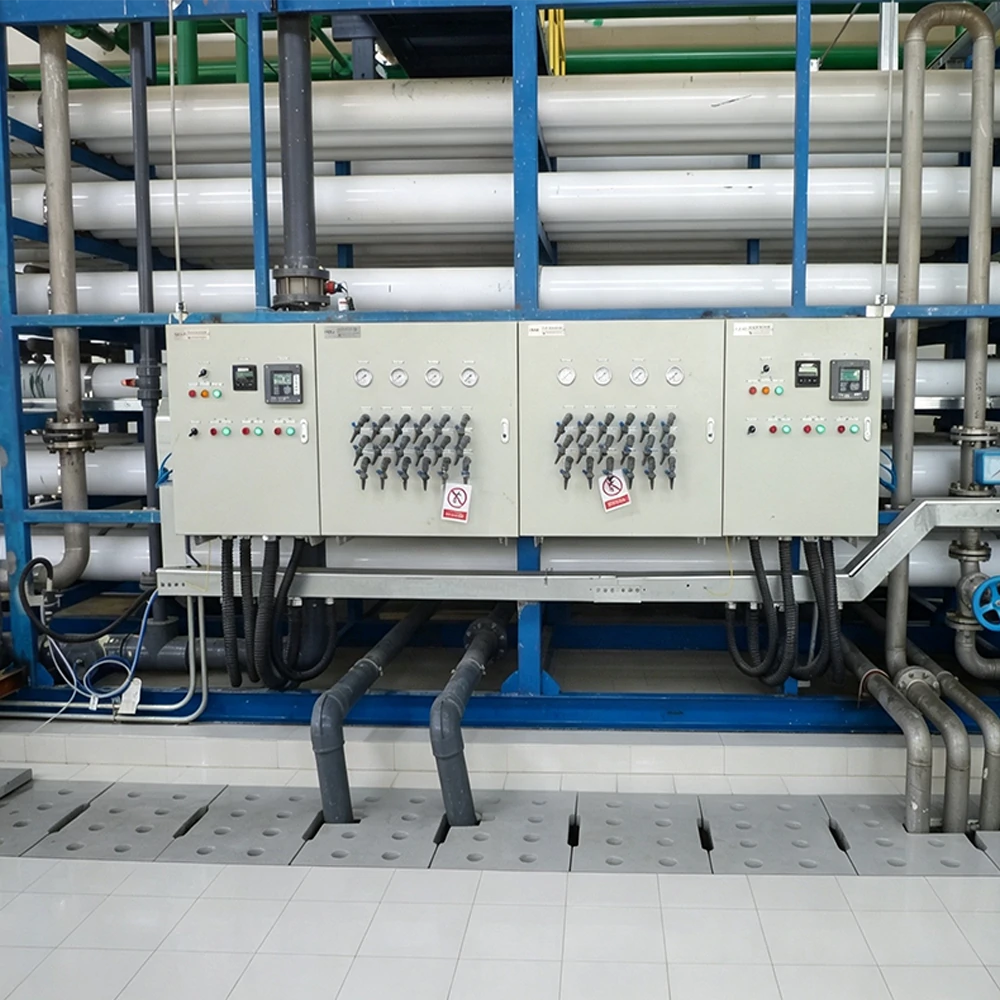
Maintaining an optimized RO membrane flux requires a deliberate operational balance. Operating a membrane flux in RO system setups at excessively high rates intensifies concentration polarization, causing dissolved salts, colloids, and organic foulants to concentrate rapidly near the membrane surface. This localized buildup triggers severe scaling, increases feed-to-concentrate differential pressure, and requires frequent chemical cleanings.
Conversely, utilizing a conservative design flux yields significant long-term performance benefits:
- Extended Service Life: Lowering hydraulic stress reduces structural compaction and prevents irreversible fouling, preserving membrane integrity.
- Consistent Salt Rejection: Stable flux rates minimize concentration polarization, ensuring optimal permeate purity.
- Reduced Operating Costs: Decreased cleaning frequencies and lower pump pressure demands reduce overall energy consumption and operational downtime.
Design flux targets vary based on feedwater quality. While municipal tap water or high-quality groundwater can support higher operational fluxes, challenging applications such as industrial wastewater reuse demand lower, more conservative limits to ensure long-term stability.
Why Is Membrane Flux Important?
Membrane flux establishes the relationship between membrane area and system capacity. For a given permeate requirement, a higher design flux can reduce the amount of membrane area needed, potentially lowering the initial equipment cost. However, operating at an excessively high flux can increase concentration polarization and fouling, which may lead to more frequent cleaning and shorter membrane service life.
For this reason, membrane systems are normally designed around an optimized and sustainable flux, rather than simply targeting the highest possible permeate production. Appropriate flux selection can support stable permeate production, longer membrane life, more predictable cleaning intervals, efficient membrane utilization, and lower long-term operating costs.
The appropriate flux must also be considered together with feed water quality, recovery, operating pressure, temperature, and membrane characteristics. A flux that works well for high-quality well water may be unsuitable for a wastewater reuse application with a higher fouling potential.
Membrane Flux Calculation
A basic membrane flux calculation requires only the permeate flow rate and effective membrane area:
J=Qp/A
Suppose a membrane system produces 15 m³/h of permeate and contains 750 m² of active membrane area. First, convert the flow into liters:
15 m3/h = 15,000 L/h
Then:
J = 15,000/750 = 20 LMH
The membrane flux is therefore 20 LMH.
The same calculation can be applied to an individual RO membrane element. If an element produces 2,000 L/day and has 40 m² of active membrane area:
J = 2000/40 = 50 L/m2⋅day
When performing a flux calculation, the flow and membrane-area units must be consistent to avoid incorrect results.
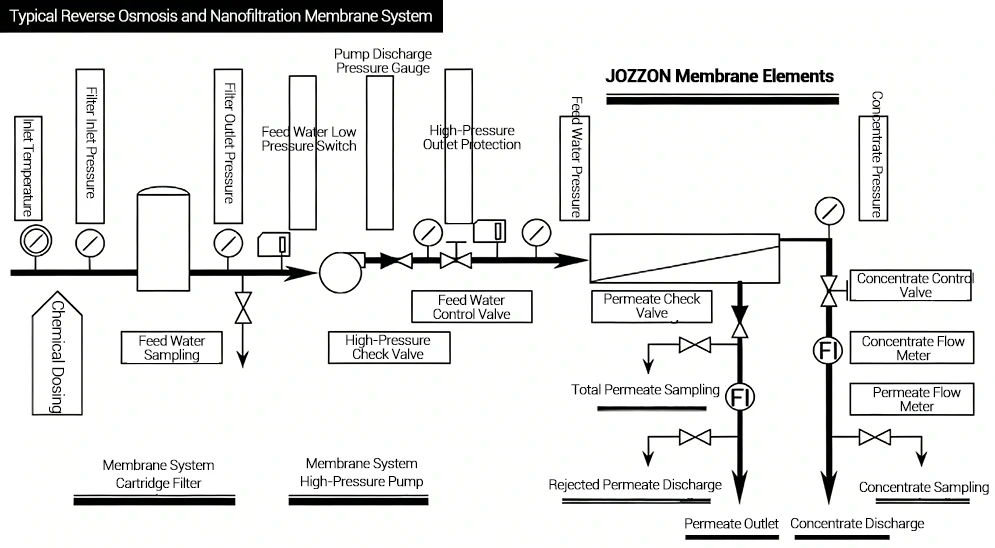
What Factors Affect Membrane Flux?
Membrane flux is not a constant value. It changes as operating conditions and feed water characteristics change.
- Operating Pressure: Increasing pressure generally increases the driving force across an RO membrane and can increase permeate flux. However, higher pressure also increases energy consumption and, under unsuitable conditions, may contribute to membrane compaction or scaling.
- Temperature: As water temperature increases, its viscosity decreases, allowing water to pass through the membrane more readily. Permeate flow and calculated flux therefore generally increase with temperature. For this reason, RO performance is often normalized to a reference temperature when comparing operating data.
- Feed Water Quality: Feed water containing high levels of suspended solids, organic matter, hardness, or dissolved salts can increase fouling and scaling risks. Effective pretreatment is therefore essential for maintaining stable flux, particularly in demanding applications.
- Recovery: Higher recovery concentrates rejected contaminants within the system. Increasing concentration can raise osmotic pressure and scaling potential, reducing the effective driving force and eventually affecting flux.
- Membrane Fouling: Organic fouling, biofouling, colloidal fouling, and mineral scaling create additional resistance to water transport and can progressively reduce permeate flux. Monitoring changes in flux can therefore provide an early indication of declining membrane performance.
- Membrane Material and Structure: Membrane chemistry and structure also influence permeability. Modern thin-film composite (TFC) membranes and hydrophilic surface modifications can provide higher water permeability while maintaining the rejection performance required for specific applications.
Membrane Flux vs. Permeate Flow
Although closely related, membrane flux and permeate flow describe different aspects of membrane performance.
Permeate flow is the total volume of water produced by a membrane element or complete system. Membrane flux expresses that production relative to the available membrane area.
For example, two RO systems may each produce 20 m³/h of permeate. If one system uses 500 m² of membrane area and the other uses 1,000 m², their permeate flow is identical, but their membrane fluxes are 40 LMH and 20 LMH respectively.
This distinction is important when evaluating different RO system configurations, sizing membrane areas, or comparing the performance of replacement membrane elements.
How to Optimize Membrane Flux
The goal of membrane design should not be to maximize flux under all conditions. Instead, engineers should aim for a flux that provides sufficient production while maintaining stable long-term performance.
Effective pretreatment is one of the most important factors. Removing suspended solids, reducing organic loading, controlling biological growth, and minimizing scaling potential can help maintain stable membrane flux.
Appropriate membrane selection is equally important because different membrane products have different permeability, salt rejection, and fouling characteristics. The membrane should be matched to the feed water and the required product water quality rather than selected solely on the basis of maximum permeate flow.
Recovery control also plays an important role. Excessively high recovery can increase concentrate salinity, osmotic pressure, and scaling risk, potentially reducing sustainable flux.
Finally, operators should monitor normalized performance and clean membranes when necessary. A significant decline in normalized permeate flow or flux may indicate fouling or scaling and can help determine when cleaning should be considered.
Membrane Flux and Fouling
There is a close relationship between membrane flux and fouling. Operating at an excessively high flux increases the amount of water drawn through the membrane surface and can intensify concentration polarization, encouraging contaminants to accumulate near the membrane interface.
This issue is particularly important in wastewater treatment and other applications with high organic or colloidal loading. A conservative design flux combined with effective pretreatment may provide better lifecycle economics than maximizing initial permeate production.
Therefore, membrane flux should always be evaluated together with feed water quality, recovery, membrane area, cleaning requirements, and expected membrane lifetime.
How to Choose the Right Membrane Flux
There is no single membrane flux suitable for every application. The appropriate design value depends on membrane type, feed water characteristics, operating temperature, recovery, and required product water quality.
When determining a suitable flux, engineers should consider:
- Feed water quality: TDS, turbidity, SDI, hardness, organic matter, and biological activity.
- Membrane type and configuration: RO, NF, and UF membranes have different permeability and fouling characteristics.
- Required permeate production: System capacity determines the total membrane area required.
- Operating conditions: Pressure, temperature, recovery, and system configuration all influence actual flux.
- Long-term performance: Sustainable flux is generally more valuable than short-term maximum production.
A qualified membrane manufacturer or supplier can use these parameters to recommend an appropriate membrane element, design flux, staging configuration, and operating range.
Conclusion
Membrane flux is a fundamental parameter for designing, operating, and evaluating pressure-driven membrane filtration systems. By expressing permeate production per unit membrane area, it connects system capacity with membrane area and provides an important indicator of membrane loading and performance.
For RO applications, RO membrane flux is influenced by operating pressure, osmotic pressure, temperature, feed water quality, recovery, and membrane condition. While a higher flux can reduce the membrane area required for a given production target, excessive flux may accelerate fouling and scaling, increasing cleaning requirements and shortening membrane life.
A reliable membrane system therefore requires a balance between permeate flow, membrane area, water quality, energy consumption, and long-term operating stability. By understanding membrane flux calculation and monitoring performance over time, engineers can make more informed decisions about membrane selection, system design, pretreatment, and maintenance.
For industrial RO applications, selecting a suitable membrane and sustainable design flux is essential for reliable water production and lower lifecycle costs. JOZZON provides RO membrane solutions for industrial and commercial water treatment applications, with membrane selection based on feed water characteristics, required capacity, operating conditions, and overall system objectives.