Energy-Saving Softening Series Nanofiltration Membrane Elements
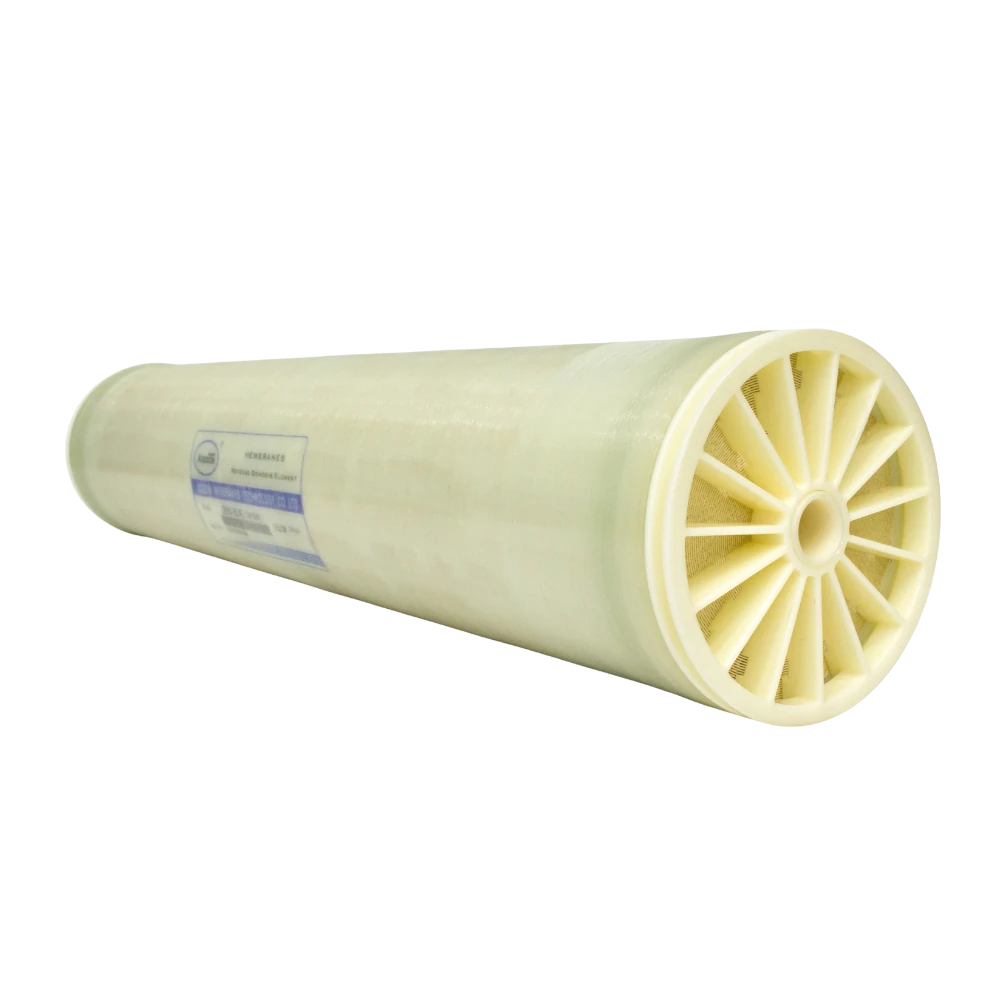
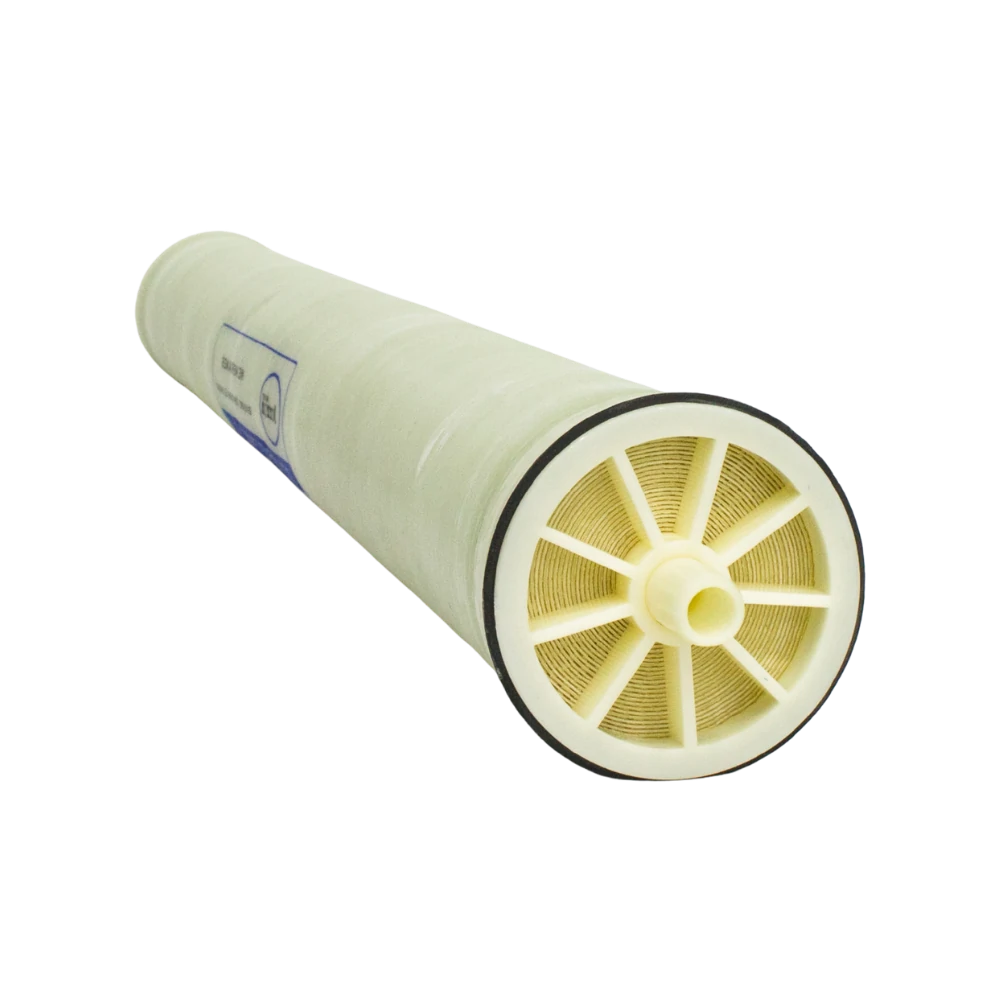
JOZZON JNF nanofiltration membrane elements are designed for low-pressure selective filtration, moderate desalination, and high removal of total organic carbon (TOC) and herbicides. Available in four-inch configurations, the JNF series supports drinking water treatment as well as separation, concentration, and purification processes in food, pharmaceutical, biological, and related industries.
• JNF-4040-HF: 1800 GPD (6.8 m³/d)
• JNF-4040-HF: NaCl desalination rate 30~50%, MgSO₄ desalination rate >85%
Nanofiltration Membrane Elements for Selective Filtration
JOZZON nanofiltration membrane elements use a new coating technology to provide selective filtration under relatively low operating pressure. Unlike separation processes that rely on chemical reactions, heating, or phase transformation, nanofiltration separates targeted components through membrane-based selective filtration.
The JNF series combines moderate desalination with high TOC and herbicide removal, making it suitable for applications where selective separation is required rather than complete salt removal. The membrane elements can be used for drinking water preparation as well as separation, concentration, and purification processes in food, pharmaceutical, biological, and other related industries.
With lower operating pressure than reverse osmosis, JNF nanofiltration membrane elements can support water treatment and separation processes where selective removal and energy-conscious operation are important considerations.
How Nanofiltration Membrane Elements Work
Selective Separation at Lower Pressure
Nanofiltration is a membrane separation process positioned between ultrafiltration and reverse osmosis in terms of separation characteristics. JNF nanofiltration membrane elements use selective filtration to separate targeted substances from water under relatively low operating pressure.
During operation, feed water passes across the membrane surface under pressure. Selected components are retained by the membrane, while water and certain smaller dissolved components pass through as permeate. The degree of separation depends on the membrane characteristics and feed-water composition.
This selective separation approach allows JNF membrane elements to provide moderate desalination while targeting total organic carbon, herbicides, and other selected substances.
Features & Benefit
1. Mild Separation Conditions
The process involves no chemical reactions, requires no heating, and involves no phase transitions, effectively protecting the bioactive components in the materials. It is particularly suitable for the separation, concentration, and purification of heat-sensitive materials in the food, pharmaceutical, and biological industries.
2. Low Energy Consumption
The required operating pressure is significantly lower than that of reverse osmosis, reducing system energy consumption and operating costs while achieving selective filtration.
3. Highly Efficient Selective Filtration
Utilizing a novel coating technology, it precisely removes harmful substances (such as heavy metals, bacteria, viruses, and some hardness ions) while retaining beneficial minerals (such as calcium, magnesium, and potassium).
4. Wide Application Adaptability
It meets the needs of preparing healthy drinking water (removing contaminants and retaining beneficial components) and can also be used for multi-media separation, concentration, and purification in the food, pharmaceutical, and biological industries.
5. Green and Environmentally Friendly Process
The separation process involves no added chemical agents and produces no secondary pollution, meeting the environmental requirements of sustainable development and the preparation of high-quality water and high-purity materials.
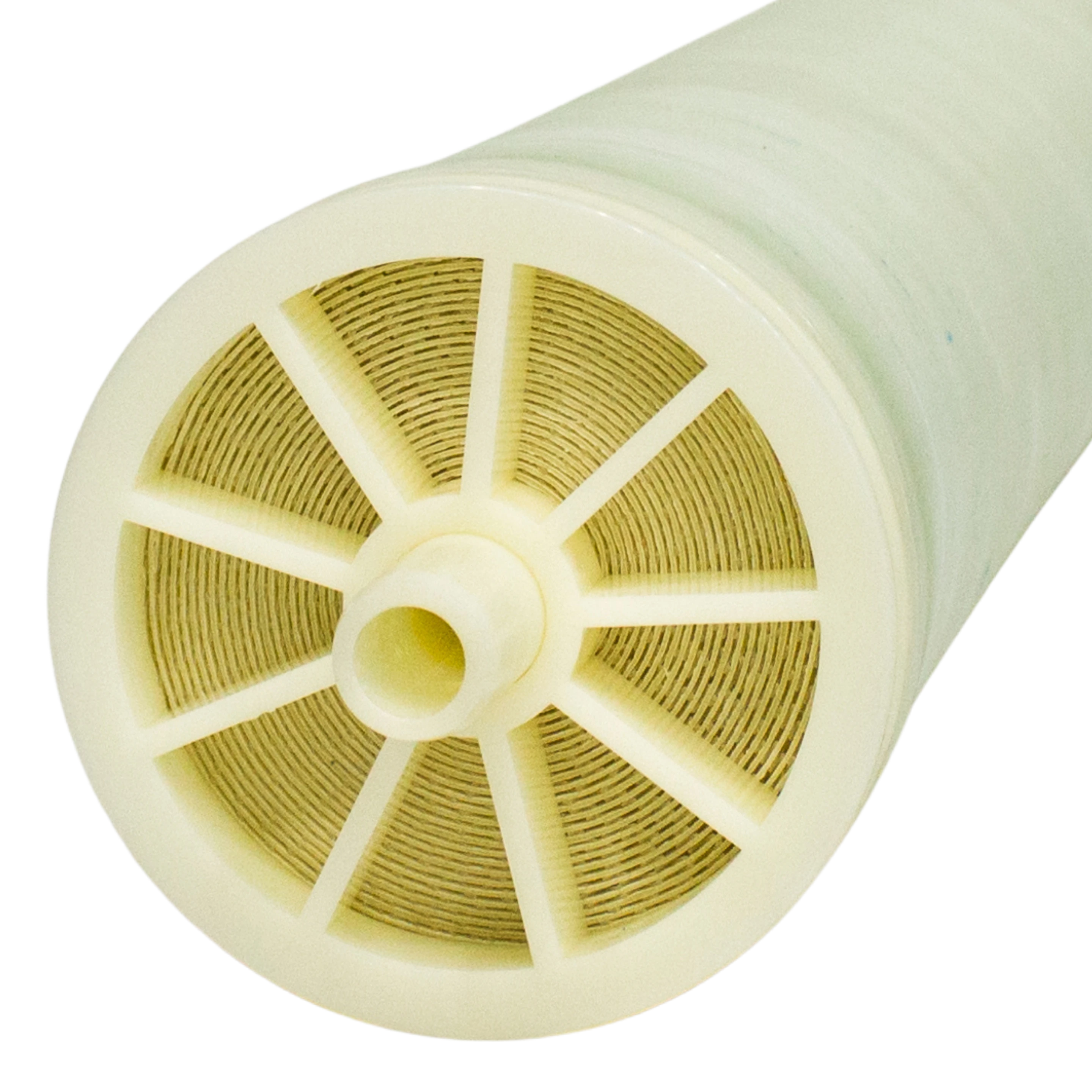
JNF Nanofiltration Membrane Series
The JNF series includes four-inch nanofiltration membrane elements developed for low-pressure operation, selective filtration, and moderate desalination. The available configurations provide different levels of salt rejection and water production to accommodate specific treatment requirements.
|
Membrane Element Model |
Effective Membrane Area ft2 (m2) |
Types of Solutions |
Water Production Flow Rate GPD (m³/d) |
Stable Desalination Rate (%) |
Application |
|---|---|---|---|---|---|
|
JNF-4040 |
90 (8.4) |
NaCl |
1500 (5.7) |
40-60 |
Suitable for applications requiring selective separation with stronger MgSO₄ rejection. |
|
MgSO4 |
1350(5.1) |
>96 |
|||
|
JNF-4040-HF |
90 (8.4) |
NaCl |
1800 (6.8) |
30-50 |
Considered for applications where higher water production is an important system requirement. |
|
MgSO4 |
1500 (5.7) |
>85 |
Selection principle: Selection between the two configurations should be based on feed-water characteristics, required permeate production, target separation performance, and overall system design.
Extreme Usage Conditions
| Maximum Operating Pressure | 600psi (4.14 MPa) |
| Maximum Influent Flow Rate | 75gpm (17 m³/h) |
| Maximum Inlet Water Temperature | 45℃ |
| Maximum Influent SDI15 | 5 |
| Influent Free Chlorine Concentration | < 0.1 ppm |
| Influent ph Range During Continuous Operation | 2~12 |
|
ph Range of Influent During Chemical Cleaning (Short-term 30-minute Period) |
1~13 |
| Maximum Pressure Drop of a Single Membrane Element | 15psi (0.1Mpa) |
Test Conditions
| Test Pressure | 70psi (0.5Mpa) |
| Test Solution Temperature | 25℃ |
| Test Solution Concentration (NaCl) | 2000ppm |
| Test Solution ph Value | 7.5 |
| Single Membrane Element Recovery Rate | 15% |
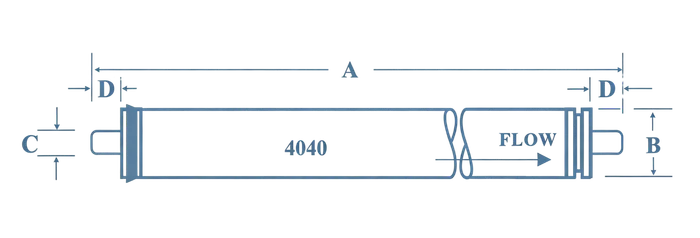
Membrane Element Size
All units shown in the diagram are millimeters (inches).