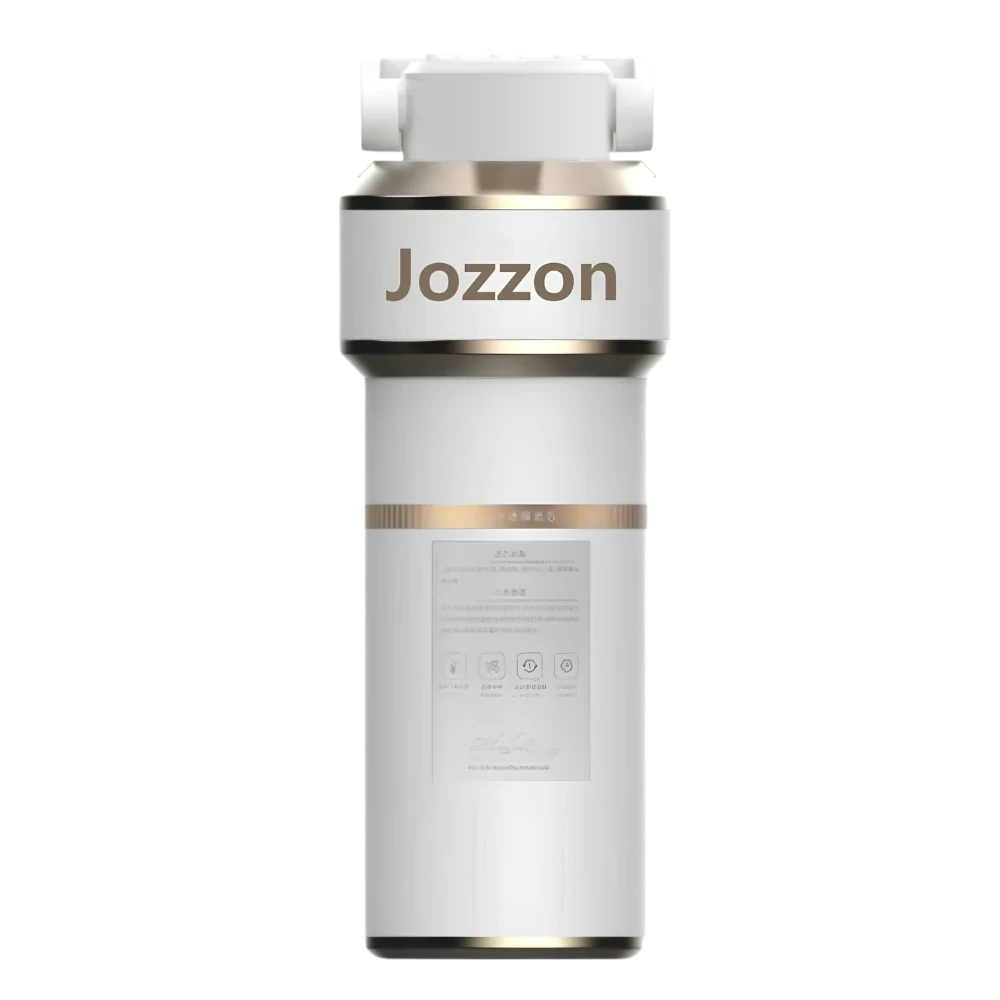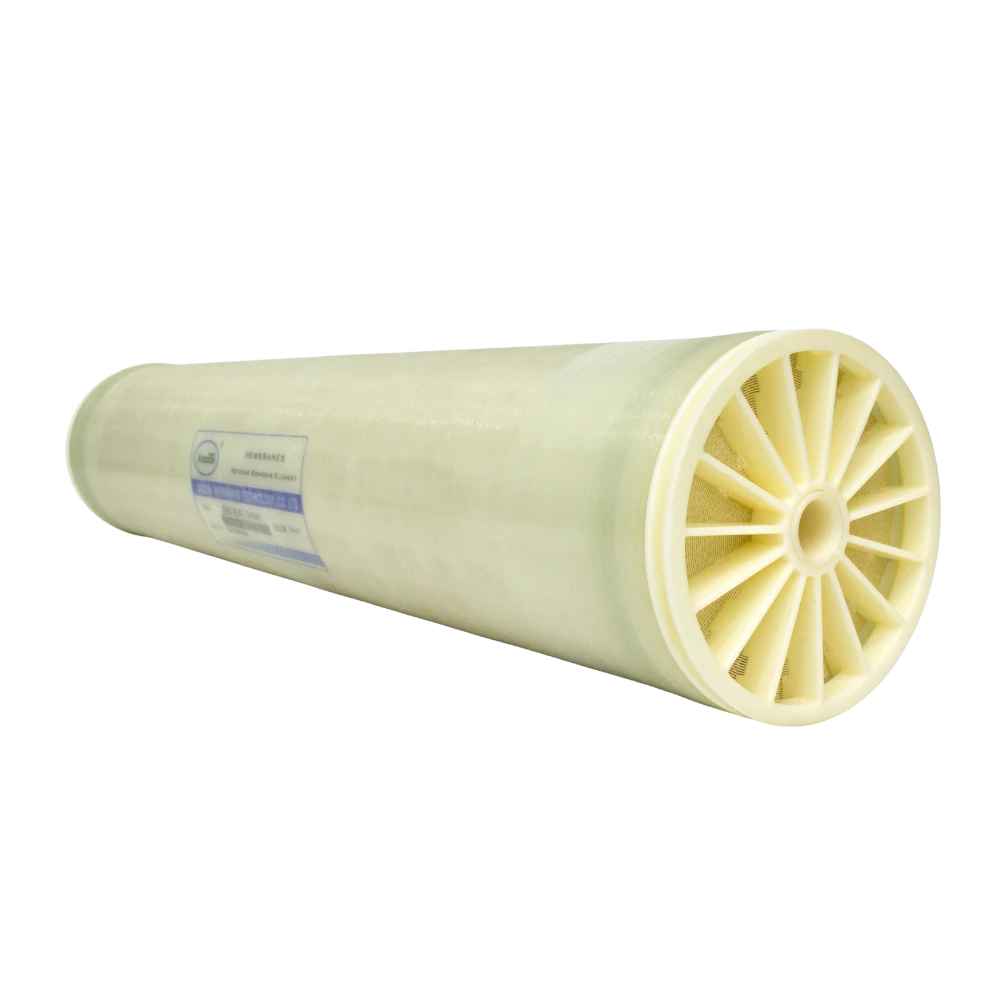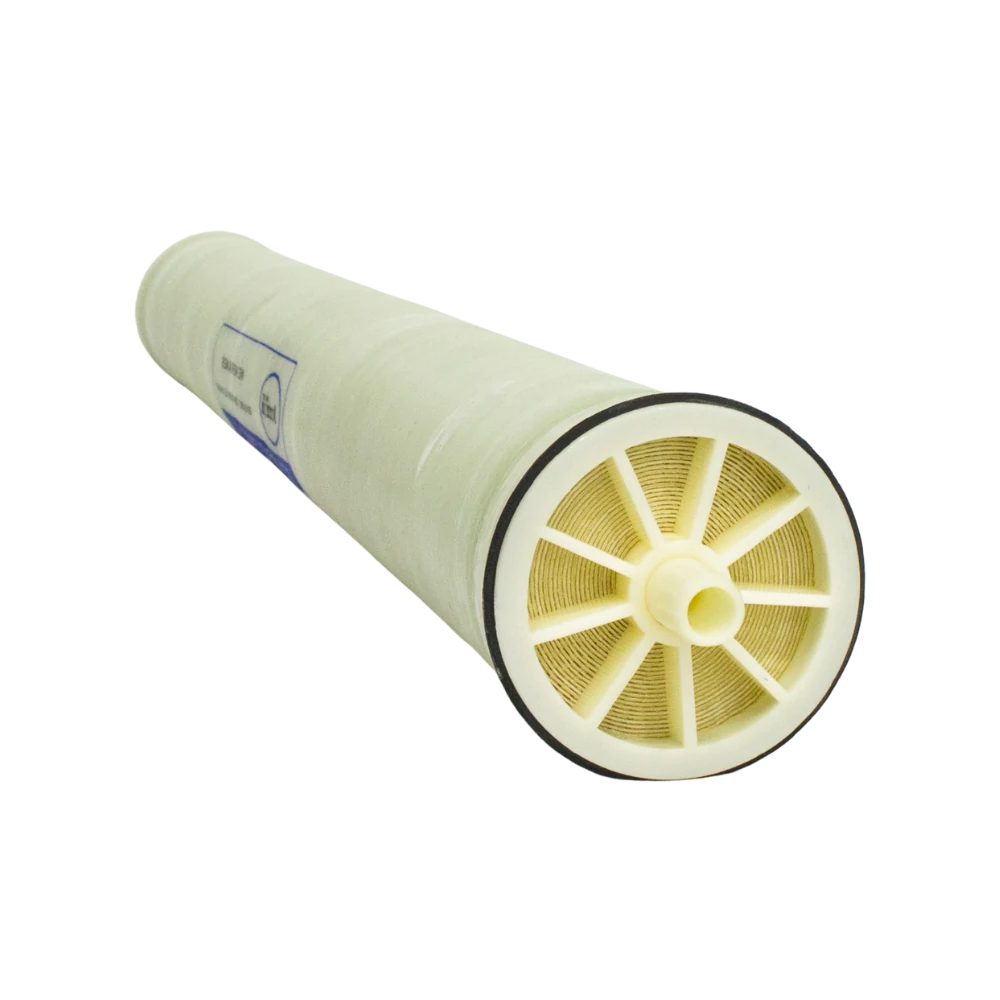
Ultrafiltration (UF) is a pressure-driven membrane separation technology used in water treatment, wastewater reuse, and industrial processing. An ultrafiltration membrane removes suspended solids, colloidal particles, and many microorganisms while allowing water and most dissolved salts to pass through. It is therefore widely used to improve water clarity and protect downstream treatment processes, particularly reverse osmosis (RO) systems.
Understanding what an ultrafiltration membrane is, how it works, and where it is most effective helps engineers and water treatment professionals select the right membrane configuration for their applications.
What Is an Ultrafiltration Membrane?
Definition of an Ultrafiltration Membrane
An ultrafiltration membrane, also known as a UF membrane, is a porous separation barrier that retains particles and macromolecules according to their size and the membrane’s separation characteristics. Under a pressure difference, water and sufficiently small components pass through the membrane as permeate, while retained substances remain in the feed stream or are removed through a concentrate stream, depending on the system design.
UF sits between microfiltration (MF) and nanofiltration (NF) in the membrane separation spectrum. Compared with conventional media filtration, it provides a membrane barrier with performance influenced by pore characteristics, membrane integrity, and operating conditions. UF can be used as a standalone treatment process or as pretreatment before RO when additional dissolved-contaminant removal is required.
What Can an Ultrafiltration Membrane Remove?
An ultrafiltration membrane can retain suspended solids, colloids, many bacteria and protozoan cysts, and selected macromolecules or larger organic compounds. Its effectiveness depends on membrane specifications, integrity, feed-water characteristics, and operating conditions.
Unlike RO, conventional UF does not substantially remove dissolved salts such as sodium, calcium, or chloride. Where desalination or significant dissolved-ion removal is necessary, UF must be combined with an appropriate downstream process.
How Does an Ultrafiltration Membrane Work?
Ultrafiltration Membrane Working Principle
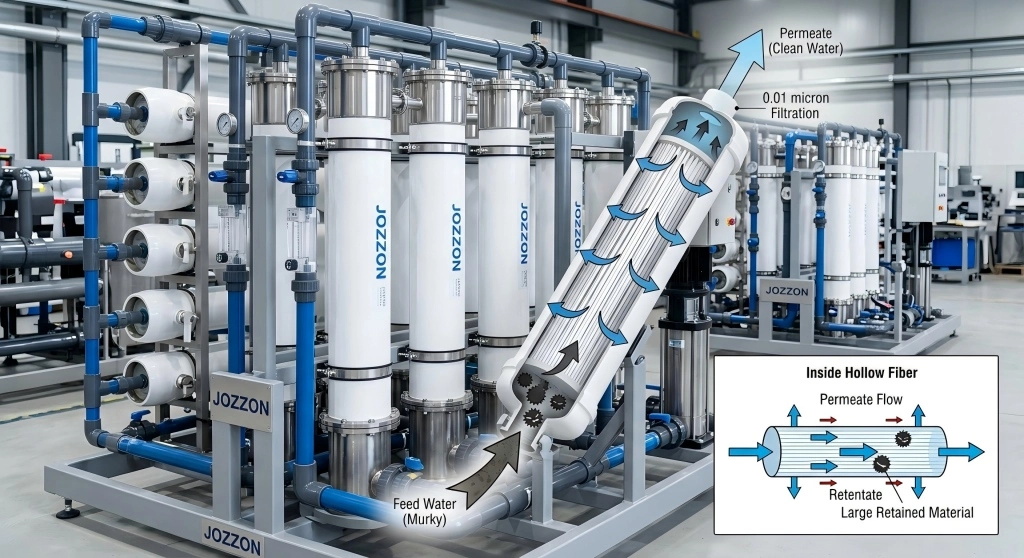
The ultrafiltration membrane working principle is based primarily on pressure-driven size exclusion. Feed water is pressurized and brought into contact with the membrane. Water and sufficiently small components pass through the membrane as permeate, while larger particles and macromolecules are retained.
UF systems commonly operate in two configurations. In dead-end filtration, feed water flows toward the membrane surface and retained solids accumulate until they are removed through backwashing or cleaning. In crossflow filtration, feed water moves along the membrane surface, helping carry away retained material and control accumulation. The appropriate configuration depends on feed-water quality and process requirements.
Pore Size and Separation Performance
UF membranes commonly have nominal pore sizes in the approximate range of 0.01–0.1 micrometers, although specifications vary by product. Some membranes are characterized by molecular-weight cutoff (MWCO), which describes their retention of selected molecules rather than providing a universal pore-size measurement.
Pore size and MWCO are important selection parameters, but they do not determine performance alone. Membrane material, pore-size distribution, feed-water chemistry, operating pressure, and membrane integrity also affect separation results. Selection should therefore begin with the target contaminants and required permeate quality.
Inside an Ultrafiltration Module
An ultrafiltration module houses the membrane surfaces and directs feed water, permeate, and retained material through designated flow paths. Module design affects membrane-area density, hydraulic performance, cleaning access, and equipment footprint.
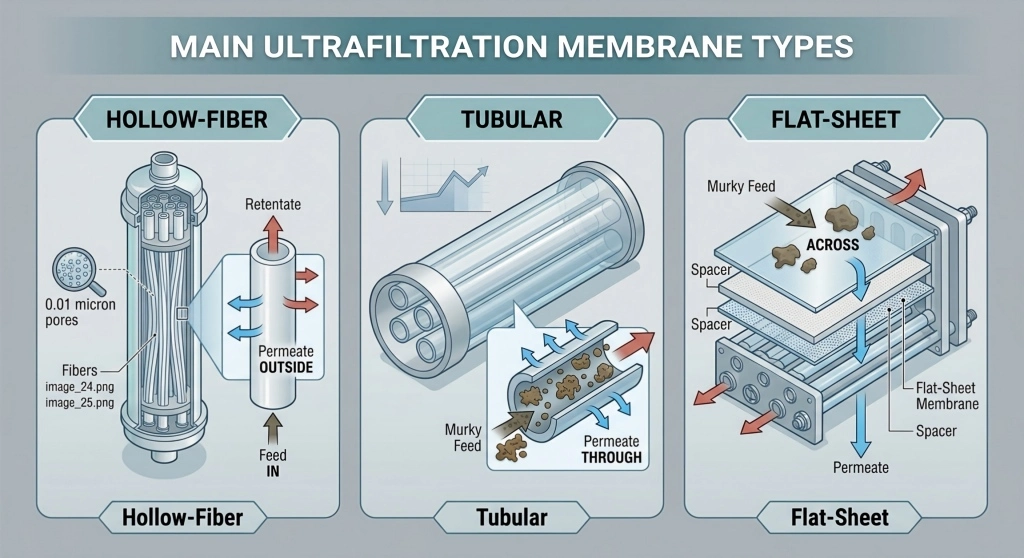
Common configurations include hollow-fiber bundles, tubular assemblies, and flat-sheet membranes. Larger systems may connect multiple modules in parallel or in stages to meet required flow rates and treatment capacity.
What Are the Main Ultrafiltration Membrane Types?
Hollow-Fiber UF Membranes
Hollow-fiber UF membranes consist of bundles of fine, hollow fibers. Water passes through the fiber walls while retained contaminants remain on the feed side. Depending on the design, filtration can proceed from outside to inside or from inside to outside the fibers.
Their high membrane-area density makes hollow-fiber systems suitable for municipal water treatment, industrial pretreatment, and wastewater reuse. Feed-water solids, fiber integrity, and cleaning requirements should be evaluated when selecting a system.
Tubular and Flat-Sheet UF Membranes
Tubular membranes have relatively large flow channels, making them useful for selected industrial streams containing high concentrations of solids, viscous materials, or grease. They offer practical advantages for solids handling and cleaning, although their membrane-area density may be lower than that of compact configurations.
Flat-sheet membranes use planar surfaces and are commonly incorporated into plate-and-frame or immersed systems, including membrane bioreactors (MBRs). The choice among tubular, flat-sheet, and hollow-fiber ultrafiltration membrane types depends on feed-water characteristics, treatment objectives, operating conditions, and maintenance requirements.
UF Membrane Materials
UF membrane materials influence chemical compatibility, mechanical properties, fouling behavior, and cleaning options. Common materials include:
Polyvinylidene fluoride (PVDF): Used in applications requiring chemical resistance and mechanical durability.
Polyethersulfone (PES) and polysulfone (PSf): Used in membrane applications where permeability, thermal stability, and separation performance are important.
Ceramic materials: Typically based on metal oxides such as alumina, titania, or zirconia. They can tolerate demanding temperatures, pH conditions, and abrasive feeds, but generally involve higher capital costs.
Actual performance depends on the specific membrane formulation and manufacturing process. Material compatibility should be confirmed against feed-water chemistry, cleaning agents, temperature, and operating conditions.
What Are the Main Applications of Ultrafiltration Membranes?
Drinking Water and Municipal Water Treatment
UF membranes reduce turbidity and retain suspended particles and many microorganisms in surface-water and municipal treatment systems. They provide a physical separation barrier and can help protect downstream disinfection or desalination processes. Performance depends on source-water quality, pretreatment, membrane integrity, and operating controls.
Industrial Water Treatment
In industrial water treatment, UF is frequently used to clarify process water or pretreat feed water before RO. By reducing suspended solids and colloidal loading, it can help limit downstream membrane fouling and support more stable operation. Applications include suitable water streams in power generation, electronics, chemical processing, and general manufacturing.
Wastewater Treatment and Water Reuse
UF can separate suspended solids and biomass from wastewater, making it useful in selected water reuse systems and membrane bioreactors. The permeate may undergo further treatment before reuse, since UF alone does not remove all dissolved contaminants or guarantee that treated water meets every reuse requirement.
Food and Beverage Processing
UF is used for clarification, concentration, and separation of selected macromolecules in food and beverage processing. In the dairy industry, applications include milk protein concentration, whey processing, and lactose standardization. It can also support juice and wine clarification by retaining selected suspended particles and haze-forming components. Membrane selection must match the product, hygiene requirements, and process conditions.
Biopharmaceutical Processing
In biopharmaceutical manufacturing, UF is commonly used to concentrate proteins and other biomolecules. Ultrafiltration may be combined with diafiltration to exchange buffer components while retaining target molecules. These applications require appropriate MWCO, low product adsorption, and compatibility with validated processing and cleaning procedures.
What Are the Advantages and Limitations of UF Membranes?
Key Advantages
UF membranes effectively retain suspended solids, colloids, and many microorganisms without requiring the high operating pressures typically associated with RO desalination. Compact module designs provide substantial membrane area, while automated operation and backwashing can simplify routine maintenance.
As an RO pretreatment technology, UF can reduce particle loading on downstream membranes and help stabilize feed-water quality when the system is properly designed and operated.
Limitations to Consider
UF does not substantially remove dissolved salts or many small dissolved compounds, so it cannot replace RO when desalination is required. Membrane fouling can also reduce permeate flow and increase cleaning frequency, particularly when feed-water quality or pretreatment is poorly controlled.
Reliable operation requires suitable pretreatment, monitoring of permeate flow and pressure differences, and cleaning procedures compatible with the membrane material. System design should account for feed-water variability, operating targets, and downstream water-quality requirements.
How to Choose the Right Ultrafiltration Membrane
Selecting an ultrafiltration membrane begins with defining the treatment objective and analyzing the feed water. Key considerations include turbidity, suspended solids, organic content, microorganism risks, temperature, and chemical compatibility.
Next, determine the required permeate quality and whether UF will operate as a standalone process or as pretreatment for RO or another treatment technology. Compare membrane configuration, material, pore characteristics or MWCO, operating flux, pressure limits, and cleaning requirements. The selected ultrafiltration module must also match the required capacity, available footprint, maintenance access, and system design.
For demanding industrial applications or variable feed-water conditions, pilot testing or application-specific validation may help confirm expected performance. Final selection should be based on verified product specifications and actual process requirements.
Conclusion
An ultrafiltration membrane is a pressure-driven separation technology that retains suspended solids, colloids, and many microorganisms while allowing water and most dissolved salts to pass through. Its effectiveness depends on membrane characteristics, module configuration, feed-water quality, and operating conditions.
JOZZON provides membrane-based water treatment solutions for industrial applications. Explore JOZZON’s ultrafiltration membrane modules to identify a suitable configuration for your feed-water conditions and treatment objectives.