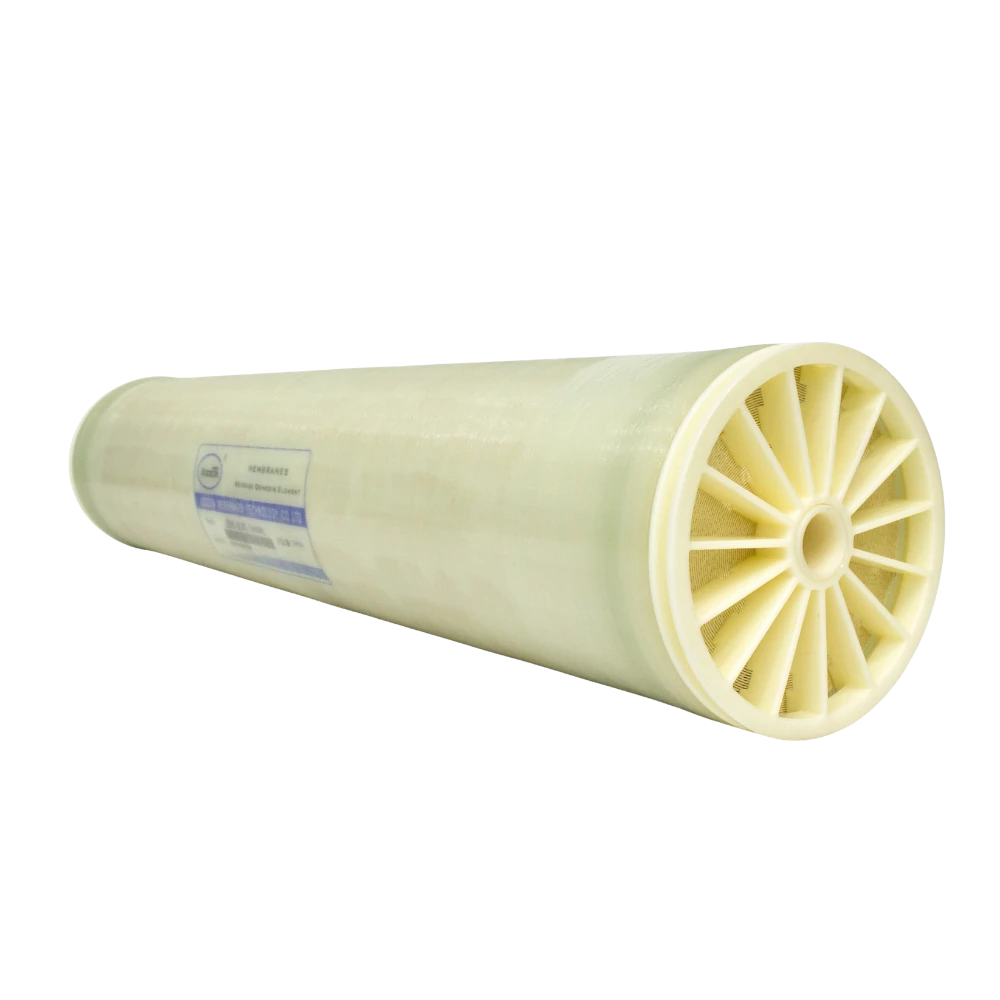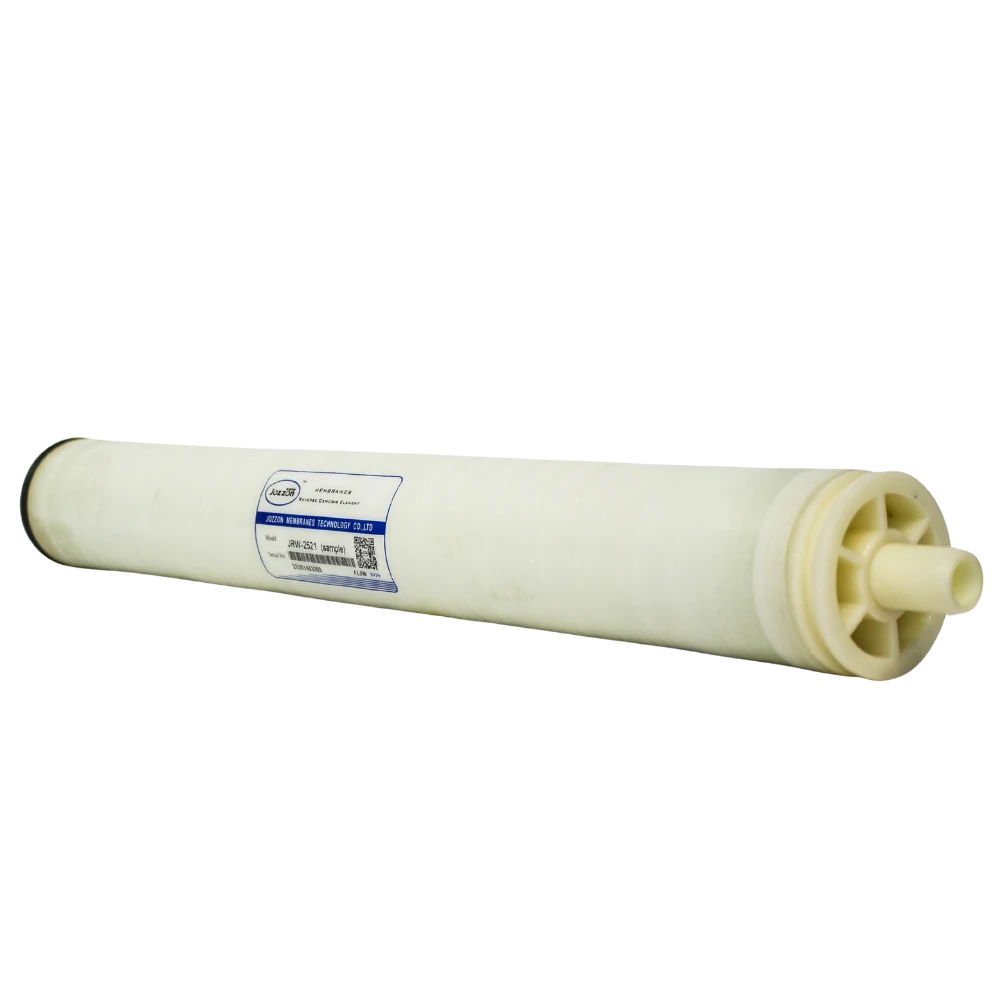
Reverse osmosis (RO) membranes are widely used in industrial water treatment, desalination, and high-purity water production. Their ability to remove dissolved salts and reduce various contaminants makes them essential for applications requiring consistent water quality. However, membrane performance depends not only on system pressure and element design but also on the materials used in membrane manufacturing.
Different RO membrane materials provide different levels of separation performance, chemical resistance, mechanical strength, and operational stability. Modern industrial membranes commonly use thin film composite (TFC) technology, while cellulose acetate remains an established alternative. Understanding these materials helps water treatment engineers and industrial buyers evaluate membrane technologies and select products suited to their feed water and operating conditions.
This guide examines the main types of reverse osmosis membrane materials, their properties, and how material selection influences industrial membrane performance.
What Materials Are RO Membranes Made Of?
The answer to what a reverse osmosis membrane is made of depends on its material type and manufacturing design. Most modern industrial RO membranes use polymer-based materials that provide the selective and mechanical properties required for pressure-driven separation.
The two main material approaches are thin film composite (TFC) and cellulose acetate-based membranes.
A typical TFC RO membrane combines three materials:
- Polyamide: Forms the selective layer that separates water from dissolved salts.
- Polysulfone: Provides a porous support beneath the selective layer.
- Polyester: Acts as a nonwoven backing that reinforces the membrane sheet.
Each material serves a different purpose. Polyamide provides the primary separation function, while polysulfone and polyester contribute to mechanical support and structural stability.
Cellulose acetate membranes use a different approach, with cellulose acetate serving as the membrane-forming polymer. Their chemical characteristics and operating requirements differ from those of polyamide-based membranes.
Other polymer modifications and surface treatments may also be used to improve selected membrane properties. Therefore, evaluating RO membrane materials requires considering both the primary polymer composition and the characteristics of the finished membrane.
Main Types of RO Membrane Materials
The main types of RO membrane materials differ in their chemical structures and functional properties. Polyamide and cellulose acetate are two important selective membrane materials, while other polymers provide support or help modify surface characteristics.
Polyamide RO Membrane
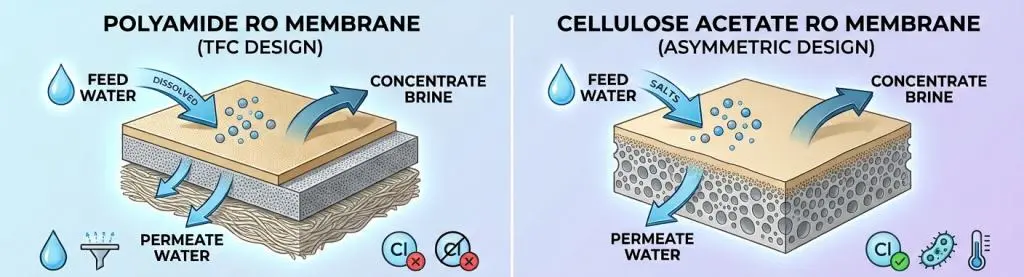
Polyamide is the most widely used selective-layer material in modern industrial TFC reverse osmosis membranes. It is typically formed through interfacial polymerization, creating a thin, dense layer supported by a porous substrate.
Its main advantage is the ability to combine high salt rejection with practical water permeability under pressure. This makes polyamide RO membranes suitable for brackish water desalination, seawater desalination, and industrial process water production.
However, aromatic polyamide is sensitive to free chlorine and other strong oxidizing agents. Exposure can damage the selective layer and cause irreversible deterioration in salt rejection. Effective pretreatment and oxidant control are therefore essential for protecting polyamide membranes.
Cleaning chemicals must also be selected carefully. Their concentration, pH, temperature, and exposure time should remain within the membrane manufacturer’s specified limits.
For many industrial applications, polyamide TFC technology offers a practical balance of separation performance, water productivity, and operational reliability.
Cellulose Acetate RO Membrane
Cellulose acetate is an established polymer used in reverse osmosis membrane production. Before the widespread adoption of TFC technology, cellulose acetate membranes were an important choice for desalination and water purification.
Unlike conventional TFC membranes, cellulose acetate membranes generally use an asymmetric structure in which a dense selective surface and porous supporting region are formed from the same membrane-forming polymer.
One notable characteristic is its greater tolerance to chlorine compared with conventional aromatic polyamide membranes under suitable operating conditions. This can be useful in treatment processes where oxidant management is an important consideration.
However, cellulose acetate has limitations. It is susceptible to hydrolysis outside its suitable pH and temperature conditions, and its biological stability must also be considered. Its permeability and salt rejection characteristics may differ from those of modern polyamide TFC membranes.
The choice between cellulose acetate and polyamide should therefore be based on feed water chemistry, target permeate quality, pretreatment capability, and operating requirements rather than on a single material property.
Advanced Polymer Modifications
Membrane material development continues to focus on improving permeability, surface characteristics, and resistance to fouling. Several approaches are being investigated or applied in specialized membrane designs:
- Hydrophilic surface coatings: Materials such as polyvinyl alcohol or zwitterionic polymers may modify surface properties and reduce the tendency of certain foulants to adhere.
- Thin film nanocomposite membranes: Selected nanoparticles, including silica, titanium dioxide, and zeolite, may be incorporated into polymer structures to modify water transport and surface characteristics.
- Modified polyamide chemistry: Adjustments to polymer composition, crosslinking, or surface morphology can influence selectivity, permeability, and fouling behavior.
These modifications are not standard features of every commercial RO membrane. Their effectiveness depends on manufacturing consistency, material compatibility, and long-term performance under actual operating conditions.
For industrial buyers, the priority should be verified membrane performance and application suitability rather than the use of a particular advanced material modification.
Thin Film Composite Membrane: How Different Materials Work Together
A Thin Film Composite Membrane combines multiple materials to achieve separation and mechanical properties that a single polymer may not provide. This construction is widely used in modern industrial RO membranes because the selective layer and supporting layers can be designed for different functions.
Understanding the materials used in thin film composite membranes helps explain how their combined properties contribute to membrane performance.
The Three Main Material Layers
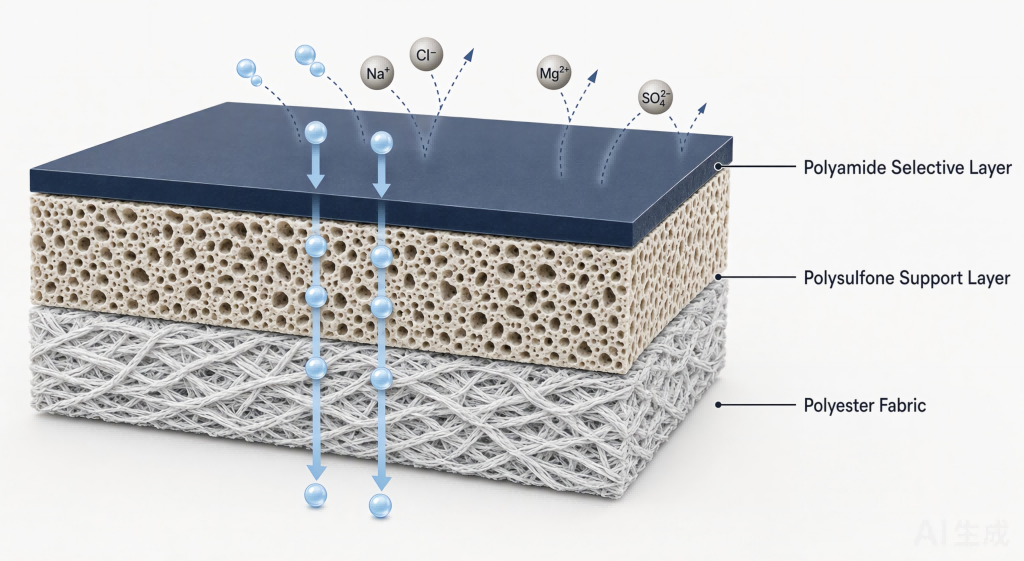
A typical industrial TFC membrane sheet contains three main layers:
1. Polyamide Selective Layer
The polyamide layer forms the active separation surface. It allows water to pass through while rejecting a large proportion of dissolved salts. Its chemistry and surface characteristics influence the balance between water permeability and salt rejection.
2. Porous Polysulfone Support Layer
The polysulfone support provides a porous foundation for the thin selective layer. It offers mechanical support while allowing water to pass through with limited resistance. Its pore structure and surface characteristics also influence composite membrane quality.
3. Nonwoven Polyester Backing Layer
The polyester support layer reinforces the membrane sheet and contributes to dimensional stability during manufacturing, handling, and operation under pressure.
Together, these materials form a composite structure in which the selective layer performs separation while the support layers maintain mechanical integrity.
Why Multiple Materials Are Used in TFC Membranes
A single material does not necessarily provide all the properties required for a high-performance RO membrane. A polymer with excellent salt rejection may lack sufficient mechanical strength, while a strong support material may not provide the selective properties needed for dissolved-salt separation.
TFC construction addresses these different requirements by combining materials with complementary characteristics. Polyamide provides the separation function, polysulfone supports the selective layer, and polyester reinforces the membrane sheet.
This approach also allows manufacturers to optimize the selective layer without requiring the same material to provide the entire mechanical structure. However, the final membrane’s quality depends on consistent layer formation, material compatibility, interfacial bonding, and defect control.
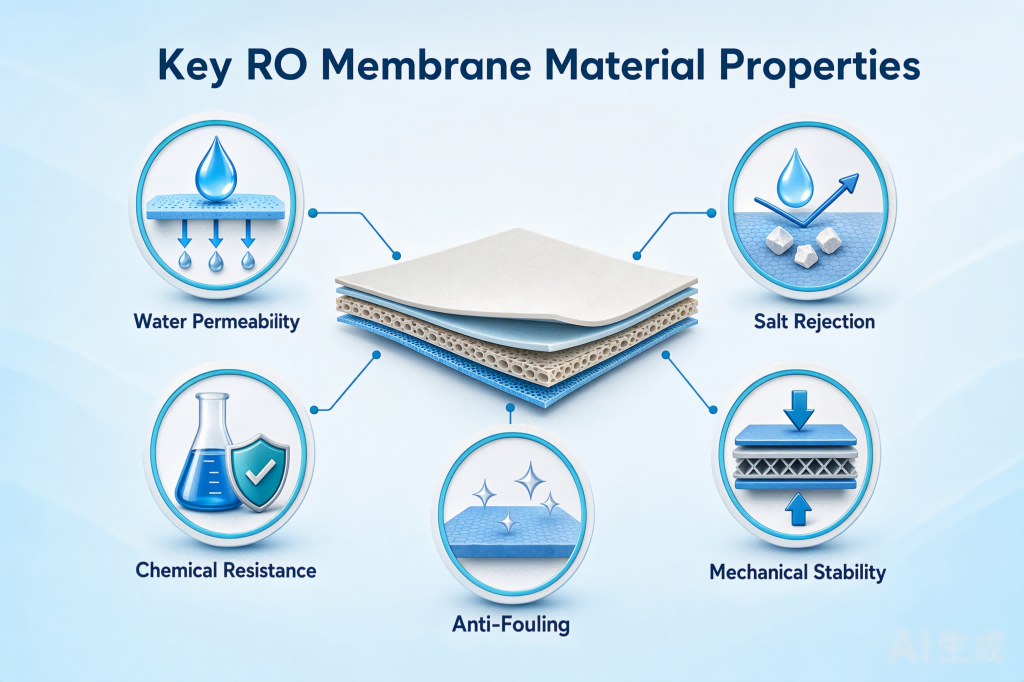
Key RO Membrane Material Properties and Performance
RO membrane material properties influence how a membrane responds to feed water chemistry, operating pressure, cleaning procedures, and long-term use. These characteristics work together to determine whether a membrane is suitable for a particular industrial application.
Water Permeability and Salt Rejection
Water permeability and salt rejection are two fundamental RO membrane performance characteristics.
The selective polymer layer controls the transport of water and dissolved substances. Its chemical structure and physical properties influence how readily water passes through the membrane and how effectively dissolved salts are rejected.
Membrane development aims to balance permeability and selectivity. Higher permeability can support greater permeate production or lower pressure requirements under comparable conditions, while high salt rejection is important when strict product water quality is required.
Actual performance also depends on feed water salinity, temperature, operating pressure, recovery, and concentration polarization. Material composition alone cannot determine system output.
Chemical Resistance and Compatibility
The chemical resistance of RO membrane materials is particularly important in industrial water treatment, where membranes may encounter oxidants, acids, alkalis, and cleaning agents.
Aromatic polyamide is sensitive to free chlorine and other strong oxidants, making effective dechlorination and oxidant control important in many applications. Cellulose acetate has different chemical characteristics but can be vulnerable to hydrolysis outside its suitable operating conditions.
Support materials and other element components must also remain compatible with the intended operating and cleaning environment.
Chemical compatibility should therefore be evaluated across the complete membrane element, not just the selective layer. Cleaning solutions, concentrations, pH, temperature, and exposure time must follow the manufacturer’s instructions. Appropriate chemical management helps reduce membrane damage and supports longer service life.
Hydrophilicity and Anti-Fouling Surface Energy
Hydrophilicity describes a material’s tendency to interact with water. It can influence how water spreads across a membrane surface and how certain foulants interact with it.
Suitable hydrophilic surface characteristics may reduce the adhesion of some organic substances. Surface energy, roughness, and chemical functionality can also affect interactions between membrane materials and feed water constituents.
However, hydrophilicity alone does not guarantee fouling resistance. Fouling behavior depends on contaminant type and concentration, operating conditions, pretreatment effectiveness, and membrane surface characteristics. Surface modifications should therefore be evaluated through performance testing under realistic operating conditions.
Mechanical Strength and Structural Stability
RO membranes operate under pressure, so their materials must maintain structural integrity throughout operation.
The polysulfone support provides a stable foundation for the selective layer, while the polyester backing reinforces the membrane sheet. Together, these materials help resist mechanical stress and maintain the composite structure.
Excessive compaction or structural damage can affect water transport and membrane integrity. Reliable operation therefore depends on both membrane-sheet material properties and the mechanical design of the complete spiral-wound element.
Thermal and Long-Term Operational Stability
Temperature influences water permeability, polymer behavior, and membrane performance. Excessive temperatures or operation outside the manufacturer’s specified range can accelerate material degradation or compromise membrane integrity.
Long-term stability also depends on repeated exposure to feed water constituents, pressure cycles, cleaning chemicals, and operating fluctuations.
A suitable membrane should maintain its required separation and mechanical properties throughout the intended operating range. Temperature limits, chemical exposure, and maintenance requirements should all be considered during material selection.
How to Choose the Right RO Membrane Materials for Industrial Applications
Selecting suitable RO membrane materials requires more than comparing polymer properties. The membrane must match the feed water, treatment objectives, operating conditions, and maintenance strategy.
Consider Feed Water Quality
Feed water chemistry is one of the first factors to evaluate. Important parameters include:
- Total dissolved solids (TDS) and salinity.
- pH, alkalinity, and hardness.
- Organic matter and suspended contaminants.
- Free chlorine and other oxidizing agents.
- Scaling and biological fouling potential.
For example, applications involving oxidant exposure require particular attention when selecting polyamide membranes because of their sensitivity to free chlorine. Pretreatment may be necessary to control oxidants, suspended solids, and other contaminants before water enters the RO system.
A comprehensive water analysis helps identify material compatibility requirements and determine the appropriate membrane type.
Match Material Properties with Operating Conditions
Operating pressure, temperature, recovery rate, and required permeate quality all influence membrane selection.
High-salinity feed water may require membranes designed for higher operating pressures and specific salt rejection requirements. Other applications may prioritize water productivity, stable permeate quality, or compatibility with particular operating conditions.
Material properties should be evaluated alongside product specifications. The selected membrane must operate within its recommended pressure, temperature, and pH ranges.
Evaluate Chemical Cleaning Compatibility
Cleaning is necessary to control fouling and scaling, but different membrane materials do not tolerate the same chemicals or exposure conditions.
Before selecting a membrane, review the manufacturer’s guidance on compatible acid and alkaline cleaning agents, permitted chemical concentrations, pH ranges, maximum cleaning temperature, and recommended exposure time.
A suitable cleaning strategy should address the expected foulants without damaging the selective layer or support materials. Following manufacturer-approved procedures is essential for protecting membrane performance.
Consider Long-Term Reliability and Application Requirements
Initial performance specifications do not tell the whole story. Industrial users should also consider operating stability, maintenance requirements, replacement intervals, and total lifecycle cost.
A membrane that meets the required permeate quality but requires frequent cleaning or premature replacement may increase the overall cost of water treatment. Selecting materials and membrane specifications that match the feed water and operating environment can help support more predictable performance.
When evaluating suppliers, consider technical documentation, product testing, manufacturing consistency, application experience, and engineering support. For complex feed water conditions or demanding performance requirements, a detailed engineering assessment or pilot test may help validate the selection.
Conclusion: Choosing the Right RO Membrane Materials
RO membrane materials play a central role in separation performance, chemical compatibility, mechanical stability, and long-term reliability. Polyamide is widely used as the selective layer in modern TFC membranes, while polysulfone and polyester provide essential support. Cellulose acetate represents another established membrane material with different operating characteristics and limitations. Advanced polymer modifications also offer opportunities to improve selected membrane properties.
For industrial water treatment, the right material choice depends on feed water quality, operating conditions, cleaning requirements, and target permeate quality. Understanding these factors helps engineers and buyers evaluate membrane products based on their actual application needs rather than a single performance specification.
JOZZON provides industrial reverse osmosis membrane solutions for a range of water treatment applications. By combining membrane material control with product engineering and manufacturing expertise, JOZZON supports customers seeking reliable membrane performance under demanding operating conditions.
Explore JOZZON’s industrial RO membrane products or contact our technical team to discuss your feed water characteristics, operating requirements, and membrane selection needs.