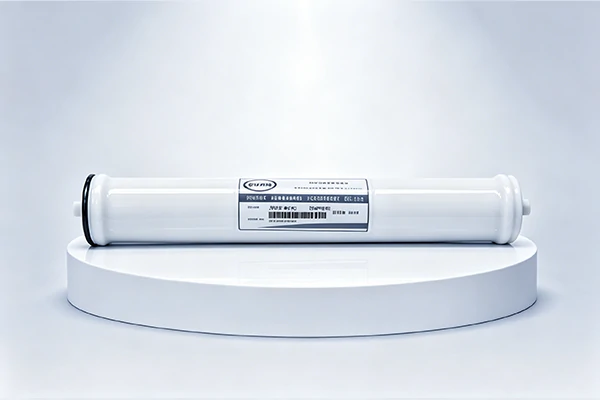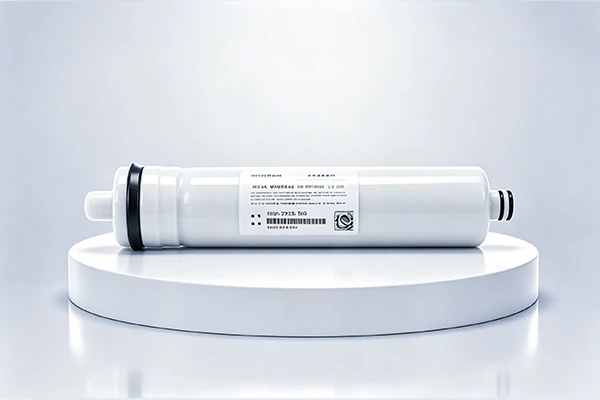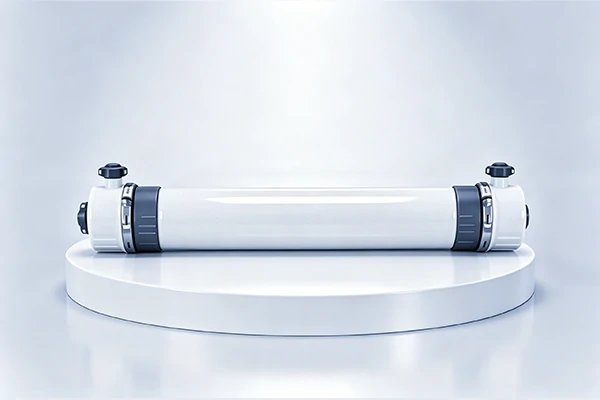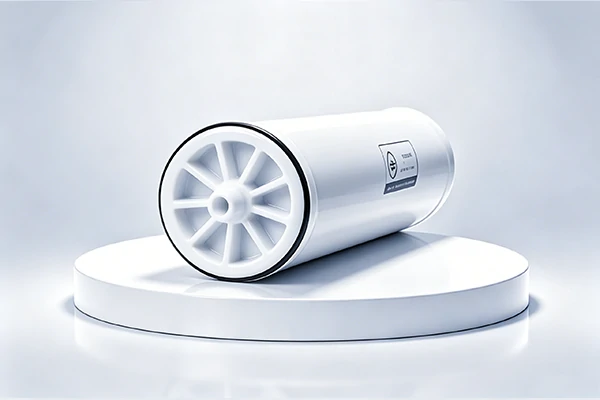
Reverse osmosis and nanofiltration technologies are currently the most efficient and economical separation methods, used in water treatment projects of all sizes, and the produced water can meet a variety of customer requirements.
Combining reverse osmosis and nanofiltration technologies with other separation technologies can reduce energy consumption and reagent costs, extend equipment lifespan, and improve the recovery rate of water treatment systems.
Table 3.1 Main Separation Technologies
|
Technology Name |
driving force |
Technical features |
|
dialysis |
Osmotic pressure of concentration gradient |
No external drive, low energy consumption, slow speed |
|
Electrodialysis |
Potential difference |
It has high energy consumption, strong removal capacity, and high influent concentration. |
|
Ion exchange |
Chemical energy |
Wide range of applications, large footprint, complex maintenance |
|
microfiltration |
pressure |
Separating large particles in a liquid with a small pressure difference |
|
Ultrafiltration |
pressure |
Separating dissolved macromolecules, with a wide range of applications. |
|
nanofiltration |
pressure |
Removes hardness from water and has strong directional separation capability. |
|
reverse osmosis |
pressure |
High precision in removing salt. |
Membrane liquid separation technologies are generally classified into four categories: microfiltration (MF), ultrafiltration (UF), nanofiltration (NF), and reverse osmosis (RO). Their separation precision and separation capacity are getting higher and higher.
(1) Microfiltration (MF)
Microfiltration can trap particles between 0.1 and 1 micrometer. Microfiltration membranes allow tiny particles and dissolved solids to pass through, but can block the passage of suspended solids, bacteria and large colloids.
(2) Ultrafiltration (UF)
Ultrafiltration can retain particles and impurities between 0.005 and 0.1 micrometers. Ultrafiltration membranes allow small molecules and dissolved solids to pass through, while effectively blocking large molecules such as colloids, microorganisms, viruses, and proteins. The molecular weight cutoff of ultrafiltration membranes is generally between 500 and 100,000.
(3) Nanofiltration (NF)
Nanofiltration operates within the range of ultrafiltration and reverse osmosis. It can retain substances as small as 1 nm with a molecular weight cutoff of approximately 50-100. Its ability to retain soluble salts ranges from 20% to 99%. It exhibits higher removal rates for high-valence ions than low-valence ions; for example, it removes magnesium sulfate and calcium chloride at 60-99%, while removing sodium chloride at 20-60%. Nanofiltration membranes are commonly used to remove organic matter and hardness from drinking water, remove color and radioactive substances from surface water, and can also be used for concentrating beverages and separating and purifying pharmaceuticals.
(4) Reverse osmosis (RO)
Reverse osmosis is the most precise membrane separation technology. It can block all dissolved salts and organic matter, allowing only water molecules to pass through. Composite reverse osmosis membranes generally have a desalination rate of over 98%. They are widely used in seawater and brackish water desalination, wastewater treatment, reclaimed water reuse, boiler feedwater, industrial ultrapure water preparation, drinking water production, and special separation applications.