
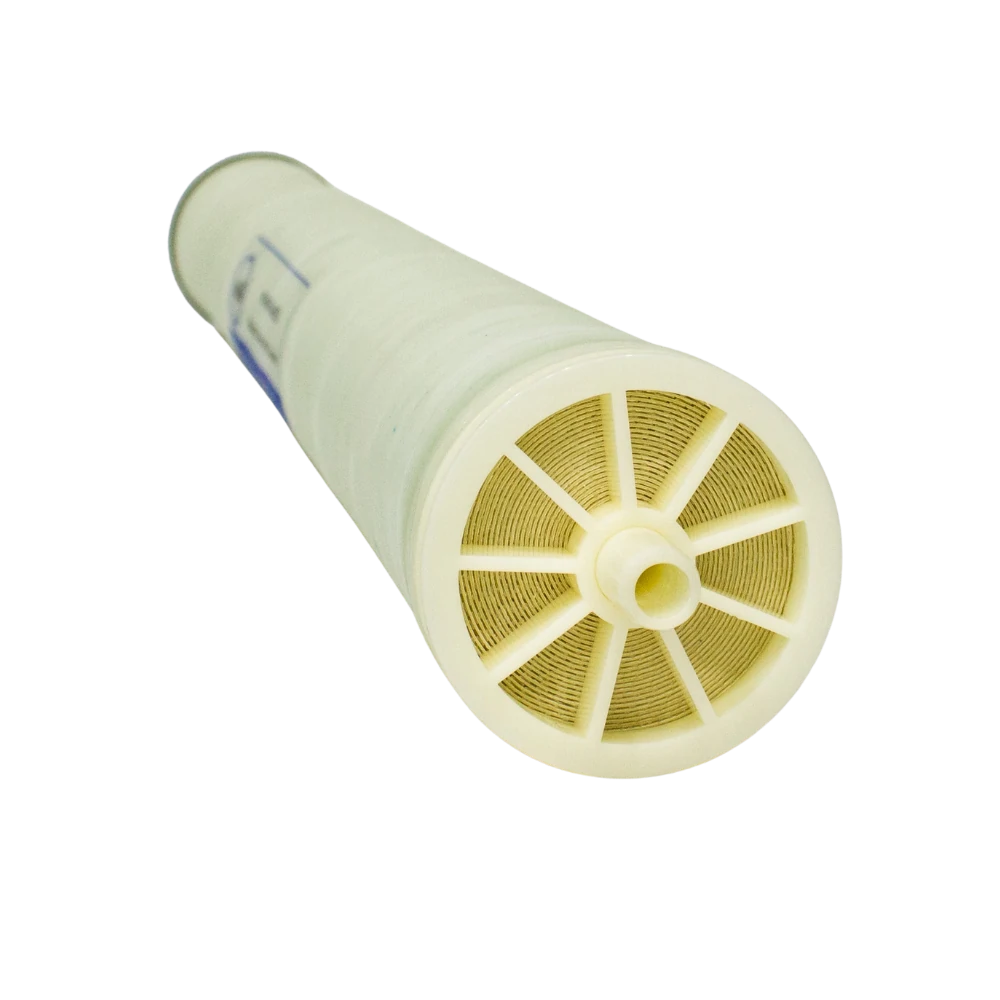
Enhanced Low-Fouling Series Reverse Osmosis Membrane Elements
JOZZON's 4-inch fouling-resistant membrane element utilizes JOZZON's proprietary anti-fouling coating technology, specifically designed for water quality with inorganic scaling and organic contamination, exhibiting excellent fouling resistance.
Applied Industries
Industrial Wastewater Treatment and Reuse
Wastewater from various industrial enterprises (electronics, textiles, chemicals, etc.) undergoes preliminary treatment followed by deep desalination and recycling.
Industrial Wastewater Treatment Containing Small Amounts of Organic Pollutants
Such as low- to medium-concentration organic wastewater from food processing, printing and dyeing, and electroplating industries.
Advanced Municipal Wastewater Treatment
Reuse of secondary effluent from municipal wastewater treatment plants, suitable for scenarios containing trace amounts of organic matter and microorganisms.
Surface Water Treatment, Groundwater Treatment
Slightly polluted water source treatment: Surface water or groundwater slightly polluted by agricultural non-point source pollution or domestic sewage, used for the production of industrial water.
Product Overview
The Jozzon Brackish water membrane element (JBW-FR) features high water flux and excellent desalination performance, making it suitable for desalination treatment of surface water, groundwater, tap water, and municipal water sources with a salt content of approximately 7000ppm or less. It is mainly used for industrial wastewater reuse of various scales, boiler feedwater in power plants, and other industrial water treatment applications. It is particularly suitable for the treatment of industrial wastewater containing small amounts of organic pollutants, urban sewage, and slightly polluted water sources.
Features & Benefit
1. Low-Adhesion Antifouling Membrane Surface Technology
The membrane employs a special hydrophilic modification process, resulting in a low surface roughness and high hydrophilicity. This makes it difficult for pollutants such as organic matter, colloids, and microorganisms to be adsorbed or deposited, reducing the tendency for fouling at the source. This technology originates from the antifouling technology developed by Jiuzhang for the water circulation system (urine reuse system) of the China Astronaut Training Center's space station, and has passed long-term fatigue testing in extremely harsh environments.
2. Wide Inlet Channel and Vortex Design
Utilizing a wide inlet channel with a special 34mil-36mil inlet angle, combined with JOZZON's independently developed patented convex guide cloth technology, turbulence is generated at the convex points of the channel, effectively flushing away colloids and scale. This design ensures uniform water flow distribution and a pressure drop of less than 15psi (0.1Mpa), maintaining a low pressure drop even under highly polluted conditions.
3. Aerospace-Grade Antibacterial and Antifouling Genes
JOZZON's specially designed "miniature high-flux antibacterial, antifouling, and high-recovery reverse osmosis membrane element" has been successfully applied to the space station's water circulation system. The JBW-FR series inherits this technological gene, adding antibacterial components to the membrane sheets to effectively inhibit microbial growth on the membrane surface, making it particularly suitable for common biofouling scenarios in urban wastewater and slightly polluted water sources.
4. Dry Membrane Element Manufacturing Process
Jiuzhang is one of the few manufacturers globally with large-scale production capabilities for dry membrane elements. Employing a chlorination-free post-treatment process, the produced membrane sheets are free from post-treatment damage, resulting in a membrane surface with more suitable smoothness, hydrophilicity, and electrical neutrality. This significantly improves the membrane's cleaning resistance and service life, ensuring stable performance throughout the entire lifecycle.
5. Fully Automated Precision Winding Technology
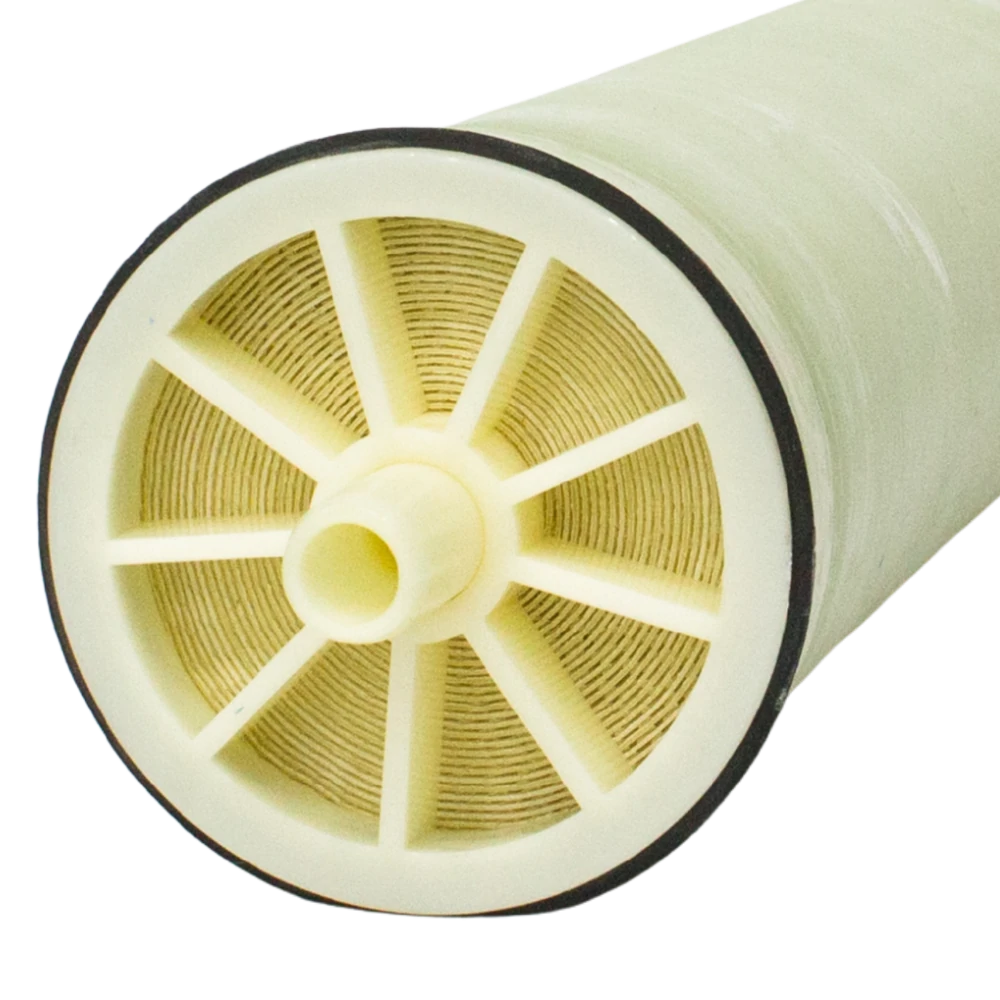
Utilizing fully automated winding technology, the sealing is precise, ensuring stable and consistent performance. All 4-inch membrane elements use a fiberglass wound shell, providing stronger pressure resistance, making them especially suitable for systems with multiple membrane elements. The patented winding process ensures a uniform number of membrane sheets and a shorter permeate flow path, achieving high permeate flow while maintaining a stable desalination rate.
Available Models
|
Membrane Element Model |
Effective Membrane Area ft2 (m2 ) |
Water Production Flow Rate GPD(m³ / d) |
Stable Desalination Rate (%) |
Minimum Desalination Rate (%) |
|---|---|---|---|---|
|
JBW-4040-FR |
90 (8.4) |
2200 (8.3) |
99.5 |
99.3 |
Extreme Usage Conditions
| Maximum Operating Pressure | 600psi (4.14 MPa) |
| Maximum Influent Flow Rate | 16gpm (3.6 m³/h) |
| Maximum Inlet Water Temperature | 45℃ |
| Maximum Influent SDI15 | 5 |
| Influent Free Chlorine Concentration | < 0.1 ppm |
| Influent pH Range During Continuous Operation | 2~12 |
| pH Range of Influent During Chemical Cleaning (Short-term 30-minute Period) | 1~13 |
| Maximum Pressure Drop of a Single Membrane Element | 15psi (0.1Mpa) |
Test Conditions
| Test Pressure | 225psi (1.55Mpa) |
| Test Solution Temperature | 25℃ |
| Test Solution Concentration (NaCl) | 2000ppm |
| Test Solution pH Value | 7.5 |
| Single Membrane Element Recovery Rate | 15% |
Membrane Element Size
The units in the diagram are millimeters (inches).